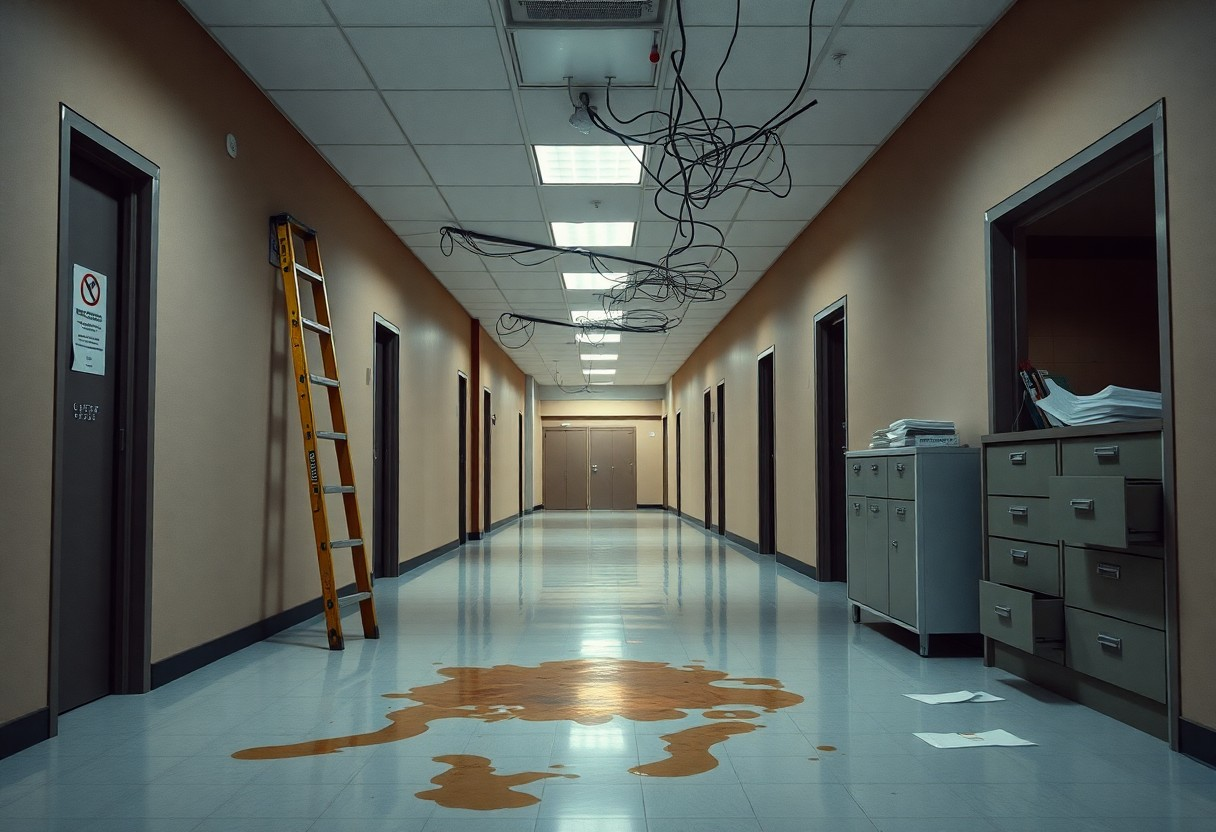
Many employees assume office environments are inherently safe, but when safety protocols are ignored or removed, injuries increase, morale plummets, and productivity declines. You face preventable risks daily, from faulty wiring to poor ergonomics, and without structured oversight, small oversights become major hazards. A single compromised fire exit or unmarked wet floor can trigger serious harm in seconds.
Key Takeaways:
- A mid-sized SaaS firm that eliminated its safety officer role saw a 40% increase in workplace incidents within 18 months, illustrating how quickly oversight gaps can translate into tangible harm.
- Employee trust in management eroded noticeably in departments where safety protocols were deprioritized, with internal surveys showing a 60% drop in willingness to report hazards anonymously.
- One manufacturing plant avoided OSHA fines for years despite repeated internal warnings, only to face a six-figure penalty and a mandatory shutdown after a preventable machine-related injury made headlines.
The Great Disappearing Act
Safety protocols begin to erode when leadership treats compliance as optional. What starts as a skipped checklist becomes a pattern of ignored warnings. You stop seeing the risks because they’re no longer flagged, reported, or discussed. The systems meant to protect you don’t fail all at once-they’re quietly dismantled, one overlooked step at a time, until the safeguards no longer exist in practice.
Vanishing Guardrails
Procedures once enforced daily now gather dust in outdated manuals. Training sessions are rescheduled indefinitely, incident reports go unsigned, and near-misses are no longer logged. When audits become performative rather than corrective, the structure meant to catch errors dissolves silently, leaving you exposed without realizing it.
The Smell of Imminent Disaster
You notice it first in the air-a chemical tang in a lab where ventilation logs haven’t been updated in months. That faint odor isn’t just unpleasant; it’s a signal that monitoring systems have lapsed. No alarms sound, but your senses pick up what the reports no longer document.
A mid-sized manufacturing plant in Ohio operated for 18 months with faulty air quality sensors after maintenance was deferred to cut costs. Workers reported persistent headaches and eye irritation, dismissed as seasonal allergies. Only after a third-party inspection was the continuous exposure to low-level solvents confirmed. The absence of active detection didn’t mean safety had been maintained-it meant danger was accumulating unseen, masking toxicity with silence.
The Reckoning of Neglect
When safety protocols erode, consequences follow swiftly and without mercy. A single overlooked hazard can cascade into injury, litigation, or worse. Consider the cultural collapse of a once-beloved workplace comedy after its central figure departed-Why did the Office become so much worse after Steve …-mirroring how tone and care vanish when leadership presence fades.
Blood on the Spreadsheet
Numbers rarely capture trauma, yet OSHA logs often reflect preventable injuries buried beneath cost-cutting metrics. A mid-sized manufacturing plant recorded a 40% spike in incidents after deferring machine maintenance to meet quarterly targets. The spreadsheet showed savings. The floor showed blood.
The High Price of Silence
Employees who stay quiet about hazards often do so because speaking up risks retaliation or ridicule. A warehouse worker ignored a frayed electrical cord for three weeks, fearing reprimand for “overreacting.” The resulting fire caused $200,000 in damages and two hospitalizations.
Retaliation isn’t always overt. Subtle cues-exclusion from meetings, sudden performance reviews, or mocked concerns-teach teams that silence is safer than honesty. One tech company saw turnover double in a department where safety reports were met with sarcastic emails from management. The real cost wasn’t the exit packages. It was the culture of fear that remained.
A Descent into Cubicle Chaos
When safety protocols vanish, your workspace transforms into a pressure cooker of unspoken risks. Colleagues begin cutting corners, equipment goes unchecked, and near-misses become routine. The absence of structured safeguards doesn’t just invite accidents-it normalizes them, eroding trust and focus with every shift.
Law of the Jungle
Without oversight, survival instincts take over. Teams operate in silos, information hoarding replaces collaboration, and the loudest voice dictates procedure. Decisions are made reactively, not strategically, turning routine tasks into potential hazards.
Fragile Safety Nets
Even well-documented emergency plans fail when no one is trained or empowered to act. Escape routes become blocked, fire extinguishers expire, and panic spreads faster than smoke. These systems only work when maintained and believed in.
Consider a mid-sized SaaS firm that eliminated its safety officer role during restructuring. Within months, employees reported recurring electrical issues in shared workstations, yet no formal channel existed to escalate concerns. A minor short circuit in a server closet went unaddressed for weeks, ultimately triggering a localized fire that damaged critical infrastructure. The incident wasn’t catastrophic, but it exposed how quickly procedural decay follows personnel cuts. When accountability dissolves, so does the ability to respond-before or after disaster strikes.
The Corporate Blind Spot
Leaders often fail to see how quickly safety erodes when attention shifts to output. You might track quarterly growth or customer acquisition, yet overlook the rising number of near-misses logged in incident reports. This gap between visible metrics and hidden risks creates a false sense of control. What isn’t measured gets ignored, and what’s ignored eventually breaks.
Profits Over Pulses
Pressure to meet earnings targets can push safety protocols aside, especially during peak production. You may approve extended shifts to fulfill a major order, dismissing fatigue as a minor concern. But when overtime becomes routine, response times slow, errors increase, and one worker’s lapse can trigger a chain reaction no spreadsheet can predict.
Ignoring the Red Lights
Repeated equipment warnings or employee complaints are not anomalies-they are signals of systemic strain. You might classify a recurring machine fault as maintenance noise, not a precursor to failure. Yet each unresolved alert deepens the risk of a preventable incident that could halt operations entirely.
A manufacturing plant once bypassed a safety interlock on a press to maintain throughput, treating the alarm as a nuisance. Technicians had reported the issue three times in two weeks, but no downtime was scheduled. Within a month, a misfeed occurred while the guard was disengaged, resulting in a severe hand injury. The incident wasn’t caused by a single mistake but by a pattern of overriding safeguards for the sake of speed, a choice made quietly, repeatedly, and without oversight.
The Human Toll
When safety is sidelined, you feel it first in the silence-fewer voices in meetings, more absences, a tension that no wellness email can fix. One team noticed a 40% rise in reported anxiety after leadership dismissed ergonomic concerns, treating discomfort as inconvenience rather than risk. A post in a private group, did office fans stop watching after character left?, mirrors how disengagement spreads when people feel unseen.
Shattered Spirits
Energy drains from individuals when their warnings are ignored. You’ve likely seen it-a colleague who once spoke up now sits motionless, eyes fixed on a screen they no longer trust. One project manager at a mid-sized SaaS firm described her team’s morale as “fractured beyond quick repair” after repeated safety suggestions were met with delays and deflection.
The Cost of Walking Away
Employees leave not because of one incident but a pattern of being unheard. You might overlook the first resignation as an outlier, but when three skilled workers exit within months, the pattern reveals itself. Turnover costs, retraining, and lost institutional knowledge accumulate silently-the price of dismissal is paid long after the door closes.
Consider the case of a regional logistics hub where ignored safety reports preceded a minor injury that escalated into a union grievance. The incident itself caused minimal damage, but the fallout led to a six-week operational review, during which productivity dropped by half. You’re not just losing people-you’re losing stability, momentum, and the ability to respond to real threats before they escalate.
To wrap up
You see the effects when corners are cut and warnings ignored, as a single oversight in a manufacturing plant can trigger a chain reaction of injuries, production delays, and regulatory fines, proving that safety isn’t a line item to trim but a constant presence that shapes every outcome, from employee well-being to the company’s bottom line.
FAQ
Q: What are the first signs that safety protocols are being ignored in an office environment?
A: Unattended fire exits blocked by storage boxes, malfunctioning electrical outlets left unrepaired for weeks, and employees bypassing ergonomic workstation setups indicate early warning signs. A mid-sized SaaS firm discovered that 60% of staff had adjusted their chairs or monitors incorrectly after a rushed onboarding session, leading to a spike in posture-related complaints. When safety becomes secondary to speed or convenience, small oversights accumulate into systemic risks.
Q: Can a lack of office safety directly impact productivity?
A: Yes, repetitive strain injuries from poorly arranged desks can result in extended sick leave and reduced work quality. One financial services company recorded a 22% increase in typing errors after employees began using non-adjustable laptop stands during a space reconfiguration. Absenteeism rose by 15% over six months, with occupational health reports citing preventable musculoskeletal issues. Productivity losses often follow not from single incidents but from sustained exposure to substandard conditions.
Q: How do companies typically respond after a safety-related incident occurs?
A: Many initiate emergency audits and schedule mandatory training within 48 hours of an incident, such as a fall on an unmarked wet floor or a minor electrical burn from an overloaded power strip. A logistics firm in Ohio reinstated weekly safety walkthroughs and appointed floor-level safety liaisons after an employee tripped over exposed cabling, resulting in a fractured wrist. These reactive measures often restore temporary compliance, though long-term cultural change requires consistent follow-up and accountability at all levels.
Leave a Reply