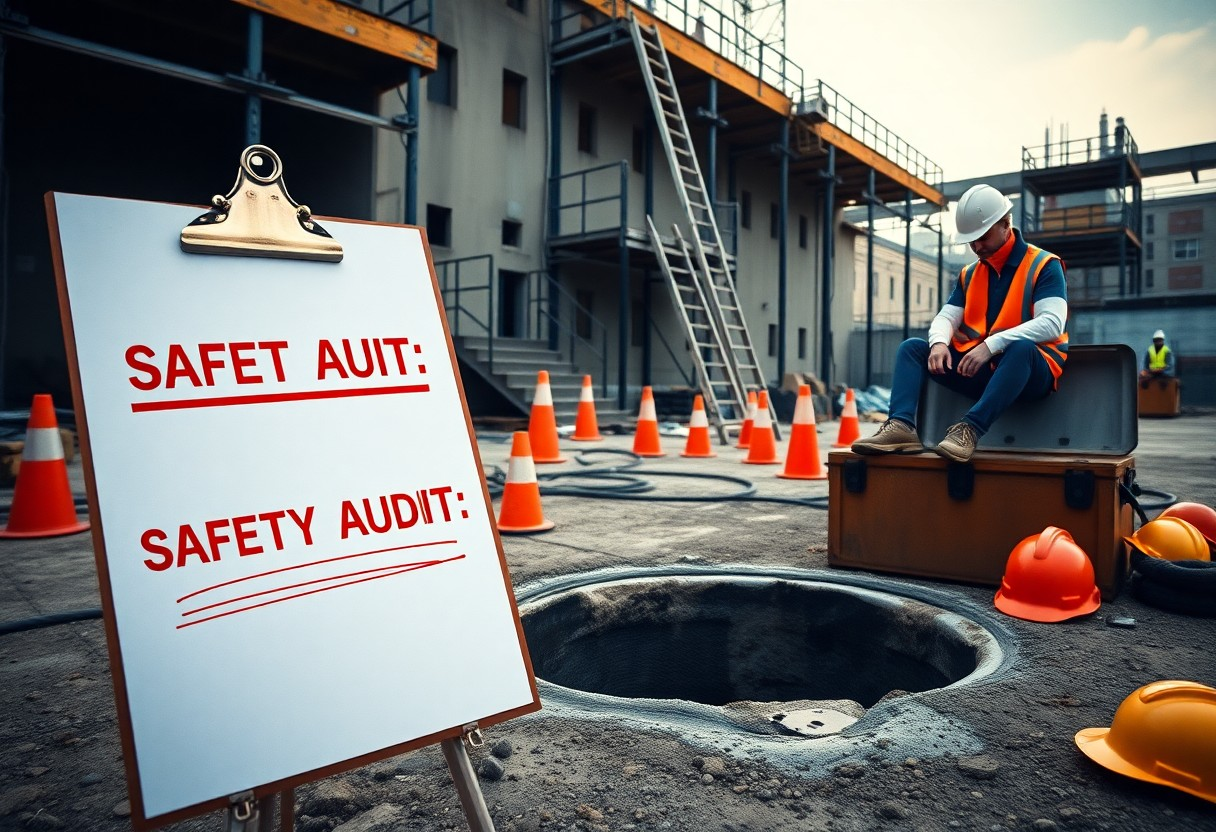
Safety audits give you a clean report, yet injuries persist on the floor-highlighting a dangerous gap between compliance and real-world protection. You follow protocols, check every box, and still face incidents that suggest something deeper is broken. The problem isn’t paperwork-it’s practice. A mid-sized SaaS firm may boast zero violations, but if workers bypass lockout procedures daily, the illusion of safety becomes a liability. You’re measuring the wrong things.
Key Takeaways:
- A clean safety audit does not guarantee a safe workplace, as audits often capture compliance with procedures rather than actual behavior or emerging risks-like a manufacturing plant with flawless documentation but recurring near-misses due to unreported shortcutting during shift changes.
- Workers may follow unsafe practices consistently without incident for long periods, creating a false sense of security; this normalization of minor violations can persist until a serious event occurs, as seen in facilities where bypassing lockout-tagout becomes routine during brief maintenance tasks.
- Lagging indicators such as injury rates only reflect past failures and fail to predict future risk, meaning organizations can appear safe on paper while underlying conditions-like poor communication during contractor handoffs or fatigue in rotating shifts-remain unaddressed.
The Mirage of the Perfect Score
High audit scores often create a false sense of security, masking underlying risks that aren’t captured on paper. Passing an inspection doesn’t mean hazards are gone-only that they weren’t documented or observed at that moment. A clean report can quietly encourage complacency, especially when teams begin equating compliance with safety. The most dangerous workplaces sometimes have spotless records, not because they’re safe, but because their problems are invisible to checklists.
The Checklist Fallacy
Audit checklists measure compliance, not culture. Finding every fire extinguisher charged and tagged says nothing about whether workers will stop a job when something feels wrong. Relying on checkboxes creates a ritual of verification that rewards appearance over action. You can meet every item and still have a near-miss tomorrow because the real risks live in behavior, not binders.
Documented Safety vs. Actual Behavior
What’s written in your safety manual rarely matches what happens during the third shift. Workers routinely bypass procedures to meet production demands, often without reporting it. A forklift operator might skip a pre-shift inspection not out of negligence, but because the checklist takes 12 minutes and the schedule allows 4. The gap between policy and practice is where injuries take root.
One mid-sized manufacturing plant recorded 100% compliance on safety audits for two years, yet saw three recordable injuries in a single quarter. Interviews revealed employees were routinely overriding machine guards to clear jams faster, a deviation known to supervisors but never reported. The behavior wasn’t malicious-it was adaptive, born from unspoken pressure to maintain output. The audit checklist didn’t ask about override frequency, so the hazard remained invisible by design.
The Normalization of Deviance
Over time, small deviations from safety protocols become routine, accepted without scrutiny. What starts as a minor adjustment-bypassing a lockout for speed-repeats until it feels correct, even when it violates procedure. This silent shift erodes compliance from within, making hazardous behavior indistinguishable from standard work.
Small Shortcuts as Standard Practice
A worker skips a pre-use inspection because the equipment “has never failed before.” Others notice, adapt, and soon the inspection is routinely omitted. Each repetition reinforces the shortcut, embedding it so deeply that it’s performed without thought, even when the original reason for the rule is well known.
The Drift into Failure
Performance slowly shifts away from formal procedures, not through negligence but through incremental choices that prioritize efficiency. Failure isn’t sudden-it accumulates in plain sight, masked by the absence of immediate consequences and the illusion of control.
Consider a mid-sized SaaS firm that streamlined server maintenance by allowing engineers to skip change logs during low-risk updates. Initially harmless, the practice expanded to higher-stakes systems. No one issued a directive to stop logging; the process simply faded. When a configuration error triggered a 14-hour outage, the root cause wasn’t incompetence-it was a yearlong drift where skipped steps became standard, undetected because audits only checked for documented policies, not actual behavior.
The Flaw in Lagging Indicators
Lagging indicators like incident rates only reflect harm after it occurs, offering no insight into the conditions that lead to injury. A clean report may signal strong recordkeeping rather than actual safety. Relying on these metrics creates a false sense of security, especially when near-misses go unreported or hazards remain unaddressed. Zero injuries do not prove zero risk.
Why Zero Incidents Does Not Mean Safety
You can have zero reported injuries and still operate an unsafe workplace. Workers may avoid reporting due to fear, incentives, or cultural pressure. Equipment might be malfunctioning, procedures bypassed, or training insufficient-all without a single recorded event. Silence in the data often masks systemic vulnerabilities.
The Statistical Blind Spot
Your safety data likely ignores what happens between incidents. A forklift operator swerving to avoid a collision but not filing a report becomes invisible in the metrics. These unrecorded moments reveal more about risk than injury counts. Near-misses are early warnings your current system is designed to miss.
One mid-sized SaaS firm discovered that 78% of employees had observed or experienced a near-miss in the past quarter, yet fewer than 5% were formally logged. The gap wasn’t due to lack of danger but to a reporting process that required three separate approvals and took over an hour to complete. When behavior is shaped more by convenience than compliance, your data reflects bureaucracy, not safety. What you don’t see is often what will hurt you.
Psychological Barriers on the Floor
Even with a clean DOT Safety Audits: What to Expect, and What Happens if …, injuries persist when workers hesitate to speak up. Fear of reprisal, distrust in management responses, or the belief that reporting won’t lead to change silences critical voices precisely when intervention is needed most.
The Silence of the Frontline
Workers often witness hazards daily but remain quiet, assuming nothing will change or that they’ll be labeled troublemakers. This unreported near-miss in a warehouse last quarter-where a forklift nearly struck a technician-was only documented weeks later during an informal crew chat, not through official channels.
Authority Bias and Audit Performance
During audits, employees may defer to supervisors’ answers instead of sharing their own observations, assuming leadership knows best. This tendency distorts the accuracy of audit findings, making conditions appear safer than they are in routine operations.
Authority bias becomes especially dangerous when junior staff withhold concerns during walkthroughs, even when they’ve seen shortcuts taken regularly. A mechanic at a regional transport hub once admitted, off-record, that he’d never corrected a supervisor during an audit-even though he knew the brake inspection log was falsified the week before.
Systemic Friction Points
Compliance does not guarantee safety when operational pressures create persistent conflicts between policy and practice. You may pass the FMCSA New Entrant Safety Audit Violations: Top Issues in …, yet still see injuries because rules are routinely bypassed to meet deadlines. These hidden trade-offs erode safety from within, even when documentation looks flawless.
Production Goals vs. Safety Protocols
When daily output targets take precedence, you might notice workers skipping lockout-tagout procedures to save minutes. Supervisors rarely report these lapses, not because they approve, but because unspoken expectations reward speed. A forklift operator rushing deliveries increases collision risk, especially during shift changes when oversight thins.
The Hidden Cost of Speed
Minutes saved by bypassing safety checks often translate into hours of downtime after an incident. You accept small risks regularly-like overloading carts or delaying equipment maintenance-because the consequences seem distant. Yet one frayed wire or missed inspection can trigger a chain reaction ending in injury.
Consider a mid-sized SaaS firm that optimized server deployment timelines so aggressively that engineers began disabling safety alerts during updates. No one raised alarms until a cascade failure took critical systems offline for 18 hours. The same pattern appears in physical workplaces: efficiency gains that ignore systemic safeguards inevitably compound risk, not reduce it.
Moving Beyond the Clipboard
Compliance checklists alone won’t stop injuries when real risks evolve faster than audit schedules. You walk the floor with a clipboard, ticking boxes, but the most dangerous hazards often exist between tasks, in fatigue, in rushed handoffs no form captures. True safety lives in behavior, not paperwork.
Observing the Unseen
What workers don’t report often matters most. A technician bypasses a guard because the machine jams weekly, a forklift driver speeds during shift change to meet quotas. These hidden workarounds reveal systemic gaps no audit form can detect without direct, non-punitive observation.
Building Resilience into the Workflow
Resilience means designing systems that adapt when pressure builds. Instead of relying on perfect compliance, you embed margin for error-like a chemical plant using color-coded valves to prevent misconnections during high-stress maintenance.
When a mid-sized SaaS firm reduced deployment errors by introducing automated rollback triggers, they didn’t punish mistakes-they expected them. You can apply the same logic on the shop floor. Automate safety interlocks, simplify procedures, and allow time for resets. The goal isn’t perfection, it’s recovery before failure becomes injury.
Final words
You passed the audit, yet injuries persist because compliance does not guarantee safety. A clean report reflects paperwork, not behavior. Workers adapt to gaps between formal procedures and daily reality, often bypassing protocols to meet production demands. Your systems may meet standards on paper, but real protection lies in continuous observation, frontline feedback, and correcting at-risk conditions before harm occurs. A forklift operator at a distribution center once adjusted his route daily to avoid a blind corner-until a near-miss forced the issue into view. That change came not from a checklist, but from listening.
FAQ
Q: If our safety audit received a 98% compliance score, how can incidents still be occurring?
A: A high audit score reflects adherence to documented procedures, not real-world behavior. One manufacturing plant, for example, passed quarterly audits with near-perfect marks yet experienced three recordable injuries in a single month due to unreported shortcutting on lockout/tagout protocols. Workers had begun bypassing steps during changeovers, a deviation invisible during scheduled audits. Compliance on paper does not guarantee consistent execution under production pressure.
Q: Can near-misses help prevent injuries even when audits show no issues?
A: Yes, near-misses often expose gaps audits miss. A mid-sized SaaS firm with a flawless safety record over two years began tracking near-misses after a technician narrowly avoided a fall from a service ladder. Internal review revealed that 17 similar incidents had gone unreported in the prior quarter. Workers assumed the ladder was “good enough” despite not meeting height-adjustment standards. Reporting and analyzing these events uncovered behavioral patterns audits failed to capture.
Q: Why don’t workers speak up about hazards if the safety system is supposedly strong?
A: Silence often stems from informal workplace norms overriding formal policy. In one food processing facility, employees routinely disabled machine guards to clear jams faster, a practice tolerated by supervisors to meet output targets. No audit observed this because it occurred between inspection cycles. Workers knew the rule but perceived the unspoken priority as speed, not safety. Trust in reporting systems erodes when actions contradict official messaging.
Leave a Reply