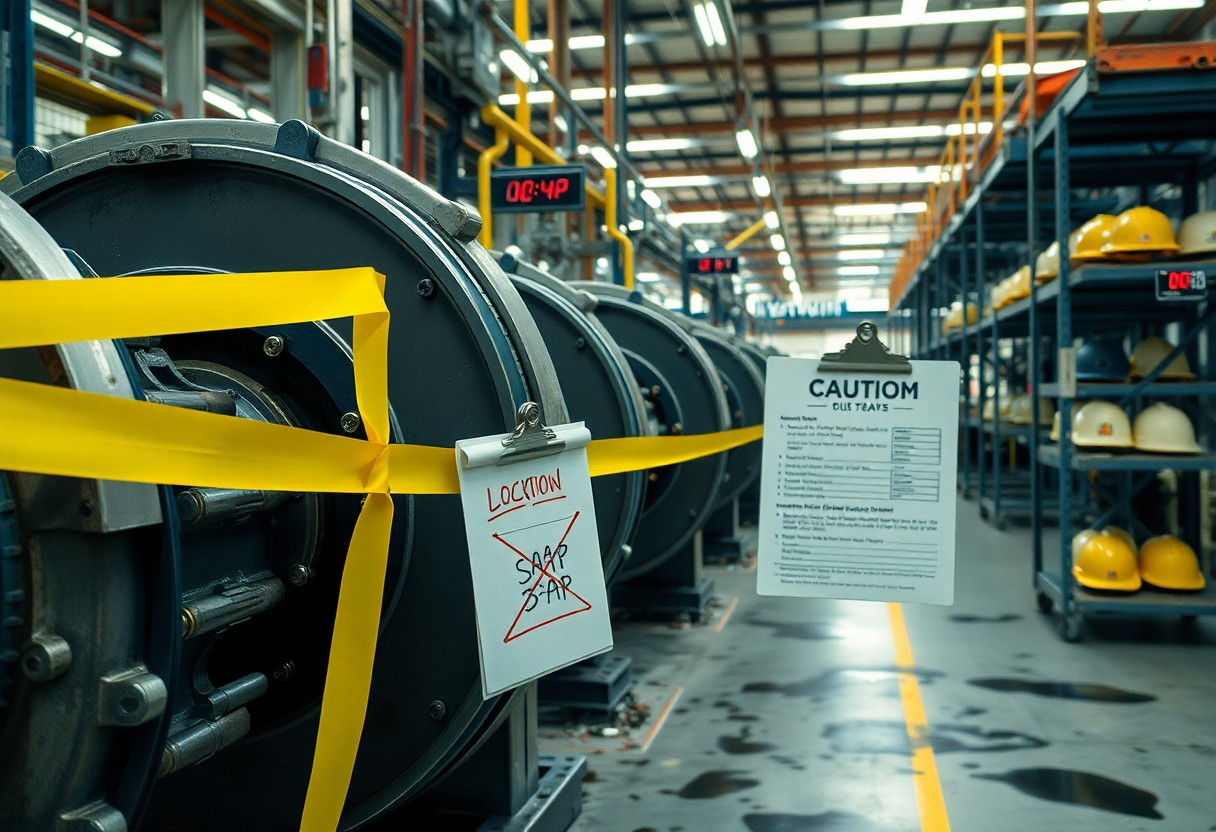
Over time, relentless output demands can reshape your team’s behavior without a single policy change. What begins as a temporary shortcut becomes normalized, and actions once flagged as hazardous are treated as routine. You adapt not because the risks vanish, but because the pressure to deliver overrides the instinct to report, pause, or protest. This shift rarely comes with announcements-only silence where warnings used to be.
Key Takeaways:
- A mid-sized SaaS firm once delayed a critical security patch to meet a quarterly feature release, resulting in a breach that exposed customer data for 72 hours before detection, illustrating how production goals can silently override established safety protocols.
- Teams under sustained delivery pressure often develop informal workarounds, such as skipping peer reviews or disabling automated tests temporarily, which become normalized despite increasing technical debt and failure risk.
- When leadership celebrates on-time delivery without public acknowledgment of skipped safeguards, it creates an implicit incentive structure where invisible compromises are rewarded, making future safety deviations more likely and harder to reverse.
The Newspeak of Productivity
You hear phrases like “streamlined approvals” or “agile compliance” replace clear safety checks, and over time, these softened terms mask skipped steps without ever stating it outright. Language becomes a tool to reframe risk as efficiency, where “fast-tracking” means bypassing review layers once deemed non-negotiable. A near-miss gets labeled a “learning opportunity” instead of a warning, and each softened phrase inches the team further from accountability. You begin describing corners cut as “optimizations,” and that shift in speech normalizes deviation until the original rule feels like an obstacle, not a safeguard.
The Clock as Tyrant
Time becomes an enforcer when deadlines dictate decisions, and you begin skipping pre-use equipment checks to stay on schedule. A five-minute delay feels unacceptable, even when that pause prevents a misaligned component from failing under load. What was once a safeguard becomes a bottleneck, and you rationalize its removal because the shift log shows no incidents-until one occurs. A technician at a mid-sized SaaS firm’s data center once bypassed thermal calibration steps before a server rollout, leading to a cascade failure that took 14 hours to resolve. Speed doesn’t cause accidents; it enables the conditions for them.
The Quiet Erasure of the Rulebook
Over time, repeated small deviations under production pressure reshape what you accept as standard procedure. A skipped checklist, a bypassed approval-each seems minor until the original safety protocols exist only on outdated documents. What was once a violation becomes routine, and the rulebook, though still printed, is no longer followed. Compliance erodes not through rebellion but through silence, as daily choices quietly overwrite formal policy. Learn more about how Production Pressures reshape behavior in high-stakes environments.
The Managerial Doublethink
You uphold safety policies in meetings while quietly adjusting deadlines that make adherence impossible, believing both actions can stand unchallenged. This contradiction isn’t oversight-it’s systemic, embedded in the belief that output justifies invisible compromises. When production pressure quietly driving unsafe conditions becomes normalized, even well-intentioned leaders participate in the fiction. What if production pressure is quietly driving unsafe decisions you no longer recognize as risky?
The Illusion of Perpetual Safety
You begin to assume that because nothing has gone wrong for months, the risks have disappeared. This false sense of security allows skipped checklists, ignored near-misses, and deferred maintenance to feel like normal practice. A technician at a chemical plant once bypassed a lockout because the line had run smoothly for 11 months. The explosion that followed injured three people and traced back not to equipment failure but to the quiet belief that safety was automatic.
The Restoration of Plain Truth
Someone finally speaks the unsaid fact: the deadline was always more sacred than the safety checklist. That single admission, spoken in a team huddle after the near-miss, unlocks a shift no policy ever could. You stop adjusting your report to fit the timeline and start documenting what actually happened, even when it slows things down. A technician logs a recurring sensor fault that was previously dismissed as ‘within tolerance.’ Another refuses to bypass a lockout because the VP is on-site. These are not rebellions but restorations-small acts that return language and action to their original meaning. Safety is no longer a performance metric but a sequence of observable choices, each one measurable not in output but in avoided harm.
Conclusion
You adjust your posture when the deadline looms, you skip the checklist when the client waits, you silence the doubt because the team is watching. Each compromise feels small, isolated, justified. Yet over time, these unspoken revisions accumulate into a new standard-one where safety is no longer a rule but a suggestion. A manufacturing plant once reduced incident reports by 40 percent not by improving conditions but by redefining what counted as an incident. Your organization may not use the same terms, but the pattern is recognizable. What you call efficiency today may be tomorrow’s preventable failure. The real test is whether your safety protocols survive the next production sprint unchanged.
FAQ
Q: How does production pressure lead to informal changes in safety protocols?
A: When output deadlines intensify, teams often adopt unspoken workarounds to maintain pace, such as skipping pre-operation checklists or bypassing lockout-tagout procedures during changeovers. A technician at a Midwest manufacturing plant described disabling a safety interlock on a conveyor system to reduce downtime between batches, a modification never documented or approved. These adjustments rarely appear in official records but become embedded in daily routines, effectively replacing formal rules with de facto practices that increase exposure to risk.
Q: Can safety culture deteriorate even when no accidents occur?
A: Yes, the absence of incidents does not confirm safety; it may instead reflect luck. A mid-sized SaaS firm maintained flawless incident reports for two years while developers routinely deployed code without peer review, citing sprint deadlines. Engineers referred to this as ‘the silent override’-a normalized deviation from protocol. Leadership interpreted the clean record as validation of their process, unaware that near-misses were being dismissed or unreported. Over time, the team lost the habit of raising concerns, mistaking silence for safety.
Q: What signals indicate that safety rules are being quietly rewritten?
A: One early sign is the routine use of exceptions, such as supervisors verbally approving deviations from standard operating procedures. Another is the emergence of coded language: phrases like ‘we’ll fix it in post’ on a construction site or ‘just get it live, we’ll patch later’ in software teams signal accepted rule-breaking. At a chemical processing facility, operators began referring to bypassing gas detectors as ‘taking the shortcut,’ a term that spread without challenge. When such language becomes commonplace, it reflects a shift in behavioral norms far more than any written policy.
Leave a Reply