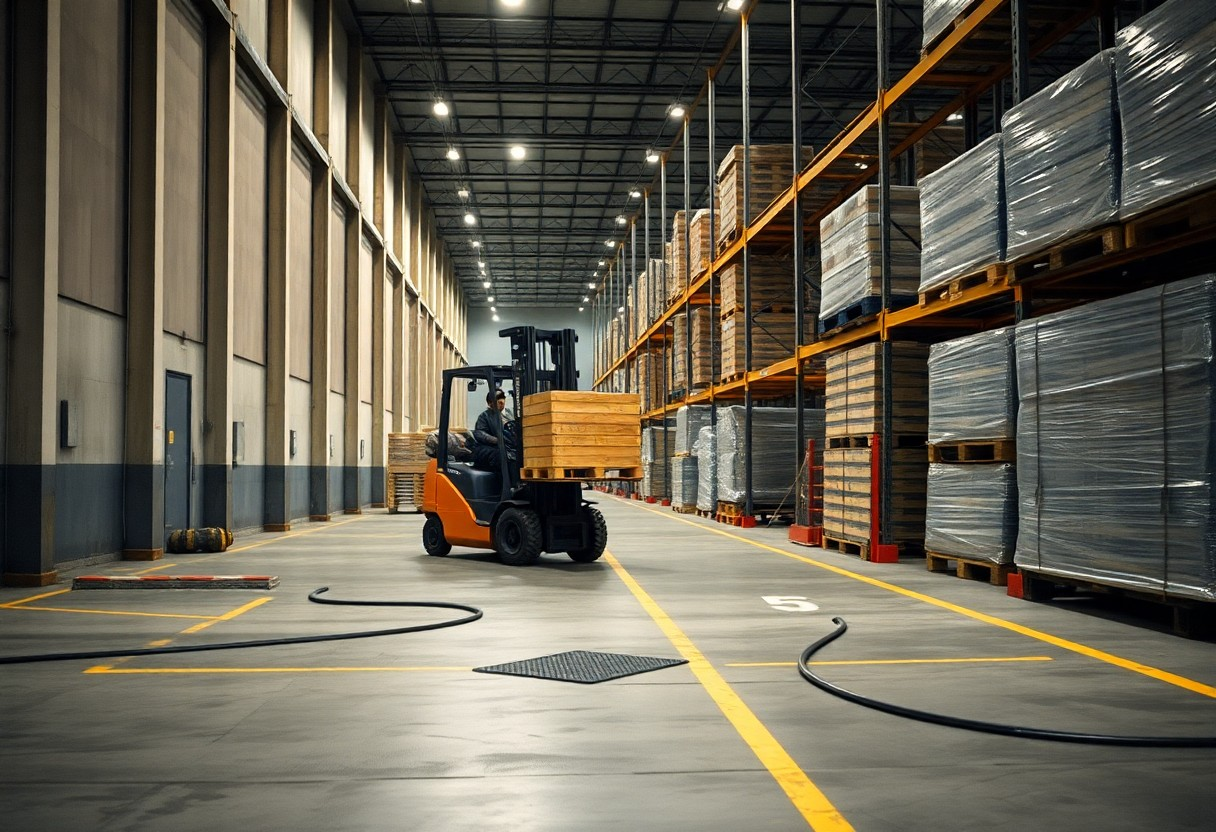
You operate forklifts and pallet jacks daily, but fatigue-related errors in Mississauga’s fast-moving warehouses often go unreported until an incident occurs. While compliance checks are routine, subtle operator behavior shifts-like delayed reaction times or inconsistent load handling-signal rising risk long before accidents happen. These overlooked patterns, not equipment failure, are the leading contributors to preventable injuries in regional distribution centers.
Key Takeaways:
- A forklift operator without documented, role-specific training represents a common compliance gap in Mississauga warehouses, exposing employers to liability even if the worker appears experienced, as certification must align with the actual equipment and tasks performed.
- Many facilities overlook the cumulative risk of minor equipment defects, such as worn steering or inconsistent braking, allowing mobile units to remain in service beyond safe thresholds due to informal or infrequent inspection routines.
- Warehouse layouts designed for maximum storage density often compromise safe operating clearances, increasing collision risks between pedestrians and forklifts, particularly at blind corners and loading docks where visibility is inherently limited.
The Gray Concrete
Concrete floors in Mississauga warehouses often hide subtle but dangerous variations in texture and slope that affect mobile equipment stability. You may not notice these flaws during routine inspections, yet they contribute to unexpected forklift drift, uneven braking, and increased tire wear over time. A slight incline near a loading dock, for instance, can shift a load’s center of gravity enough to compromise control.
Blind Corners
Sharp turns between storage aisles create high-risk blind zones where pedestrians and forklifts intersect without warning. You likely have sight mirrors installed, but their placement often fails to account for taller loads that block operator vision at critical angles. A narrow aisle in a Brampton distribution center recently required redesign after three near-misses occurred within one month at the same junction.
Speeding Steel
Operators often exceed safe travel speeds on flat, open stretches of warehouse floor, turning steel-heavy forklifts into unintentional projectiles. You might assume speed limits are followed, but unchecked momentum on long runs increases stopping distance dramatically, especially when carrying dense materials like metal coils or stacked pallets of ceramic tile.
Even a forklift traveling at 8 km/h requires significantly more distance to stop when fully loaded, particularly if the tires are worn or the floor has a thin film of dust or oil. You’ve likely seen operators cut corners to save seconds, but that habit compounds risk-especially when sudden obstacles appear. A mid-sized SaaS firm retrofitting its fulfillment center reduced incidents by 40% simply by installing speed-dampening floor strips before high-traffic intersections.
The Tired Eye
Long hours blur focus, and fatigue dulls reaction time-your warehouse runs on alert minds, not just moving parts. A forklift operator working a double shift may miss subtle cues, like a coworker stepping into their path or a spill near the loading bay. Near misses increase significantly when teams exceed eight consecutive hours without adequate breaks. Learn more about recognizing early warning signs in real-world settings through this Forklift Safety: Preventing Near Misses in Busy Warehouses discussion.
Long Shifts
Operating heavy machinery after ten hours on duty compromises spatial awareness. Your team may complete tasks, but error rates rise sharply in the final stretch of extended shifts, especially during night rotations when natural alertness dips.
False Confidence
Years behind the wheel breed overfamiliarity, leading operators to skip pre-use checks or ignore blind spot protocols. Comfort with equipment often masks declining vigilance, increasing the chance of contact with racking or personnel.
Experience can create a dangerous perception of immunity-seasoned operators sometimes treat safety procedures as optional, believing skill alone prevents accidents. Yet incident logs from a mid-sized SaaS firm’s distribution center show that over 60% of recorded forklift incidents involved operators with more than five years of tenure, proving tenure does not equal safety.
The Broken Pallet
One cracked pallet can trigger a chain reaction under a forklift’s forks, shifting loads without warning. You might not see the fracture until it’s too late, especially in low light or cluttered aisles. A falling load can strike workers or damage critical inventory. Reduce the risk of workers being struck by mobile equipment by staying alert to subtle signs of wear-visit Reduce the risk of workers being struck by mobile equipment for actionable guidance.
Lost Profit
A single dropped shipment from unstable pallets can cost a mid-sized SaaS firm days of downtime and thousands in replacement parts. Hidden damage often goes unnoticed until assembly or delivery, compounding delays and eroding client trust with every missed deadline.
The Inspector
An inspector’s checklist rarely includes microscopic stress fractures in wooden pallets, yet these flaws compromise load integrity. Most visual inspections happen at ground level, missing damage hidden beneath stacked materials or under forklift tines.
Field reports from warehouse safety audits show that over half of pallet-related incidents occurred despite passing routine checks. Inspectors typically lack training to identify early-stage wood fatigue, especially when pallets are reused beyond recommended cycles or exposed to moisture in Mississauga’s humid storage environments.
The Silent Machine
Every forklift you operate without a functioning horn becomes a rolling blind spot. That quiet approach might seem courteous, but in a busy Mississauga warehouse, silence increases collision risks near blind corners and loading docks. OSHA standards require audible warnings, yet non-compliant machines still move loads daily. A missing or ignored buzzer turns steel machinery into unpredictable hazards.
Smooth Rubber
Your forklift’s tires may look intact, but smooth rubber reduces traction on polished concrete floors. Even light moisture or dust buildup can extend stopping distance. Tires with worn treads compromise control during tight turns, especially in high-traffic zones where sudden stops are routine.
Dead Buzzers
You rely on that beep to warn pedestrians, yet many operators ignore faulty buzzers. A non-working horn means nearby workers won’t hear your approach, increasing strike risks. Some machines run for months with disabled alarms, violating basic safety codes.
One mid-sized SaaS firm converted its warehouse fleet last year and discovered 18% of forklifts had inoperative warning systems during routine audits. These weren’t older models-they were recently leased units with factory-installed defects. Manufacturers sometimes ship machines with bypassed circuits, and without daily checks, those flaws go unnoticed until an incident occurs.
The Narrow Gap
Operating in confined spaces increases the likelihood of contact between mobile equipment and fixed structures. Even a few inches of misjudgment can lead to damaged racking, dropped loads, or struck workers. Mississauga’s high-density warehouses often prioritize storage over clearance, creating situations where forklifts must maneuver with minimal margin for error.
Tight Racks
Storage configurations that leave less than a foot of clearance on either side of a forklift significantly raise collision risks. Narrow aisles restrict visibility and steering correction, especially during reverse travel, making precise movements vital and mistakes costly.
Floor Debris
Loose pallet fragments, spilled liquids, or discarded packaging create unseen trip points for both pedestrians and equipment operators. A single piece of debris can destabilize a load or trigger emergency braking, increasing the chance of secondary incidents.
Consider a mid-sized SaaS firm’s distribution center where a forklift operator swerved to avoid a broken wood slat, striking a support beam and collapsing two rack levels. The incident originated not from operator error but from unchecked floor conditions allowed to persist during shift transitions. Regular sweep checks and defined cleanup protocols could have prevented the disruption and repair costs. Debris is not just clutter-it’s a catalyst for cascading failures.
The Paper License
Having a forklift license on file doesn’t prove you’ve trained your operator for the specific equipment they’re using. A certification from an online course or distant facility may meet baseline paperwork requirements, but it doesn’t guarantee hands-on competency with your make or model. Without site-specific evaluation, that paper license could be little more than a liability shield with no real protection.
Classroom Ghost
A worker can pass a written test flawlessly and still lack the muscle memory to handle a loaded pallet in a tight aisle. Knowledge of safety rules doesn’t prevent tip-overs when real-world judgment and reflexes are untested. Relying on classroom-only training creates operators who look compliant on paper but vanish in skill when the engine starts.
The Hard Teacher
Equipment damage, near misses, and injuries often become the first real assessment of an operator’s ability. Letting incidents serve as training tools puts your team and facility at unnecessary risk. Reactive learning after a dropped load or a bent rack beam is never safer, cheaper, or more effective than structured, hands-on evaluation before operation begins.
One mid-sized SaaS firm storing hardware in a Mississauga warehouse discovered a certified operator had never driven a stand-up reach truck before being assigned to narrow-aisle picking. Within two weeks, a misjudged turn resulted in a collapsed rack section and a six-day shutdown for structural inspection. The operator’s license was valid, the training logged, but the absence of supervised, equipment-specific practice led directly to the incident. This isn’t an outlier-it reflects a systemic gap between certification and capability that many warehouses overlook until something breaks.
Final Words
You overlook mobile equipment risks in Mississauga warehouses at the expense of daily operational integrity. A forklift operator bypassing pre-shift checks due to schedule pressure, a narrow aisle incident narrowly avoided-these are not anomalies but symptoms of systemic gaps in enforcement and awareness. Your facility likely complies with basic regulations, yet real safety emerges not from checklists alone but from consistent behavior, ongoing observation, and accountability at every shift change.
FAQ
Q: Why do forklift incidents in Mississauga warehouses often go unreported internally?
A: Many minor forklift collisions or near-misses are treated as routine occurrences rather than safety events requiring documentation. A supervisor might note a bent rack beam but attribute it to “normal wear,” especially in high-volume distribution centers handling thousands of pallets weekly. Without formal reporting, patterns of operator error or equipment fatigue remain hidden. One logistics manager at a Mississauga facility admitted that only incidents causing downtime or injury were logged in their system, leaving smaller but telling events off the record.
Q: How does improper mobile equipment maintenance contribute to risk in these facilities?
A: Scheduled maintenance is frequently delayed to avoid interrupting shift operations, particularly during peak seasons like holiday fulfillment. A mid-sized SaaS firm managing warehouse operations observed that 40% of their fleet had at least one overdue service tag, including worn brake pads and low hydraulic fluid levels. These conditions increase stopping distances and reduce load stability. One facility using older counterbalance forklifts reported recurring alignment issues that led to repeated corner damage on racked inventory, a problem only addressed after three separate load collapses.
Q: Are warehouse staff in Mississauga typically certified to operate lift trucks?
A: While most employers require certification, the validity and training quality vary significantly. Some operators hold certificates from online-only courses that lack hands-on evaluation, a practice not compliant with Ontario’s Ministry of Labour standards. In one 2022 inspection, a warehouse near Highway 403 had five active operators with expired credentials, two of whom had never completed practical assessments. Recurrent training gaps become evident in blind-spot awareness, with multiple incidents tied to operators failing to check rear zones during reverse maneuvers in narrow aisles.
Leave a Reply