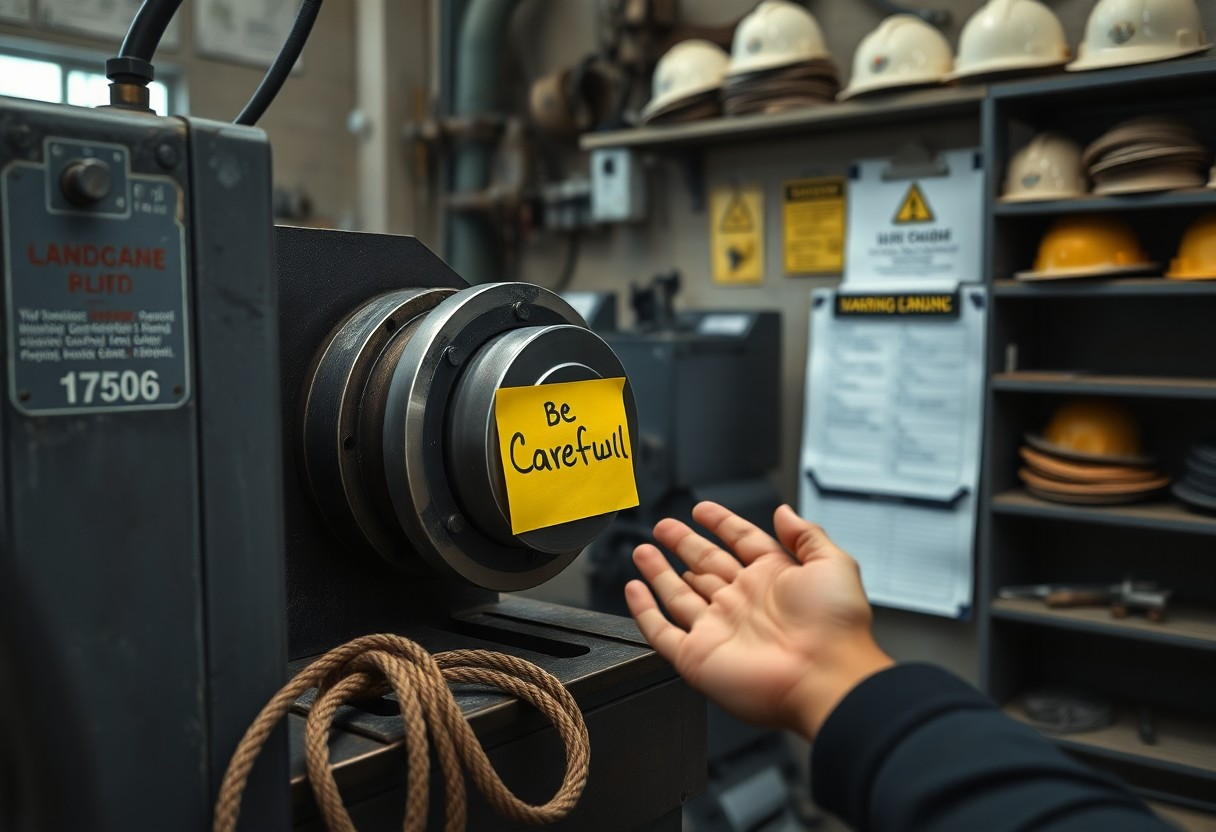
There’s a quiet danger when your organization’s primary safety instruction is a vague reminder to “be careful.” You hear it in hallways, on signs, and in pre-shift meetings-a phrase so overused it has lost all meaning. You’re expected to stay safe, yet given no tools, training, or systems to make that possible. When warnings replace safeguards, you’re left absorbing risk that should have been engineered out. This isn’t safety-it’s deflection.
Key Takeaways:
- A safety culture that relies on verbal warnings instead of structural safeguards often fails under pressure, as seen when a manufacturing plant repeated “be careful” after repeated minor burns, only to experience a severe injury when a worker bypassed a missing guard to meet production targets.
- Organizations that treat cautionary language as a complete risk mitigation strategy frequently overlook root causes, such as a logistics company that logged hundreds of “slip hazard” reminders without addressing uneven flooring, leading to a 40% rise in fall-related claims over two years.
- Human attention degrades predictably under repeated alerts, making warnings ineffective over time, a pattern documented in a hospital that reduced needlestick injuries by 75% only after replacing staff reminders with retractable syringes and safety-engineered IV ports.
The Poverty of Slogans
Repeating “be careful” transforms responsibility into ritual, not protection. You absorb the phrase so often it loses meaning, becoming background noise instead of guidance. A sign that says “stay safe” without instruction offers no defense against a moving forklift or a frayed wire. Safety reduced to empty language leaves you exposed, relying on hope rather than design.
Linguistic rot in the workplace
Terms like “eyes on task” or “mind on mission” sound authoritative but carry no operational weight. You hear them daily, yet they fail to define what correct action looks like. This erosion of precise language replaces clarity with vagueness, making it harder to identify real hazards or communicate risk accurately across teams.
The vacuum of actionable advice
When warnings contain no steps to follow, you’re left to interpret danger on your own. A supervisor shouting “watch out!” gives you split seconds to react, not time to prevent. The absence of specific, repeatable procedures turns safety into guesswork, especially under fatigue or pressure.
Consider a warehouse where workers handle heavy loads near conveyor junctions. Without diagrams, training on pinch points, or marked safe zones, verbal reminders are the only defense. You might avoid injury today, but tomorrow’s near-miss reveals the system’s flaw: it depends on your constant vigilance, not on controls that reduce risk regardless of attention. A well-placed guard rail or interlock switch would eliminate the hazard, but instead you get another poster saying “stay alert.” That gap-between what is said and what is done-is where accidents grow.
The Scapegoat in the Safety Vest
Wearing the vest doesn’t protect you from blame when systems fail. Safety gear becomes a symbol used to assign fault, not prevent harm. You’re expected to embody caution while working within designs that ignore human limits. The moment an incident occurs, attention shifts to your actions, not the decisions made far above you. Protection is performative, not physical.
Shifting the burden of risk
Management transfers liability by emphasizing individual compliance. You receive checklists, training videos, and stern reminders to “stay alert,” while outdated machinery operates without safeguards. A forklift with blind spots isn’t redesigned; instead, you’re instructed to “watch out.” The hazard stays, but the responsibility moves.
Protecting the institution through ambiguity
Vague directives like “use good judgment” replace clear procedures. You’re told to “be safe” without guidance on how to achieve it under time pressure. This language creates plausible deniability-if something goes wrong, officials claim you misinterpreted expectations. Ambiguity becomes a legal shield.
When policies rely on undefined standards, no one can prove negligence existed before an incident. A mid-sized SaaS firm faced scrutiny after an engineer collapsed from overwork, despite internal messages urging staff to “listen to your body.” The phrase sounded supportive but carried no enforceable limits on hours or workload. Wellness rhetoric masked structural exploitation.
Biological Limits and Corporate Denial
Human attention spans are biologically constrained, yet companies often act as if sustained vigilance is a choice. When fatigue, stress, or monotony inevitably set in, the response is rarely system redesign-it’s blame. Workers are told to “stay alert” while operating under conditions that make focus physically impossible over time. This denial of human limits persists even in high-risk environments where lives depend on reliable performance. 🚨 𝐒𝐭𝐚𝐲 𝐒𝐚𝐟𝐞 – 𝐃𝐨𝐧’𝐭 𝐆𝐞𝐭 𝐂𝐨𝐦𝐩𝐥𝐚𝐜𝐞𝐧𝐭 🚨 Safety … posts flood internal channels, mistaking repetition for protection.
The fallacy of constant focus
Expecting uninterrupted attention ignores how the brain naturally cycles through focus and rest. In practice, prolonged concentration leads to micro-lapses that can trigger catastrophic errors, especially during routine tasks. No amount of willpower can override this cognitive rhythm, yet safety protocols often assume otherwise, treating momentary distraction as misconduct rather than an expected human behavior.
Why human error is a design flaw
When workers make mistakes under predictable conditions, the failure lies not in the individual but in the system that required perfection to function. A design that depends on flawless human performance is inherently unsafe. Errors signal weak safeguards, not weak people, and treating them as personal failures prevents meaningful improvement.
Consider a control room operator who misses a critical alert after hours of low-stimulus monitoring. The error appears sudden, but the conditions for it were built into the shift schedule, interface layout, and alarm frequency. Systems that don’t account for attention drift, sensory overload, or decision fatigue are guaranteed to fail under real-world pressure. Blaming the operator ignores the fact that any person in that role would face the same risk. Safe design anticipates error and contains it, not punishes it after the fact.
The Architecture of False Security
Compliance documents grow thicker while incident rates stay flat, revealing a system that prioritizes appearance over protection. You sign forms acknowledging risks, yet the real hazards remain unaddressed, hidden behind layers of procedural theater. Paper trails accumulate, but physical safeguards do not, leaving you exposed despite the illusion of control.
Choosing ink over iron
Management approves budgets for binders, not barriers. You receive updated policy manuals instead of machine guards, safety quizzes instead of ventilation systems. The preference for documentation over durable fixes means your protection exists only on the page, not in the车间 or on the rig.
The theater of corporate protection
Annual safety videos play while broken interlocks remain unpatched. You wear pristine gear for photo ops, yet routine maintenance logs show ignored defects. These rituals signal concern, but the performance replaces prevention, making compliance a substitute for correction.
Safety audits often highlight training completion rates, not structural integrity. A mid-sized SaaS firm might celebrate 100% e-learning sign-offs while its warehouse staff bypass malfunctioning emergency stops. The emphasis on visible compliance-certificates, checklists, slogans-masks the absence of engineering rigor, allowing preventable failures to persist beneath polished reports.
The Numbing Effect of Constant Warnings
Overexposure to repeated safety slogans conditions you to tune them out, turning urgent messages into background noise. When “be careful” is issued as frequently as a weather report, its urgency erodes. You stop registering the risk behind the phrase, especially when no tangible action follows. A post by 🦺 “Safety First” Isn’t True and That’s the Problem 🦺 | Jorge G. illustrates how performative statements displace real safety thinking.
Sensory adaptation to empty phrases
Your brain treats repetitive warnings like ambient sound, filtering them subconsciously. Phrases such as “stay safe” or “watch your step” lose meaning when issued without context or follow-up. You hear the words but no longer process the hazard they describe, especially when leadership offers no corresponding changes in tools, training, or workflow. The danger lies in mistaking repetition for reinforcement.
The descent into habitual indifference
Each time a warning is issued without consequence or support, your trust in the system weakens. You begin to assume that if nothing bad happened yesterday, it won’t happen today. This pattern breeds a quiet resignation-compliance without engagement. The real risk emerges not from ignorance, but from normalized inattention.
Consider a mid-sized SaaS firm where daily stand-ups opened with a “safety reminder,” yet no incident reporting tool existed. Employees stopped acknowledging the prompt altogether. One developer ignored a server alert, assuming it was another routine nudge. The outage lasted six hours. Without structural follow-through, warnings become rituals, not safeguards. Your behavior adapts to the gap between what is said and what is done.
The Necessity of Concrete Engineering
Engineering out failure points is the only reliable way to prevent harm when human error is inevitable. Relying on vigilance ignores how fatigue, stress, and routine erode attention. A control panel that physically prevents incorrect sequence activation eliminates a class of mistakes no amount of training can. Systems must assume lapses will occur and still keep people safe.
Replacing platitudes with precision
“Be careful” offers no guidance under pressure. What you need is a checklist, a physical stop, or a mandatory confirmation step. A chemical plant operator won’t guess the correct valve sequence-they follow a color-coded, interlocked procedure that makes deviation impossible. Precision replaces guesswork with certainty.
Designing for the fallible mind
Your brain takes shortcuts, especially when tired or distracted. A well-designed system accounts for this by reducing cognitive load and blocking automatic errors. Anesthesia machines now include pin-index safety systems that prevent attaching the wrong gas cylinder, a direct response to a deadly cognitive slip.
When alarms sound every few minutes, the brain habituates and misses the critical one. Instead of more warnings, modern ICU monitors use smart prioritization and escalation protocols that route urgent alerts directly to mobile devices while suppressing non-critical noise. This reduces alarm fatigue and increases response accuracy during true emergencies, protecting both patients and staff.
Summing up
You rely on warnings because they are easy to issue and cheap to implement, but when “be careful” is the full extent of a safety strategy, you shift responsibility without reducing risk. A factory floor that posts “Mind the Gap” beside an uncovered conveyor trench hasn’t made anyone safer, only created the appearance of action. Real protection comes not from vigilance demanded but from hazards removed-machine guards installed, walkways elevated, processes redesigned. You accept verbal cautions as solutions at the expense of structural change, and in that compromise, injuries remain inevitable, predictable, and preventable.
FAQ
Q: Why do repeated verbal warnings like “be careful” fail to reduce workplace injuries over time?
A: Overreliance on verbal cautions creates an illusion of safety action without altering physical or procedural risks. A manufacturing plant may issue hundreds of “watch your step” reminders weekly, yet if wet floors remain unmarked and drainage is inadequate, the hazard persists unchanged. The human brain habituates to repeated warnings, especially when they are not paired with tangible interventions, making them less effective with each repetition. This psychological desensitization means workers eventually register the phrase as background noise rather than a meaningful signal.
Q: Can a company be cited for relying solely on verbal safety instructions?
A: Regulatory bodies like OSHA emphasize control hierarchies that prioritize engineering and administrative controls over verbal warnings. A construction firm that depends only on foremen shouting “be safe” near open excavations, without guardrails or fall protection systems, could face citations during inspections. In one enforcement case, a warehouse operator was fined after an employee fell from a loading dock, with investigators noting that no physical barriers existed despite daily verbal reminders. The absence of structural safeguards, not the lack of warnings, formed the basis of the violation.
Q: What is a real-world example of replacing “be careful” with an effective safety intervention?
A: A mid-sized SaaS firm with a server room accessible via a narrow staircase replaced its “mind the steps” signs with non-slip treads, improved overhead lighting, and handrails on both sides. Incident reports related to slips decreased to zero within six months. The change succeeded because it addressed biomechanical realities-foot traction, visibility, and balance-rather than expecting sustained attention to a phrase. The engineering controls functioned continuously, regardless of worker fatigue or distraction, unlike verbal cues that require active listening and compliance.
Leave a Reply