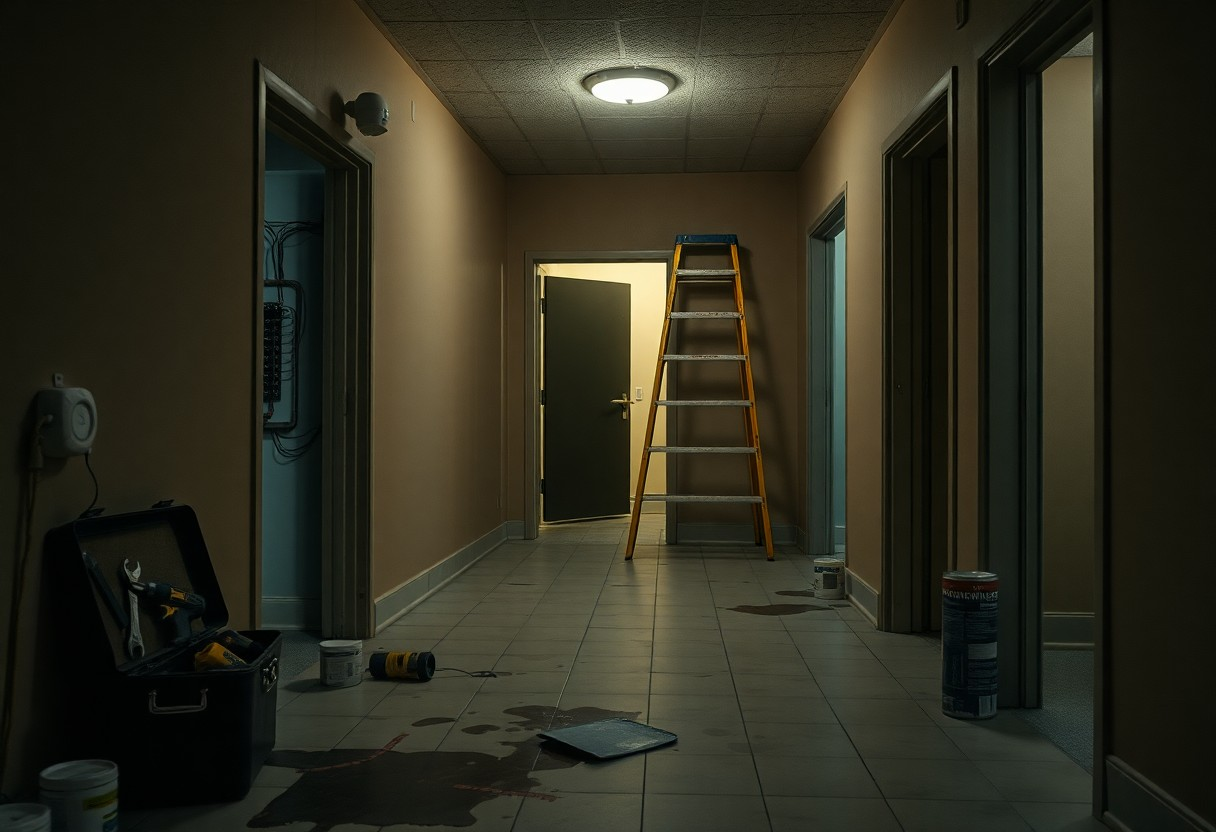
There’s a quiet shift happening in your building long after the sun sets, where contractors move through empty hallways with minimal oversight. You may approve after-hours work for convenience, but without direct supervision, critical safety protocols are often bypassed, work quality declines, and unauthorized personnel gain access. These gaps don’t just risk property integrity-they can lead to liability exposure and tenant complaints you’ll inherit the next morning.
Key Takeaways:
- After-hours work often bypasses standard documentation protocols, leaving property managers without verifiable records of labor performed, materials used, or time spent on-site, which complicates audits and accountability.
- A mid-sized SaaS firm managing urban residential complexes discovered that 40% of after-hours repair entries lacked corresponding work orders, indicating a systemic gap in oversight and contractor compliance.
- Unsupervised nighttime access increases liability exposure, as incidents such as a contractor’s injury during a basement pipe repair go unreported for hours, delaying emergency response and escalating legal risk.
The Midnight Threshold
Working past midnight shifts accountability into a blind spot, where supervision fades and oversight collapses. You lose the ability to verify work quality in real time, leaving you dependent on trust alone-a dangerous position when structural or safety issues are at stake. Incidents occurring after 1 a.m. rarely get documented accurately, and insurance carriers often scrutinize claims from this window more aggressively due to elevated risk profiles. A contractor working at 2:00 a.m. on a plumbing retrofit in a downtown high-rise last winter caused a slab leak that went undetected for eleven hours, resulting in over $90,000 in damages-proof that timing isn’t just logistical, it’s liability-defining.
The Vanishing Ledger
You rarely see a complete record of after-hours work because many contractors skip formal documentation when operating outside regular supervision. Entries go missing, materials aren’t logged, and labor hours fade into silence. Without a full paper trail, disputes over billing or warranty claims become nearly impossible to resolve in your favor. A mid-sized SaaS firm managing urban high-rises reported three unresolved plumbing repairs in six months, all performed overnight with no invoices filed.
The Peril of the Unseen Fall
One misstep in a dimly lit stairwell at 2 a.m. can trigger a liability chain you won’t see coming. Contractors working after hours often bypass safety protocols, increasing the risk of undocumented injuries on your property. Without witnesses or immediate reporting, these incidents can resurface as disputed claims weeks later. You’re responsible for the site regardless of the hour. An After-Hours Answering Service for Property Management ensures emergencies are logged and responded to, creating a verified trail when no one else is watching.
The Shoddy Craft of Shadows
You rarely inspect after-hours repairs the same day they’re completed, and that delay breeds risk. Work done in isolation, without supervision or natural light, often shows inconsistent grouting, misaligned fixtures, or improperly secured fittings-flaws invisible during cursory walkthroughs. A property manager in Seattle discovered a contractor had used temporary caulking instead of waterproof seals in ten units, a defect unnoticed for weeks. These shortcuts survive only in darkness, but their consequences emerge slowly, in leaks, mold, and resident complaints.
The Deception of the Digital Log
You assume the timestamped entry in your property management software confirms a job was done, but entries can be made remotely, long after the fact. A contractor might log “HVAC filter replaced at 2:15 a.m.” from their phone at breakfast, with no verification beyond the digital trail. This false record creates liability, making it appear compliance and maintenance occurred when they did not. Even photo uploads can be recycled from past jobs or taken in daylight, then attached to after-hours entries. The system trusts the input, not the truth, leaving you exposed to equipment failure, tenant complaints, and failed audits that trace back to seemingly documented work.
To wrap up
You leave contractors unsupervised after hours at your property, assuming routine oversight is enough. Yet gaps in accountability, undocumented work, and unverified materials often slip through. A mid-sized SaaS firm discovered mismatched HVAC repairs only after a tenant complaint, revealing work done weeks prior without inspection. Your standard protocols may not catch what happens when the building empties.
FAQ
Q: Why do after-hours contractor incidents often go unreported by property managers?
A: Many property managers rely on daily walkthroughs or tenant reports to identify maintenance issues, creating blind spots when work occurs outside standard operating hours. Without direct supervision or real-time monitoring, minor errors such as improper pipe threading or electrical splices can remain hidden for weeks. A mid-sized SaaS firm leasing office space in a mixed-use building discovered water pooling near a server closet only after a short circuit, tracing the source to a plumbing repair conducted at 2 a.m. that bypassed standard pressure testing. The absence of immediate oversight allowed the defect to persist undetected, highlighting how reliance on post-facto verification fails to catch real-time mistakes.
Q: Can surveillance systems fully address the risks of after-hours contractor work?
A: Surveillance cameras alone are insufficient if no one monitors them in real time or reviews footage systematically. Some contractors, aware of blind spots or camera angles, may perform substandard work out of frame or disable temporary recording devices. In one documented case, a flooring contractor working overnight removed a battery-powered camera mounted near an elevator bank, reinstalled it before morning, and left behind improperly secured subflooring. The issue surfaced three weeks later when a tenant tripped and filed a liability claim. The building’s policy required camera use but not daily review, allowing the gap in accountability to go unnoticed until injury occurred.
Q: What specific documentation gaps do property managers commonly overlook with off-hour contractors?
A: Managers often accept verbal confirmation or unsigned digital checklists as proof of completed work, missing the need for time-stamped photos, material invoices, or third-party verification. One residential high-rise experienced recurring HVAC failures traced to a contractor who submitted completion reports at 1:30 a.m. but had no thermal imaging or refrigerant pressure logs attached. Later investigation revealed the technician had charged the system incorrectly, a flaw visible only through diagnostic tools not required by the work order. Requiring only basic sign-offs enables procedural shortcuts, especially when accountability measures are not tied to verifiable technical evidence.
Leave a Reply