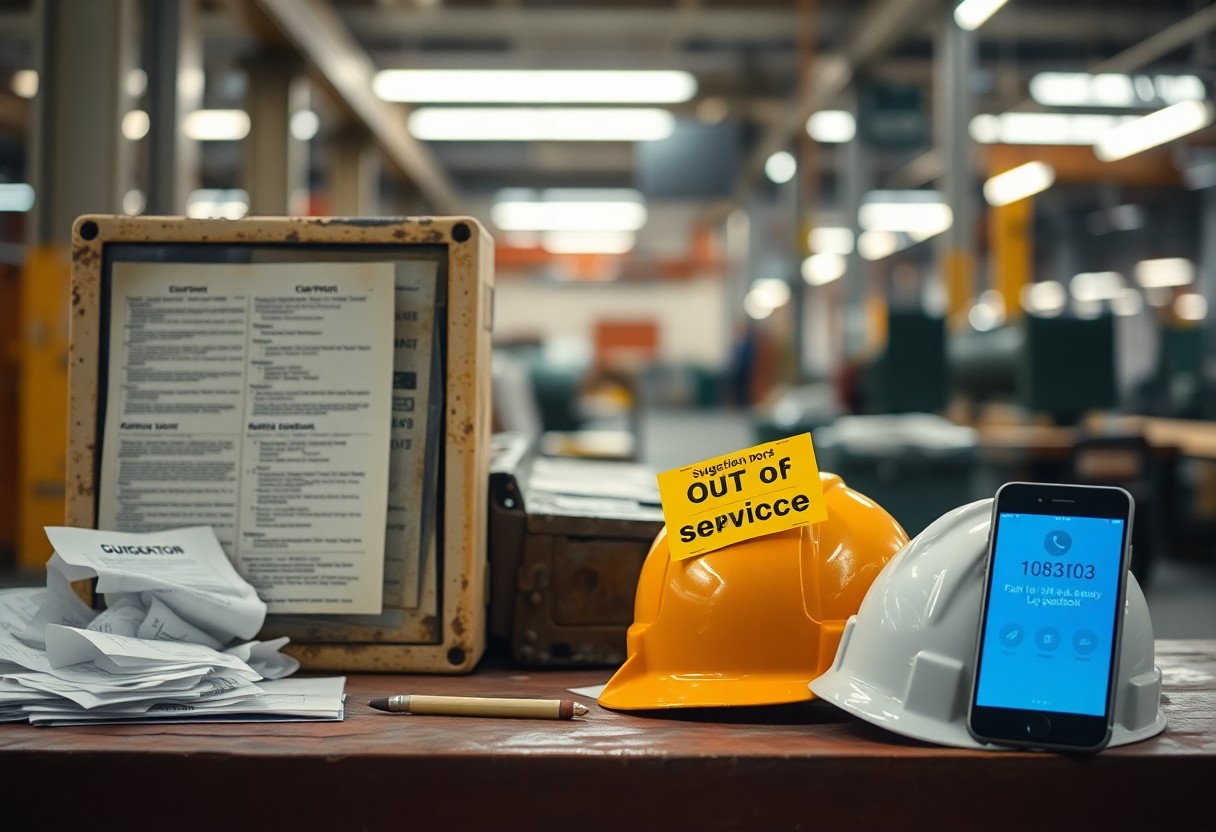
Many employees continue performing their duties even as trust in management erodes, but what they stop saying reveals far more than what they do. You may still receive incident reports or performance updates, yet critical insights about safety risks, ethical concerns, or operational flaws often vanish first. A mid-sized SaaS firm once discovered that after a leadership restructuring, internal reports on software bugs dropped by half, not because issues decreased, but because engineers no longer believed fixes would follow. Your system may be functioning on the surface while silent disengagement undermines its foundation.
Key Takeaways:
- Workers withhold safety concerns when trust in management erodes, as seen in a manufacturing plant where incident reports dropped by half despite a spike in near-misses, indicating suppressed communication rather than improved conditions.
- Employees stop documenting unethical behavior once they believe reporting leads to inaction or retaliation, such as in a mid-sized SaaS firm where whistleblower submissions fell to near zero after a manager was quietly reassigned following a misconduct investigation.
- Performance feedback becomes less candid when confidence in fairness declines, leading teams to avoid critical input-illustrated by a project team that failed to flag integration flaws until after launch, citing prior experiences of being ignored during planning reviews.
The Mechanics of Muted Tongues
What you once reported without hesitation-safety near-misses, workflow bottlenecks, ethical concerns-begins to stay locked in silence the moment trust erodes. Your withheld input isn’t disengagement; it’s a calculated response to perceived futility or risk. A technician at a mid-sized manufacturing plant stops logging minor equipment faults after repeated ignored reports, knowing escalation brings scrutiny, not solutions. This silence accumulates, transforming small omissions into systemic blind spots. When feedback loops break, problems grow in the dark.
The Invisible Peril of the Shop Floor
Small safety lapses go unreported when trust erodes, like a frayed cable guard left in place because speaking up feels pointless. You notice the hesitation in a veteran machinist who once flagged every anomaly, now silent as a misaligned press continues operation. One unreported vibration can cascade into catastrophic equipment failure, yet the real danger lies in the pattern, not the single act. A near-miss with a conveyor jam becomes routine, invisible through collective resignation. The silence itself becomes the hazard, spreading not through malice but through the slow erosion of belief that anyone in charge is listening.
The Quiet Decay of Office Morals
Small ethical lapses begin to go unreported when trust erodes-colleagues observe a manager inflating project metrics and say nothing, or ignore a peer taking credit for borrowed ideas. What was once flagged as a breach of integrity becomes normalized, not through sudden corruption but through silence. You stop calling out minor fraud in timesheets, overlook conflicts of interest in vendor selections, and accept manipulated performance reviews as routine. The system’s perceived unfairness teaches you that honesty carries more risk than complicity, and over time, the distinction between right and convenient blurs.
The Shadow of Petty Tyranny
When a supervisor retaliates over minor infractions or punishes honest mistakes with disproportionate consequences, you stop speaking up-even about hazards that could cause real harm. A pattern of intimidation over trivial issues signals that reporting anything unwelcome is risky. According to Why Do Many Employees Fail to Report Safety Concerns …, fear of being labeled difficult or disloyal silences workers long before serious dangers are ever mentioned. One technician at a manufacturing plant withheld a report about a frayed electrical cord after seeing a coworker written up for complaining about broken chairs. That kind of daily, low-level control erodes safety culture more insidiously than any single catastrophic failure.
The Friction of Broken Gears
When procedural inconsistencies become routine, you stop flagging errors because leadership dismisses them as isolated. A repeated software bug in payroll goes unreported after three ignored warnings, then resurfaces during an audit, triggering compliance scrutiny. Each omission accumulates, transforming minor oversights into systemic vulnerabilities. You adapt by minimizing input, conserving energy for tasks that won’t be overwritten or dismissed without explanation. This silence isn’t apathy-it’s self-preservation in a system that penalizes honesty.
The Mirage of Corporate Progress
You see the polished dashboards, the quarterly reports glowing with upward trends, and the leadership team celebrating milestones that feel hollow. What you don’t see are the near-misses quietly buried, the process shortcuts taken to hit targets, and the employee suggestions discarded because they’d slow the momentum. A mid-sized SaaS firm once rolled out an AI-driven performance tracker that inflated engagement metrics while actual retention plummeted. The system appeared to advance, but beneath the surface, trust eroded, and truth became optional.
Conclusion
You stop reporting safety lapses when leadership dismisses near-misses as exaggerations, as seen when a warehouse team withheld injury risks after their supervisor mocked a minor incident. You omit honest feedback in performance reviews once you realize candor leads to stalled promotions. You hide process inefficiencies when previous suggestions were ignored or punished. A mid-sized SaaS firm discovered a 40% drop in internal incident reports within six months of a management reshuffle that prioritized output over transparency. Your silence is not apathy-it is a calculated response to a system that no longer earns your trust.
FAQ
Q: What types of workplace incidents do employees stop reporting when trust in management erodes?
A: Workers begin withholding reports of safety hazards, ethical concerns, and interpersonal conflicts when they believe leadership ignores or retaliates against disclosures. A technician at a manufacturing plant may notice a frayed electrical cord on a critical machine but chooses not to file a report after seeing a colleague reprimanded for raising a similar issue last quarter. Employees in departments like customer service or logistics often stop logging minor compliance deviations, assuming corrective action is unlikely or that documentation will be used to assign blame rather than fix problems. This silence extends beyond physical risks to include instances of harassment or policy violations, particularly when prior reports led to inaction or social isolation for the whistleblower.
Q: How does declining confidence affect peer-to-peer reporting among team members?
A: When trust in formal channels breaks down, informal networks also weaken, leading to fewer warnings or tips shared between coworkers. A warehouse supervisor might overhear two employees discussing a recurring forklift malfunction but neither files an incident report, assuming the issue has already been dismissed by maintenance. In office environments, team members may stop alerting each other to data entry errors or scheduling conflicts, interpreting past managerial indifference as permission to disengage. A mid-sized SaaS firm observed a 40% drop in internal error flags over six months, coinciding with the departure of a trusted department head and the introduction of a rigid, top-down review process that discouraged open feedback.
Q: Can the reduction in reporting be reversed, and if so, what steps have proven effective?
A: Rebuilding reporting behavior requires consistent, visible changes in how disclosures are received and acted upon. One regional healthcare provider restored incident reporting rates by assigning neutral third-party reviewers to investigate concerns and publishing anonymized summaries of outcomes quarterly. Managers began holding monthly safety circles where employees could speak without supervisors present, and every reported issue received a written response within ten business days, regardless of whether a fix was implemented. Another example comes from a transportation company that replaced its anonymous tip line with face-to-face feedback sessions led by rotating employee representatives, resulting in a measurable increase in the reporting of maintenance oversights and scheduling risks within three months.