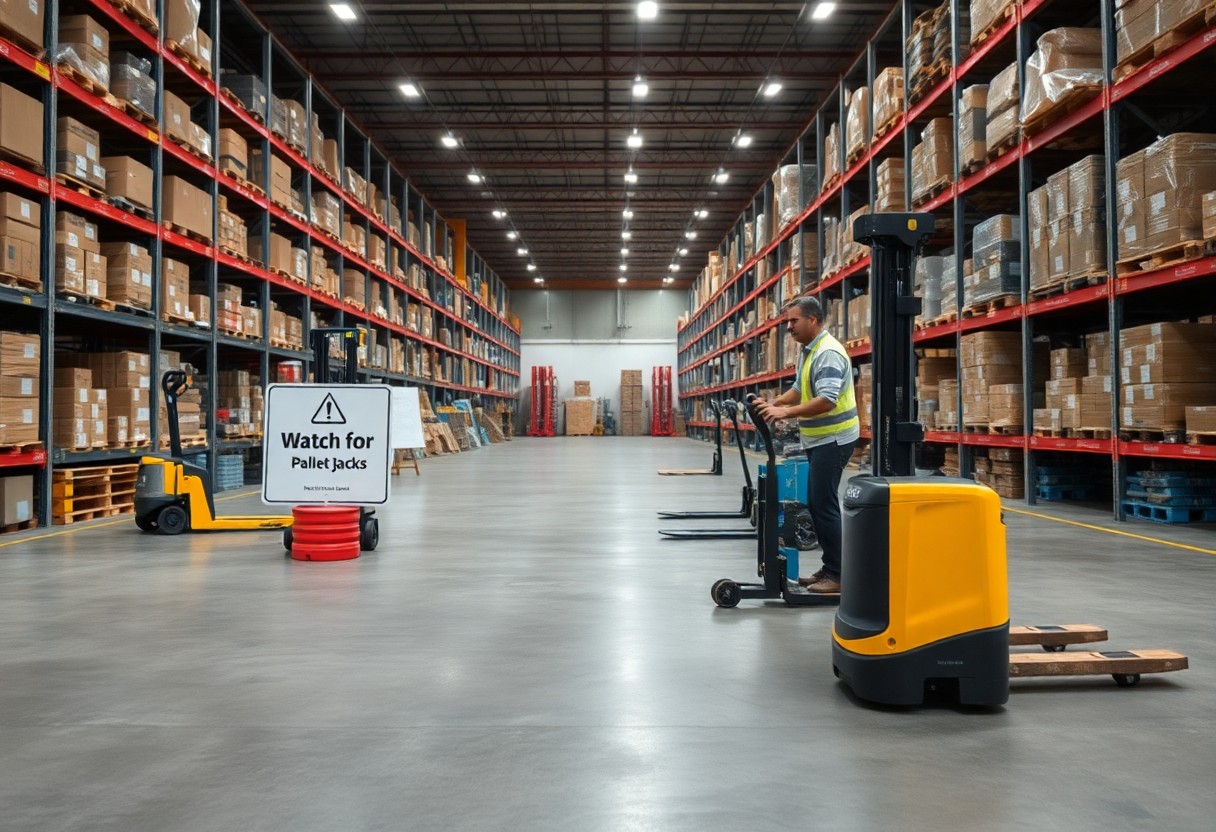
With the increasing reliance on pallet jacks in modern warehouses, it’s important for you to be aware of their potential hazards and benefits. These vital tools can significantly enhance your efficiency when moving goods, but they also pose risks if not operated properly. Understanding their features and implementing safety measures will help you maintain a safe working environment while maximizing productivity. Stay informed about best practices to ensure you and your team handle pallet jacks effectively and safely.
Key Takeaways:
- Pallet jacks are crucial for efficient movement of goods in warehouses.
- Regular maintenance of pallet jacks ensures safety and longevity of equipment.
- Training staff on proper usage enhances productivity and reduces workplace injuries.
Understanding Pallet Jacks
Types of Pallet Jacks
Pallet jacks come in various types, each designed to address specific handling needs in warehouse operations. The most common types include manual pallet jacks and electric pallet jacks. Manual pallet jacks, operated by hand, are ideal for smaller operations with lighter loads, while electric pallet jacks provide greater efficiency for heavier loads and larger operations. Additionally, you may encounter high-profile pallet jacks designed for lifted loads and walkie pallet jacks that allow you to control them while walking alongside.
| Type | Description |
| Manual | Operated by hand, suitable for lighter loads. |
| Electric | Powered models for heavier loads and increased efficiency. |
| High-Profile | Designed for higher lifting capabilities. |
| Walkie | Allows you to control while walking beside the unit. |
Key Features and Specifications
When identifying a pallet jack, consider its key features and specifications to ensure it meets the demands of your operations. Important specifications include the lifting capacity, which typically ranges from 2,000 to 5,500 pounds, alongside fork dimensions to accommodate various pallet sizes. Additionally, you should look for features that enhance usability, such as ergonomic handles, adjustable forks, and battery life for electric models. These specifications directly impact your efficiency and safety in moving materials within your facility.
- Lifting Capacity: Handles up to 5,500 pounds.
- Fork Dimensions: Accommodates standard and euro pallets.
- Ergonomic Handles: Reduces operator fatigue.
- Adjustable Forks: Versatility for different load types.
- Battery Life: Important for electric pallet jacks.
Knowing the key features of pallet jacks will enable you to select the right model for your operational needs, boosting productivity and maintaining safety. You may also want to consider the maintenance requirements for each type, ensuring long-term performance and reliability.
- Maintenance Requirements: Essential for longevity.
- Load Stability: Prevents accidents and drops.
- Durability: Materials used affect lifespan.
- Low Profile Design: Ideal for tight spaces.
- Safety Features: Includes brakes and alarms.
Knowing these additional features aids you in making an informed decision that enhances safety and efficiency in your warehouse. Prioritizing features that match your specific handling needs will empower you to operate more effectively and safely.
Safety Considerations
Operator Training Requirements
Ensuring that operators are well-trained is vital for the safe use of pallet jacks. You should implement a comprehensive training program that covers safe handling techniques, proper loading practices, and the ergonomic aspects of using pallet jacks. This includes instruction on how to operate the equipment in various environments, especially where space is limited or when maneuvering around obstacles. Encourage operators to complete a certification process that includes both written and practical assessments to ensure comprehension and competency.
Potential Hazards and Mitigation
While pallet jacks are designed for ease of use, they present several hazards if not managed correctly. Common issues include overloading, which can lead to equipment failure, and inadequate maneuvering in tight spaces, resulting in accidents. To mitigate such risks, adhere strictly to the manufacturer’s load capacity recommendations, and regularly inspect equipment for wear and tear, particularly the wheels and lifting mechanisms. Additionally, establishing clear pathways and signage in your warehouse can help guide operators and reduce the likelihood of collisions.
Utilizing technology can significantly enhance safety measures as well. For instance, implementing routine audits of loading procedures and leveraging data from equipment sensors can help monitor operator behaviors. Advanced pallet jacks equipped with safety features such as automatic braking systems can reduce the risk of accidents. By promoting a culture of safety, you not only protect your employees but also maintain operational efficiency in the warehouse.
Maintenance and Care
Routine Maintenance Checks
To ensure optimal performance and longevity of your pallet jack, you must conduct routine maintenance checks regularly. Inspect the wheels and casters for wear and tear, as damaged wheels can hinder mobility and pose safety risks. Checking the hydraulic fluid levels is equally important; if levels are low, it can lead to malfunction and potential operational hazards. Aim to perform these checks daily before putting your equipment to use.
Additionally, examine the forks for any signs of damage or bending. Forks should remain straight and not exceed weight limits to prevent accidents. Lubricate moving parts as needed to reduce friction, contributing to smoother operation and extending the life of your pallet jack. This proactive approach to maintenance can significantly reduce costly repairs in the long run.
Troubleshooting Common Issues
Even with diligent maintenance, issues can arise with pallet jacks. If you encounter problems, such as the jack not lifting, check for hydraulic fluid leaks or air trapped in the hydraulic system. A quick inspection can sometimes reveal simple solutions, such as securing loose components or replacing worn seals. Being aware of these potential issues empowers you to resolve them swiftly, minimizing downtime.
Should you notice the wheels are not turning smoothly, inspect the casters for blockages or debris. Cleaning the wheels might resolve the issue, but be vigilant for signs of excessive wear, which indicates it may be time to replace them. Having a troubleshooting checklist on hand can save you time and keep your operations running efficiently.
Choosing the Right Pallet Jack
Assessing Warehouse Needs
Evaluating your warehouse’s specific requirements is imperative when selecting the right pallet jack. Consider the weight and size of the loads you typically handle. For instance, if you’re moving heavier items frequently, opt for a pallet jack with higher weight capacity and durable construction. Various models like the Lx21 W Forks Duty Manual Pallet Jacks Trucks are designed to safely lift and transport heavier goods. Assess your floor space as well; a compact jack might be necessary for narrow aisles, while wider options can accommodate larger loads more efficiently.
Budget Considerations
Setting a budget is imperative to narrow down your choices and ensure you acquire a pallet jack that meets your operational needs without overspending. Pallet jacks come in a variety of price ranges, influenced by features like load capacity, materials, and brand reputation. While it might be tempting to choose the cheapest option, consider the potential long-term costs associated with maintenance and lower durability. A well-made pallet jack will often save you money over time by reducing maintenance needs and increasing efficiency.
For smaller warehouses, investing in a mid-range pallet jack could provide the balance between performance and cost. However, if you manage a high-volume operation, the initial higher expense of more robust jacks can result in better returns through improved productivity. Don’t forget to factor in any additional expenses such as training or accessories that may enhance the functionality of your pallet jack.
Innovations in Pallet Jack Technology
Electric vs. Manual Models
The choice between electric and manual pallet jacks often comes down to the specific needs of your operation. Electric pallet jacks offer unmatched efficiency, enabling you to move heavier loads with less physical effort. For instance, models equipped with lithium-ion batteries can lift loads up to 5,500 pounds, significantly reducing the time spent on repetitive tasks. In high-volume settings, this can translate into enhanced productivity and lowered labor costs.
Conversely, manual pallet jacks are still widely used for their simplicity and lower initial investment. They are particularly beneficial in smaller warehouses where space is at a premium. You might find that they provide sufficient functionality for moving lighter loads without the need for charging or maintenance associated with electric models. However, realize that manual models require more physical exertion, which could lead to fatigue over time, especially in settings where goods are frequently moved.
Advancements in Ergonomics
Recent advancements in pallet jack design have focused significantly on ergonomics, which can have a profound impact on your team’s efficiency and safety. Modern electric pallet jacks now feature adjustable handlebars, allowing users to find the most comfortable working position. Additionally, they often come with advanced controls that reduce strain on the wrist and improve maneuverability in tight aisles. The integration of smart technology, such as load weight indicators, prevents overloading, which can not only enhance safety but also prolong equipment life.
Additionally, incorporating cushioned grips and enhanced stability features has shown to decrease instances of workplace injuries. A study revealed that ergonomic improvements in warehouse equipment led to a 40% reduction in musculoskeletal injuries among workers. By investing in this technology, you are not only enhancing safety but also fostering a more productive work environment.
Regulatory Compliance
OSHA Standards for Warehouse Equipment
Compliance with OSHA standards is vital for the safe operation of pallet jacks in your warehouse. This includes ensuring that your equipment meets minimum safety requirements regarding design, maintenance, and operation. For instance, pallet jacks should not only be properly maintained but also equipped with necessary safety features, such as adequate braking systems and ergonomically designed handles. Violations can lead to accidents and significant fines, emphasizing the importance of adhering to these regulations.
Additionally, you must provide your operators with the necessary training on using pallet jacks safely. OSHA mandates that employees must be trained on various aspects, including load handling, maneuvering, and potential hazards associated with pallet jacks. Ongoing refresher training is recommended to ensure that your team stays updated on safety practices and regulations, thus minimizing liability and enhancing workplace safety.
Industry Best Practices
Implementing industry best practices for pallet jack use can dramatically reduce accidents and enhance productivity. For example, optimize your layout to ensure adequate space for maneuvering pallet jacks, allowing operators to move safely without navigating tight areas. Moreover, using designated paths for pallet jacks can lower the risk of collisions with other equipment or personnel, enhancing overall workflow.
Regular audits of your warehouse operations to identify potential hazards can further strengthen your safety protocols. Employees should be encouraged to report unsafe conditions immediately, and a culture of safety should be cultivated. Utilizing checklists for daily pre-operational inspections of pallet jacks helps in maintaining equipment integrity and compliance, ensuring that problems are addressed before they lead to injuries.
To Wrap Up
Now that you have a better understanding of warehouse equipment, especially the importance of monitoring pallet jacks, you can take proactive steps to ensure safety and efficiency in your operations. By staying aware of the functionality and condition of your pallet jacks, you can prevent accidents and downtime that could disrupt your workflow. Regular inspections and maintenance are key to maximizing the lifespan of your equipment and ensuring smooth logistics.
Incorporating best practices for pallet jack use will improve your productivity while maintaining a safe working environment. Make it a priority to train your team on proper handling techniques and to establish protocols for reporting issues. By prioritizing these strategies, you create a more effective warehouse operation that ultimately contributes to your overall success.
FAQ
Q: What are pallet jacks and how do they function?
A: Pallet jacks are manual or electric devices used to lift and move pallets within a warehouse. They have forks that slide into the pallet and hydraulic systems that lift the load off the ground, allowing for easy transportation.
Q: What safety precautions should be taken when using pallet jacks?
A: When using pallet jacks, ensure that the load is evenly distributed and within the weight capacity. Always maintain a clear path and be mindful of surroundings to avoid collisions. Wear appropriate footwear and use proper lifting techniques to minimize injury.
Q: How can I determine if a pallet jack is in good working condition?
A: To ensure a pallet jack is functioning properly, check for smooth operation by lifting and lowering loads, inspect wheels for wear, and examine the hydraulic system for leaks. Regular maintenance and servicing are recommended for optimal performance.
Leave a Reply