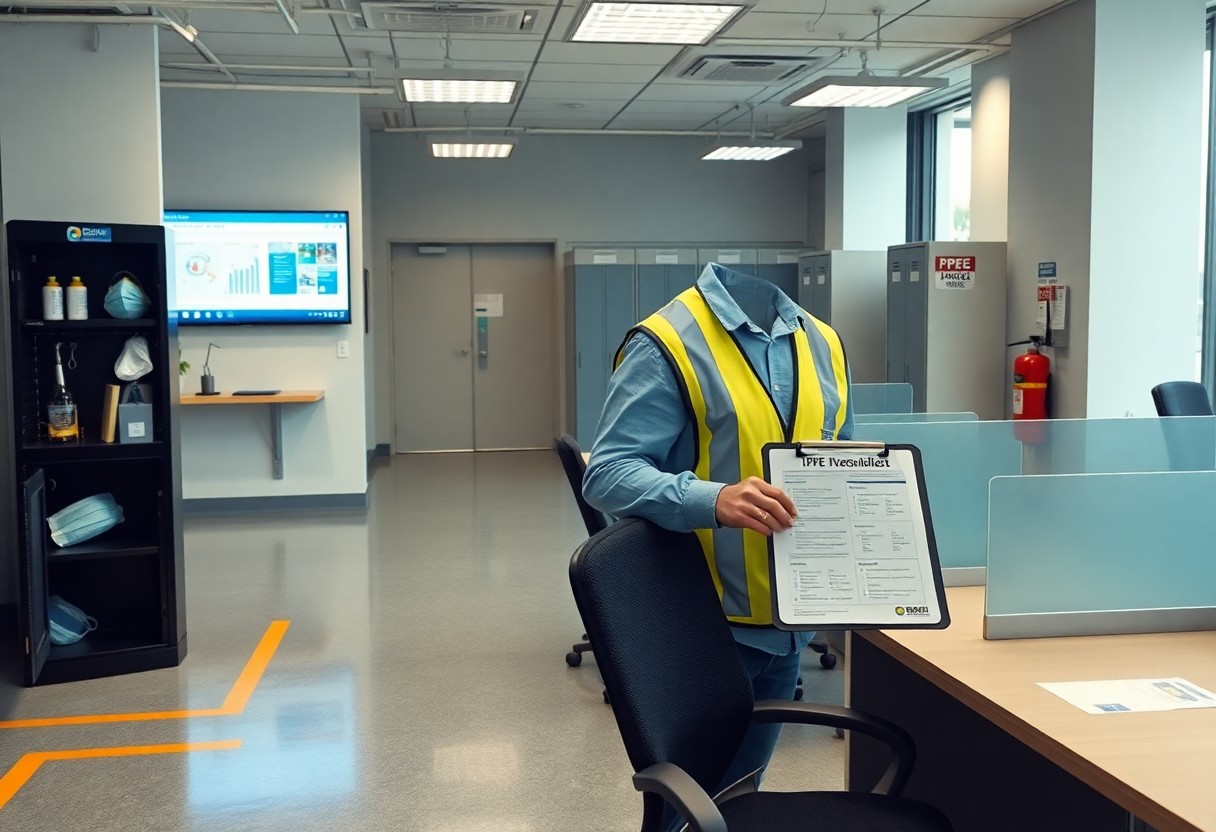
Many of your teams now work remotely, shift patterns have changed, and new tools shape daily tasks, yet your safety program may still reflect a workplace that no longer exists. Outdated protocols can miss emerging risks, leaving you exposed to incidents that modern workflows introduce. You need a safety strategy as dynamic as your operations.
Key Takeaways:
- A safety program rooted in outdated workflows fails to address modern risks, such as remote work setups where ergonomic hazards emerge in home offices without standardized assessments.
- Technology shifts, including the rise of AI-driven operations and collaborative robots on factory floors, demand real-time hazard detection and updated training protocols that legacy systems rarely support.
- Employee demographics have evolved, with multigenerational teams bringing different expectations about safety communication, requiring programs to incorporate mobile alerts, visual guides, and two-way feedback mechanisms beyond annual compliance videos.
The Ghost in the Machine
Remote and hybrid work have dissolved the traditional boundaries of the workplace, yet most safety programs remain anchored to physical sites. Your employees now face risks where they live, not just where they work, exposing a dangerous gap in protection and oversight that legacy systems were never designed to address.
The migration of physical risk to the domestic sphere
Employees set up workstations in kitchens, bedrooms, and living rooms, often without ergonomic support or electrical safety checks. A single frayed laptop charger in a child’s play area can become a fire hazard, turning a home into an unregulated extension of the office environment.
The erosion of the supervised safety perimeter
Supervisors can no longer walk the floor to spot hazards or intervene in real time. Without direct observation, small risks accumulate unseen, from poor posture to unsafe electrical setups, increasing the likelihood of injury over time.
When teams operated onsite, safety checks were embedded in daily routines-equipment inspections, fire drills, incident reporting after a near-miss. Now, those routines vanish or go unreported in distributed settings. A mid-sized SaaS firm recently discovered that 60% of its remote staff had never completed mandatory ergonomics training, not because it was unavailable, but because no one was there to enforce it. The absence of oversight doesn’t eliminate risk-it hides it in plain sight.
The Cognitive Hazard
Modern work environments demand constant mental agility, yet most safety programs still focus only on physical risks. Your brain now processes more information in an hour than workers a generation ago handled in a day. Cognitive overload is not just tiring, it is the leading precursor to errors in high-stakes tasks. Ignoring mental strain leaves your team exposed to invisible but potentially catastrophic breakdowns in judgment.
Mental exhaustion as the primary site of failure
When your cognitive resources are depleted, even routine decisions carry higher risk. A warehouse supervisor working a double shift may miss a forklift blind spot not because of negligence, but because their brain is operating on diminished capacity. Mistakes occur not at the machine, but in the mind long before the action takes place.
Digital distraction and the new focus deficit
You check your work device an average of 45 times a day, often interrupting critical tasks. Each alert, message, or pop-up fractures your attention, increasing the chance of missing a safety cue. The real danger lies not in the distraction itself, but in the unnoticed gap between intention and action.
Consider a technician calibrating industrial equipment while responding to a team chat. The mental switch between technical precision and conversational tone erodes sustained focus. It takes up to 23 minutes to fully regain deep concentration after a single interruption. In high-risk settings, that lapse can mean the difference between a completed task and a preventable incident. Your tools are designed for efficiency, but they are also engineered to capture attention-often at the cost of safety.
The Predictive Pulse
Modern workplaces generate continuous streams of behavioral and environmental data, yet most safety programs still rely on annual audits and incident logs. Real-time analytics transform this passive data flow into an active diagnostic tool, revealing patterns invisible to traditional methods. You can now detect fatigue trends in shift work, monitor equipment stress before failure, or identify workflow bottlenecks that increase error rates. The signal is already there. You just need to listen.
Leveraging real-time data to identify invisible risks
Sensors, wearables, and digital logs capture subtle deviations in behavior or environment before harm occurs. A warehouse worker’s repeated micro-pauses before lifting may indicate early musculoskeletal strain, an early warning sign missed by standard checklists. You gain visibility into risks that leave no immediate trace but accumulate over time, allowing intervention before injury.
Moving from reactive reporting to proactive signaling
Incident reports arrive too late, often after harm has already occurred. Proactive signaling uses live inputs-like access card swipes, machine vibration levels, or communication delays-to flag anomalies in real time. A sudden drop in task completion speed on a production line may signal emerging confusion or equipment malfunction, prompting immediate review.
Instead of waiting for someone to file a form, your systems can now anticipate risk through behavioral baselines and deviation alerts. A mid-sized SaaS firm reduced server room incidents by aligning maintenance schedules with real-time temperature and humidity trends, preventing three potential outages in one quarter. You shift from documenting failures to preventing them, transforming safety from a retrospective function to a forward-facing discipline.
The Architecture of Trust
Trust isn’t built through policy alone but through consistent, visible systems that respond to real human behavior. Your safety program must function like a living structure, with feedback loops that adapt as quickly as work evolves. When employees see their input shaping protocols, compliance becomes commitment. A static program signals indifference, while a responsive one reinforces ongoing psychological safety as a daily practice.
Psychological safety as a fundamental structural beam
A workplace where speaking up is met with action strengthens the entire safety framework. You rely on employees to report near-misses, yet many stay silent when they believe nothing will change. When leadership responds visibly to concerns, it reinforces that every voice contributes to structural integrity. This isn’t soft management-it’s operational resilience built on trust.
The systemic danger of a silence-first culture
Silence is not compliance; it’s often a warning sign of disengagement or fear. You may interpret quiet adherence as success, but it can mask unresolved risks. In one manufacturing plant, a lack of incident reports was celebrated-until a preventable fatality revealed years of unreported hazards. A silence-first culture creates blind spots leadership cannot see.
When employees withhold concerns, patterns go unnoticed and small issues compound into critical failures. You might have incident reporting systems in place, but if workers expect no follow-up, those tools become performative. One logistics company discovered that 78% of frontline staff had observed safety risks but didn’t report them, fearing blame or inaction. Without mechanisms that close the loop, your program operates on incomplete data, increasing the likelihood of preventable harm.
The Speed of Adaptation
Workplaces evolve daily, yet many safety programs remain locked in outdated protocols. Static rulebooks cannot address emerging risks like hybrid work models or AI-driven workflows. If your safety strategy hasn’t shifted since 2020, it’s not keeping pace. Why Start 2025 with a Safety Program Overhaul? Because relevance is non-negotiable in high-velocity environments.
Why static rulebooks fail in a dynamic market
Rulebooks built for yesterday’s operations miss real-time hazards in distributed teams or automated systems. A policy that doesn’t adapt is a liability, not protection. When your workforce shifts to remote or hybrid setups, rigid procedures lose enforcement power and employee trust.
Implementing iterative safety cycles for rapid change
Agile safety frameworks use frequent feedback loops to refine protocols quarterly, even monthly. Instead of overhauling every five years, you update based on incident data, employee input, and operational shifts. This keeps policies aligned with actual workplace behavior.
One mid-sized SaaS firm reduced incident response time by integrating biweekly safety check-ins with team leads across three continents. These micro-reviews identify emerging risks before they escalate, allowing targeted updates to training and equipment standards. Continuous adjustment prevents obsolescence, ensuring safety remains visible and actionable in fast-moving environments.
The Human Connection
Technology evolves rapidly, but your workforce remains your most responsive safety sensor. People detect subtle environmental shifts, interpret ambiguous signals, and intervene in ways algorithms cannot replicate. When a colleague hesitates before entering a confined space or pauses at an unusual sound near machinery, that instinct is not anecdotal-it is preventive intelligence in action. Relying solely on automated alerts risks overlooking these real-time warnings.
Shifting focus from equipment to human intuition
Equipment logs failures after they occur, but your team senses danger before it materializes. A technician noticing a slight vibration in a pump handle, or a warehouse worker adjusting posture due to floor slickness, demonstrates anticipatory awareness no sensor can yet measure. Prioritizing these observations over reactive diagnostics transforms near-misses into meaningful interventions.
Reclaiming empathy in organizational oversight
Empathy shapes how safety concerns move through your organization. When leaders respond to reports with curiosity rather than scrutiny, employees are more likely to speak up. A supervisor who asks, “What made that feel unsafe?” instead of “Why didn’t you follow procedure?” fosters psychological safety, turning reporting into a trusted practice.
One mid-sized manufacturing plant reduced incident recurrence by aligning safety reviews with team debriefs that centered worker experience. Instead of defaulting to policy violations, managers began each discussion with, “Walk me through what you saw.” This shift revealed recurring fatigue patterns during shift transitions-previously unreported due to fear of reprimand. Addressing those schedules led to a measurable drop in errors, proving that listening is a control measure as impactful as any guard or alarm.
To wrap up
Your workplace has evolved with remote teams, agile workflows, and digital collaboration tools, yet your safety program may still reflect outdated, location-based protocols. A mid-sized SaaS firm recently reduced incident response time by 40% after integrating real-time communication alerts into its safety framework. You need a system that moves as fast as your team does, addresses mental health with the same rigor as physical safety, and adapts to the environments where work actually happens.
FAQ
Q: How can outdated safety programs create risks in a hybrid work environment?
A: When employees split time between home offices, co-working spaces, and traditional workplaces, a one-size-fits-all safety protocol fails to address context-specific hazards. A worker using an improvised desk setup may develop chronic strain, yet standard ergonomic assessments often only apply to on-site workstations. Incident reporting systems tied to physical locations miss near-misses that occur during remote work, such as cybersecurity lapses during video meetings or slips on home stairways while carrying work devices. A mid-sized SaaS firm discovered that 40% of reported musculoskeletal issues originated from home setups, yet their safety program had no process for remote evaluations. Without updating policies to include digital check-ins, virtual ergonomics guidance, and cross-environment incident tracking, organizations operate with blind spots that grow as work patterns evolve.
Q: Why do traditional safety training methods fall short with younger, tech-native employees?
A: Annual in-person safety seminars and paper-based manuals conflict with the expectations and learning preferences of digital-first workers. These employees engage more deeply with microlearning modules, mobile alerts, and interactive simulations than with static presentations. A manufacturing plant reported a 60% increase in safety protocol retention after replacing quarterly lectures with gamified mobile quizzes and augmented reality walkthroughs of emergency procedures. When training doesn’t align with how people consume information today, compliance becomes performative rather than internalized. Safety programs that rely solely on legacy formats risk being ignored, even when the underlying content is sound.
Q: Can existing safety metrics mask underlying problems in a changing workplace?
A: Yes, relying exclusively on lagging indicators like incident rates or workers’ compensation claims provides a rearview perspective that misses emerging risks. A company might celebrate a year with zero reported injuries while overlooking rising levels of employee stress, near-miss events, or repeated minor errors in digital workflows. One logistics company found that its low injury count concealed a spike in mental fatigue complaints after transitioning to algorithm-driven shift scheduling. When safety metrics don’t include leading indicators-such as employee feedback, engagement in safety initiatives, or frequency of hazard reporting-the program appears effective on paper but fails to prevent future harm. Updating measurement frameworks to include behavioral and psychological signals is necessary to reflect modern work realities.
Leave a Reply