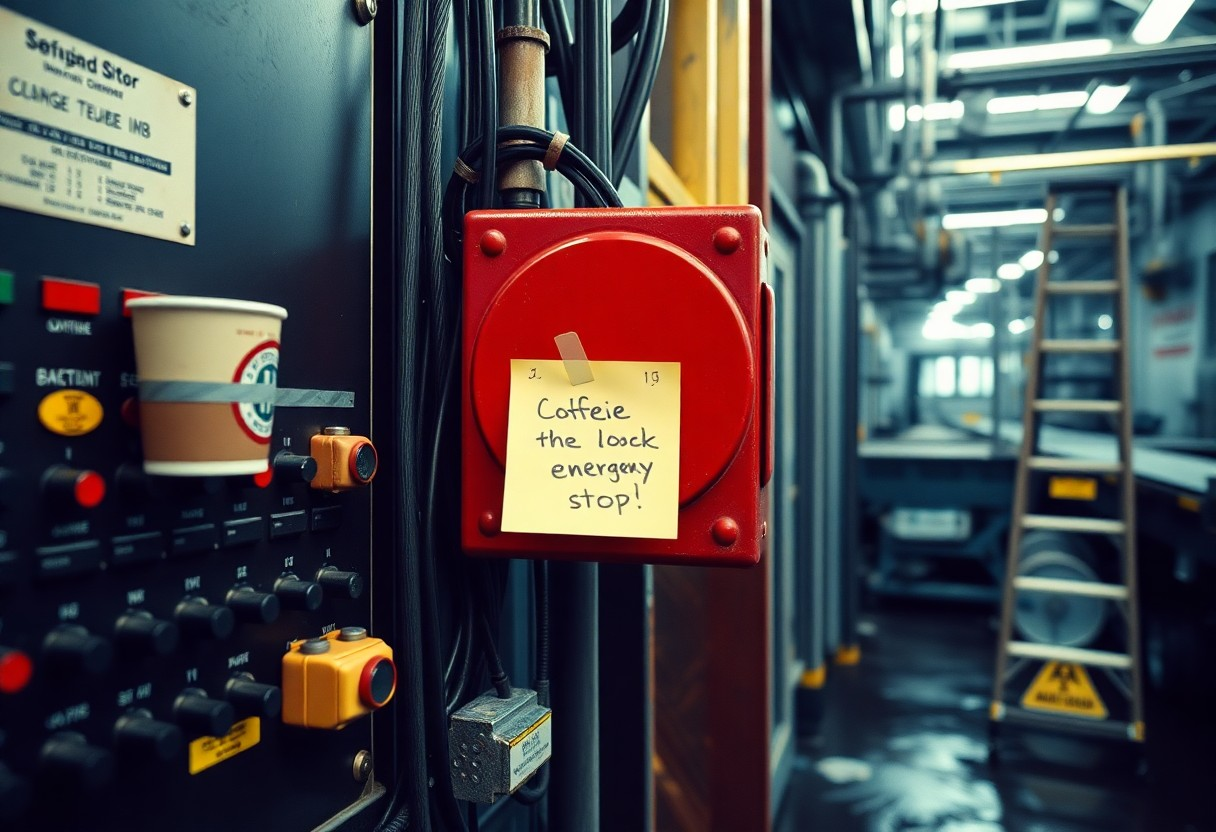
You’ve seen the forms, signed the waivers, and sat through the briefings, but you know the real warnings happen in hushed tones near the break room or a sideways comment before a shift. What gets said in those moments-about faulty equipment, unreported near-misses, or shortcuts that feel unavoidable-rarely makes it onto official checklists, yet it shapes daily survival on the job.
Key Takeaways:
- Workers often share hazard warnings through informal channels like break-room conversations or text messages, bypassing official reporting systems due to fear of retaliation or bureaucratic delays, as seen in a 2022 incident at a Midwest manufacturing plant where employees used a private group chat to alert each other about a malfunctioning press.
- Unreported near-misses frequently contain detailed observations about equipment behavior or procedural flaws that formal forms lack, such as a technician noting that a valve consistently sticks when temperatures drop below freezing, a detail omitted from incident logs but repeated in hallway discussions.
- Peer-to-peer safety advice tends to include context-specific workarounds, like taping a flashlight to a guard rail for better visibility during night shifts, revealing gaps in lighting design that standardized audits failed to identify.
The Language of the Shop Floor
On the shop floor, you learn to listen beyond the written report. Workers trade subtle cues-glances before speaking, coded phrases like “it’s running hot again” or “the guard’s been off since Tuesday”-that carry urgent warnings never captured in incident logs. A raised eyebrow at a machine’s noise, a muttered “don’t use bay three after lunch,” these are the real-time alerts passed hand to hand, where experience speaks louder than procedure. You know the official form asks for facts, but survival depends on the unrecorded truth whispered between shifts.
The Ghost in the Machine
Someone always knows the control panel resets when the line overheats, though no manual mentions it. You learn this after a near-miss, whispered during a shift change. These unrecorded failures-recurring sensor glitches, temporary fixes, workarounds for faulty automation-are passed like warnings. The machine behaves unpredictably under load, and the real troubleshooting guide lives in memory, not in logs. A technician at a mid-sized SaaS firm once bypassed a locked subsystem using a sequence known only to three people. That knowledge vanished when they retired.
The Social Cost of Honesty
Admitting a near-miss or procedural lapse can label you as a problem, not a protector, especially when others rely on unspoken rules to stay efficient. You might report the truth on paper, but in the break room, silence becomes solidarity. Speaking up risks isolation, sideways glances, or being passed over for shifts-consequences rarely captured in incident logs. What you keep quiet about isn’t ignorance, it’s survival. For deeper insight, read Things You Should Never Say to Your Employees, where tone and trust collide in ways safety forms never reveal.
Shortcuts as a Necessity
When equipment calibration takes 20 minutes but the line expects output every five, you bypass the lockout-just this once. Supervisors don’t ask, so you don’t tell, because stopping means falling behind, and falling behind means scrutiny. That unreported bypass becomes routine, passed quietly between shifts like a survival tactic. A technician at a Midwest packaging plant once rigged a foot pedal to skip a sensor-three near-misses followed before anyone documented it. You know the rule, but you also know the pace.
The Gap Between Desk and Danger
What you report on a form rarely captures what you feel at the machine. The checklist stops at procedural compliance, but the truth lives in the split-second hesitation before restarting a jammed conveyor, the unspoken glance exchanged when a guard is loose, the quiet adjustment made without logging a work order. A supervisor in an office may never see the oil slick that reappears every third shift, but the night crew knows exactly where to step. These are not oversights-they are survival adaptations refined through repetition and risk.
Final Words
You hear the unspoken rules every shift: the coworker who rolls their eyes at the checklist, the veteran who quietly adjusts a guard because “it’s always in the way,” the whispered warning about which machine “acts up” when the supervisor’s not around. These moments form a parallel safety system built on trust, experience, and sometimes fear, one that never appears in incident reports but shapes every decision on the floor. A mid-sized SaaS firm may log every server outage, but in manufacturing, the real data often lives in hallway conversations and knowing glances. Your team’s survival depends as much on what they share quietly as on what’s filed formally.
FAQ
Q: Why do employees often avoid reporting near-misses even when encouraged to do so?
A: Workers frequently withhold near-miss reports because past incidents led to disciplinary action or scrutiny, despite official policies promising no retaliation. A technician at a mid-sized manufacturing plant described how a coworker was reassigned after reporting a malfunctioning guard, sending an unspoken message that speaking up carries risk. Others note that paperwork often ignores root causes, instead focusing on individual error, which discourages honest input. When forms fail to reflect real conditions, employees stop investing time in filling them out.
Q: What kind of safety concerns are most commonly shared verbally but never documented?
A: Equipment workarounds top the list-such as bypassing a jam-prone safety interlock on a packaging machine because it slows production by 30%. Workers pass these fixes from shift to shift through informal briefings, often calling them ‘tricks of the trade.’ One warehouse team routinely disables a sensor on a conveyor to prevent constant shutdowns, a practice known to supervisors but never recorded. These undocumented adjustments persist because reporting them would require halting operations for repairs that management delays due to cost or downtime.
Q: How do team dynamics influence what gets reported versus what stays hidden?
A: In tight-knit crews, protecting the group often outweighs compliance. A welder at a fabrication yard admitted his team covers for each other when skipping lockout-tagout steps during tight deadlines, knowing a formal report could trigger investigations that disrupt workflow. New hires learn quickly: those who file forms without first discussing concerns with peers are seen as outsiders. Trust within the team becomes a filter-only issues that don’t risk blame or production delays make it onto official documents.
Leave a Reply