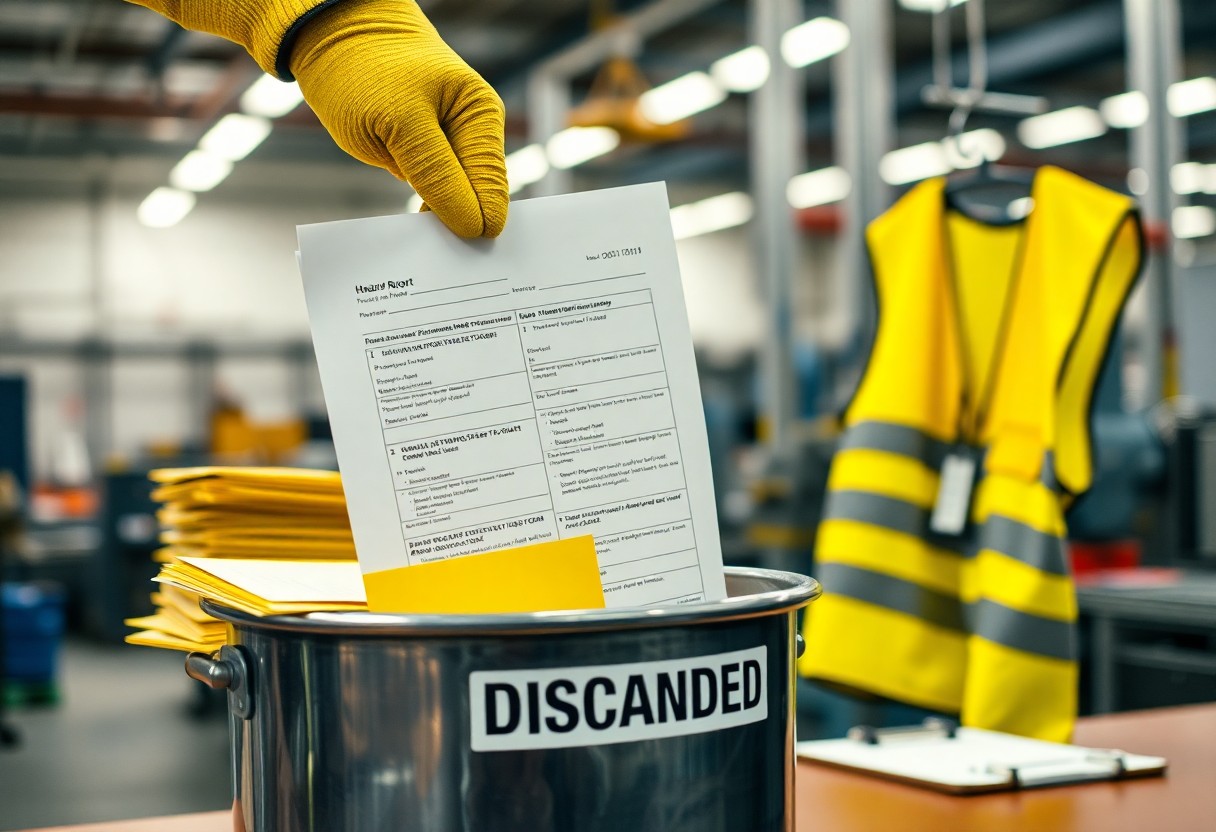
With your first near-miss report met with silence, you begin to question whether speaking up matters at all. When follow-up vanishes and actions stall, the real reason workers stop reporting hazards isn’t apathy-it’s learned futility. Each unacknowledged submission reinforces a quiet conclusion: raising concerns changes nothing, and continued reporting only increases personal risk without benefit.
Key Takeaways:
- Workers often stop reporting hazards when their previous reports lead to no visible action, as seen in a manufacturing plant where repeated warnings about a frayed conveyor belt were ignored until an injury occurred, reinforcing the belief that speaking up changes nothing.
- Peer dynamics play a decisive role-employees in high-pressure environments, such as a regional logistics hub, have admitted to withholding safety concerns to avoid being labeled as troublemakers or slowing down team output.
- Bureaucratic reporting systems that require multiple forms, approvals, and follow-ups deter participation, particularly when frontline staff observe that only 20% of submitted hazard logs result in documented corrective steps, signaling inefficiency and disengagement from management.
The Logic of the Shrug
You’ve seen it happen: a frayed cable near a loading dock, a chemical container without a label, a near-miss on the warehouse floor. Someone notices, pauses, then walks away. The decision isn’t apathy-it’s calculation. When past reports vanished into silence, when no follow-up came, no change followed, the conclusion becomes unavoidable: speaking up changes nothing. The shrug isn’t indifference. It’s learned futility, reinforced every time action is met with inaction.
The Feedback Trap
Reports vanish into a void, and silence becomes the response you learn to expect. When your hazard submission triggers no reply, no follow-up, no visible change, the message is clear: speaking up has no consequence. A manufacturing technician flags a frayed wire three times over six months; the machine keeps running, the form emails confirm receipt but nothing else. This absence of feedback trains you to stop trying, not because you don’t care, but because you’ve been taught your input holds no weight.

The Social Gravity of Risk
You feel the weight of speaking up when others stay silent. One near-miss report can isolate you, especially if peers view it as overreaction or disloyalty to the team’s pace. A technician at a mid-sized manufacturing plant once noted how raising concerns led to being labeled “the caution guy,” subtly excluded from informal job assignments. This social pressure distorts risk perception, making hazards seem less urgent than group harmony. According to 8 Reasons Employees Avoid Reporting Near Misses, peer dynamics often outweigh formal safety policies. The strongest deterrent isn’t bureaucracy-it’s the unspoken rule: don’t rock the boat.
The Paperwork Filter
Every time you submit a hazard report, it triggers a cascade of forms, approvals, and follow-up logs that rarely lead to visible change. The system treats your observation not as a warning but as a data point to be filed, often vanishing into a digital queue with no timeline or accountability. What feels like action to management often registers as silence to you, reinforcing the belief that speaking up only adds burden without impact. A technician at a manufacturing plant noted that three separate reports about a frayed conveyor belt were logged under different categories, delaying repair for weeks. Redundant documentation becomes a barrier, not a safeguard, and when fixes take longer because of process overload, the message is clear: your effort is absorbed, not acted upon.
The Blame Illusion
Management often insists there’s no retaliation for raising concerns, yet you notice those who speak up are quietly sidelined during promotions. The official stance denies fault, but the pattern of career stagnation after reporting tells a different story. You adapt by staying silent, not because you fear outright punishment, but because you’ve seen how reputations subtly erode. A project lead at a manufacturing plant filed three safety reports in one month and was reassigned to night shifts without explanation.
Final words
You stop reporting hazards not because you don’t care, but because the system often responds with silence, delay, or paperwork that leads nowhere. A technician at a manufacturing plant logs a frayed wire, only to see it tagged and ignored for weeks. When action finally comes, it’s framed as a routine fix, not a prevention tied to your input. Recognition never reaches you, and the next hazard feels equally futile to report. This cycle isn’t about apathy-it’s about learned irrelevance.
FAQ
Q: Why do employees often stop reporting safety hazards even when a formal system is in place?
A: Workers frequently disengage from hazard reporting not because they disregard safety, but because their past reports led to no visible action. A technician at a manufacturing plant may report a frayed electrical cord near a conveyor belt, only to see it remain unaddressed for weeks. When follow-up is inconsistent or communication is absent, employees interpret silence as indifference. Over time, repeated inaction teaches staff that reporting is a procedural formality with no real impact, weakening participation regardless of policy intent.
Q: Can positive safety cultures still suffer from underreporting?
A: Yes, even organizations with strong safety messaging can experience reporting decay. A mid-sized SaaS firm with regular safety training and leadership walkarounds discovered through an internal audit that near-miss incidents were being documented internally by teams but never entered into the official system. Employees explained they shared concerns in team huddles because those channels produced faster resolutions. The official process, though well-designed, was seen as slow and disconnected, showing that cultural goodwill cannot compensate for inefficient or delayed response mechanisms.
Q: Is fear of retaliation the main reason workers stay silent about hazards?
A: While fear plays a role in some environments, research and incident reviews suggest it is often not the primary barrier. In a 2019 review of incident data from a regional transportation agency, only 12% of non-reporting cases cited direct retaliation concerns. More commonly, workers described reporting as “pointless” or “too much effort for no result.” One mechanic noted he stopped filing forms after submitting three reports on faulty lift equipment, none of which received a response. The dominant pattern was not fear of punishment, but a quiet resignation born of repeated neglect.