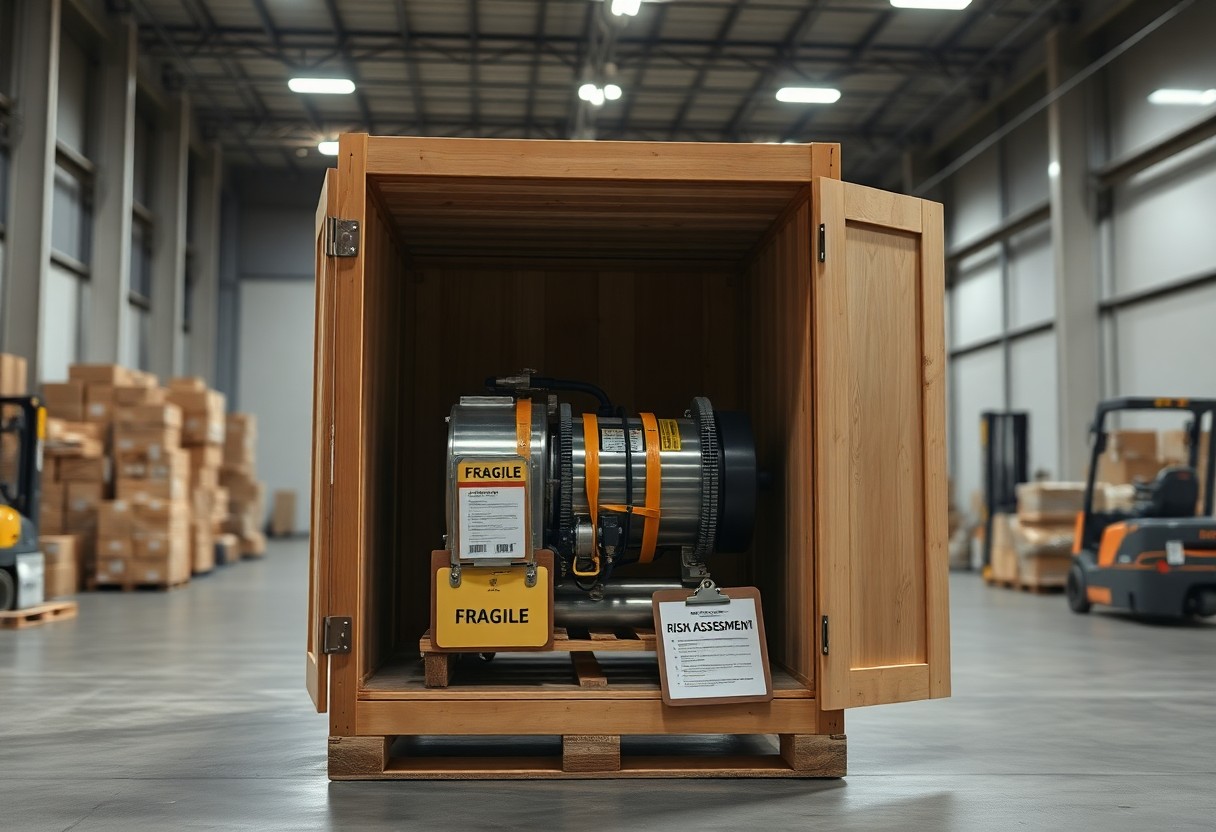
You unbox a new machine, its polished surface reflecting your team’s anticipation, but without a completed risk assessment, that equipment becomes a potential source of serious harm. Modern workplaces often prioritize speed over safety, allowing hazards to go unidentified until an incident occurs. Your responsibility begins the moment the delivery is signed.
Key Takeaways:
- A mid-sized SaaS firm deploying new server hardware discovered a six-week gap between equipment installation and risk assessment review, leaving technicians exposed to unmitigated electrical hazards during initial setup and configuration.
- Regulatory audits in manufacturing sectors have increasingly flagged missing or outdated risk documentation for recently installed machinery, with one 2023 inspection sweep identifying incomplete assessments on 40% of newly commissioned robotic workcells.
- Incident reports from a food processing plant traced a severe laceration to an unguarded conveyor coupling-added during final assembly but never reflected in the original risk analysis, which had been based on pre-delivery schematics.

The Shiny Machine and the Silent Hazard
That new machine gleams under the workshop lights, its controls sleek and its performance promises bold. Yet beneath the polished surface, unaddressed hazards may already be active-missing guards, unverified emergency stops, or software logic that doesn’t align with your workflows. You are responsible for what happens when it powers on for the first time, not just its output but the safety of everyone nearby. A single overlooked integration flaw can trigger a chain of events leading to injury. The absence of a completed risk assessment means the machine is not ready for operation, regardless of delivery status. One mid-sized SaaS firm learned this when a prototype interface caused repeated calibration errors, nearly resulting in a mechanical overload incident during early testing.
The Paperwork Void
When the equipment arrives without updated risk assessments, you inherit undocumented hazards that bypass safety protocols. A new CNC machine at a mid-sized manufacturing plant once triggered three near-misses in its first week because the original assessment excluded integration risks with existing assembly lines. Missing documentation doesn’t just delay compliance-it creates blind spots in hazard recognition that frontline workers must navigate without guidance.
Operational Realities
When the new machine powers up without a documented risk assessment, you’re already operating in breach of basic safety protocols. Missing evaluations mean unseen hazards-unguarded pinch points, unverified lockout/tagout procedures, or electrical incompatibilities-can go unnoticed until an incident occurs. A discussion on New Equipment Risk Assessments highlights how often teams assume safety is built in, when in reality it must be systematically verified. Assumption is the most dangerous step in any startup process.
Human Consequences
Every unassessed machine puts your team at immediate risk, exposing them to pinch points, unexpected startups, or toxic emissions. A technician at a mid-sized manufacturing plant lost two fingers when reaching into a new conveyor system that lacked lockout-tagout documentation. These injuries are preventable, yet they occur because safety reviews lag behind delivery. You are responsible for ensuring each operator understands the hazards they face-before the first power-up. A single oversight can lead to permanent disability, workers’ compensation claims, or worse, a fatality that alters lives and company culture forever.
Corrective Measures
Immediate action is required when equipment arrives without a completed risk assessment. You must halt deployment and notify safety personnel to conduct a site-specific evaluation. Operating machinery未经评估 exposes your team to uncontrolled hazards and violates regulatory expectations. A documented hazard analysis, including lockout/tagout procedures and emergency shutdown steps, becomes the minimum threshold for approval. For a mid-sized SaaS firm integrating a new server rack, this pause prevented an electrical overload incident during initial testing.
Final Words
You assess risks before operating new equipment, not after an incident occurs. A conveyor system installed without updated guarding procedures led to a preventable injury at a Midwest distribution center last year. Your team relies on you to ensure documentation and safety protocols arrive with the machinery, not weeks later. Compliance isn’t retroactive, and safety can’t be an afterthought.
FAQ
Q: Why is a risk assessment necessary before using new equipment, even if it’s been used elsewhere?
A: Equipment may have been operated under different conditions, maintenance schedules, or safety protocols at previous sites, making past performance an unreliable indicator of current safety. A new facility might have unique spatial constraints, workforce experience levels, or integration requirements that alter how hazards manifest. For example, a CNC machine that operated safely in a climate-controlled factory may pose overheating or ventilation risks in a poorly insulated workshop. Without a site-specific assessment, assumptions about safety can lead to preventable incidents, such as entanglement, electrical faults, or exposure to hazardous energy during maintenance.
Q: Who is responsible for ensuring a risk assessment is completed when new machinery arrives?
A: Responsibility typically falls on the employer or site safety officer, but it requires coordination between procurement, operations, and health and safety teams. Procurement staff must verify that risk documentation is included in delivery checklists, while operations managers must withhold equipment use until assessments are signed off. In one documented case, a packaging plant avoided a serious injury after the maintenance supervisor flagged that a new shrink-wrap machine lacked lockout/tagout points. The delay allowed engineers to modify the design before full deployment, underscoring the need for shared accountability across departments.
Q: What should a risk assessment for new equipment include if the manufacturer’s documentation is incomplete?
A: When manufacturer data is missing or generic, the assessment must identify hazards through direct observation, technical specifications, and input from operators who will use the machine. This includes evaluating pinch points, noise levels, emergency stop accessibility, and compatibility with existing systems. A mid-sized SaaS firm that expanded into hardware prototyping discovered that an off-the-shelf 3D printer emitted fine particulates beyond acceptable indoor air quality thresholds. Their in-house assessment led to the installation of local exhaust ventilation and revised operating hours to limit exposure, demonstrating how proactive evaluation fills gaps left by incomplete supplier information.