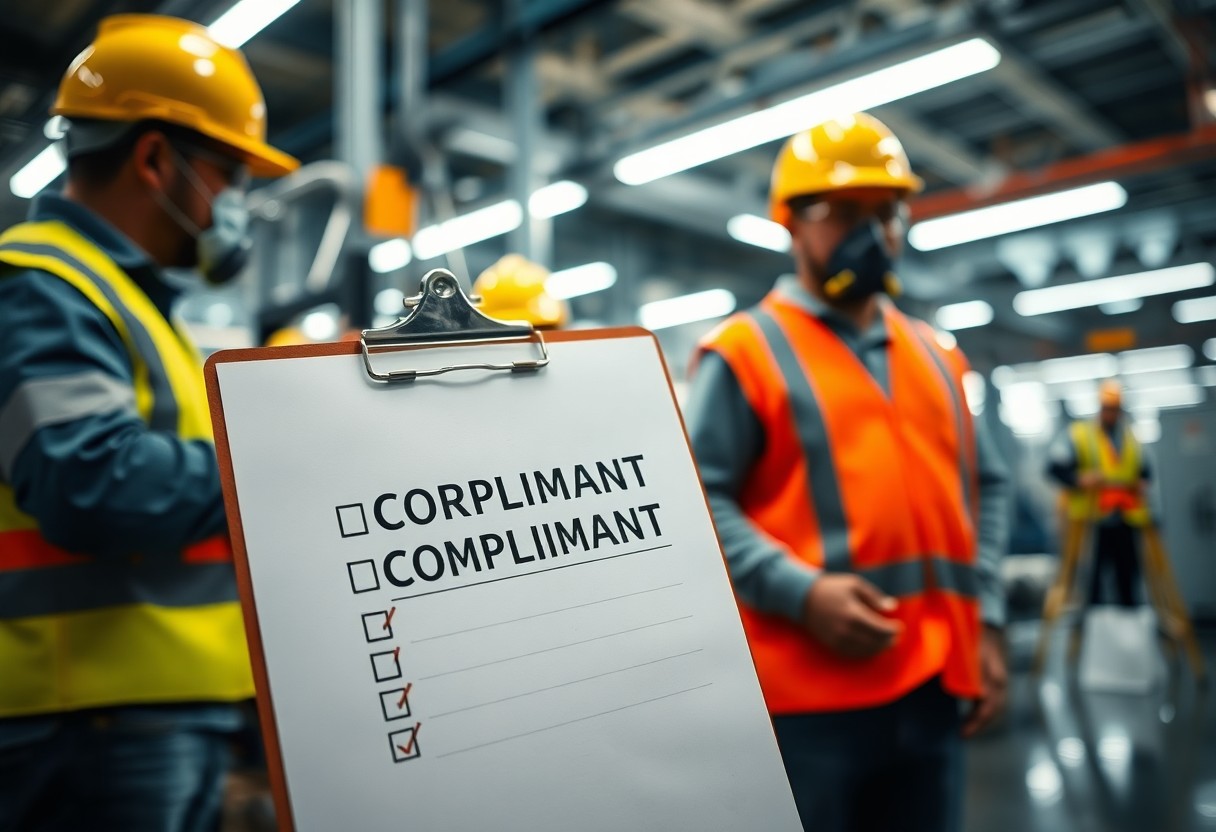
You check every regulatory box and pass every inspection, yet injuries still occur. Compliance does not guarantee safety. A program can meet OSHA standards and still leave workers exposed to preventable harm. The equipment may be present, but if it’s not used correctly-or at all-your team remains at risk. Real protection goes beyond paperwork.
Key Takeaways:
- A compliance audit passing does not guarantee worker safety; one manufacturing plant recorded a 40% increase in eye injuries despite full OSHA documentation being up to date and inspections cleared.
- Ill-fitting respirators were found in a third of frontline workers during spot checks at a chemical processing facility, revealing that equipment distribution without proper fit testing creates a false sense of protection.
- Employee feedback collected anonymously at a mining operation showed that 60% of workers modified or bypassed PPE due to discomfort or impracticality during long shifts, indicating that usability matters as much as availability.
The Paper Shield
Compliance documents create a false sense of security when they substitute for real protection. You may have every form signed and filed, yet workers still face hazards daily. A perfect audit trail means nothing if the hard hat on site is two sizes too large. Paper compliance hides gaps that only field observation can reveal.
The Illusion of the Form
A signature on a training sheet does not prove understanding or retention. You might have records showing every employee completed PPE training last quarter, but one-on-one spot checks reveal workers misusing respirators or skipping gloves. The form fills the requirement, not the function.
The Ghost of the Audit
An annual audit captures a single moment, not daily reality. You passed with no findings, yet three months later, a near-miss investigation uncovers routine shortcuts. Compliance ghosts linger where inspections are infrequent and unannounced checks are rare.
One mid-sized SaaS firm with warehouse operations maintained flawless OSHA records for years, yet a third-party safety review found forklift operators regularly bypassing seatbelt sensors. The audit checklist did not include behavioral observation, so the violation remained invisible. What gets measured once a year often deteriorates in the gaps between visits.
The Man in the Dust
You see him every morning at the site entrance, respirator hanging loosely around his neck, dust already coating his sleeves. Compliance records list him as fully equipped, yet the gap between policy and practice widens with each shift. His presence exposes a quiet truth: approved gear means nothing when it’s not worn correctly, consistently, or with purpose.
The Weight of the Mask
A respirator that isn’t sealed properly offers false protection, and many workers wear them incorrectly to avoid discomfort. You may have trained them on fit testing, but without daily supervision, shortcuts become routine. One torn strap or unsealed edge renders the entire device ineffective, leaving lungs exposed to silica and other hazards.
The Distance of the Office
Managers reviewing PPE logs from climate-controlled trailers rarely witness how gear is actually used in the heat of a 10-hour shift. This physical and cultural separation means real-world deviations go unseen, uncorrected, and eventually accepted as normal. Paper compliance thrives in that silence.
Observations from a mid-sized SaaS firm transitioning to field operations revealed that frontline supervisors spent less than 90 minutes per week directly observing safety practices. Without consistent presence on the ground, assumptions replace evidence. A worker might sign a checklist confirming respirator use while supervisors, miles away, have no way to verify it. The longer this gap persists, the more likely near-misses go unreported and corrective actions never begin.
The Failure of the Tool
Compliance doesn’t guarantee protection, and your PPE program may check every regulatory box while still exposing workers to harm. A hard hat that meets ANSI standards but slips constantly during overhead work creates a dangerous false sense of security. Equipment must perform under real conditions, not just in certification tests.
The Trap of Poor Design
Many PPE items are engineered without input from the people who wear them daily. A lineman struggling with insulated gloves that limit dexterity may bypass them entirely, turning a safety requirement into a safety risk. Functionality shapes behavior more than policy ever will.
The Cost of Saving Money
Choosing the cheapest compliant respirator can lead to higher long-term expenses when workers reject it for discomfort. A mid-sized manufacturing plant replaced a low-cost model after usage rates dropped below 40%, undermining the entire respiratory protection plan.
When budget drives PPE selection, the hidden costs emerge in reduced wear time, increased supervision, and higher incident rates. One refinery discovered that a slightly more expensive earplug had three times the compliance rate of its cheaper counterpart, directly reducing noise-exposure incidents over a six-month period.
The Law of the Brotherhood
Compliance doesn’t guarantee safety when unspoken rules override official policy. In many worksites, a silent code-known as the Law of the Brotherhood-dictates behavior more powerfully than any OSHA regulation. You may have trained your team on Worker Rights and Protections | Occupational Safety and …, yet still see workers skip PPE to avoid standing out. Peer pressure, not policy, often decides what gets worn.
The Shared Belief
Staying safe is often seen as a sign of weakness among crews bonded by years in the field. You’re expected to endure heat, risk, and discomfort without complaint. This shared belief turns protective gear into a symbol of doubt-not just about safety, but about loyalty and toughness. What’s on paper means little when respect depends on what you’re willing to ignore.
The Foreman’s Choice
A foreman who values speed over procedure sends a clear message, even if silently. You might enforce PPE during audits, but when he nods at a worker entering a trench without a hard hat, that single act carries more weight than any safety manual. His choices shape daily behavior more than corporate mandates ever will.
That nod isn’t just approval-it’s permission, repeated daily in small decisions. When supervisors prioritize output and overlook lapses, they reinforce a culture where compliance is situational. A mid-sized SaaS firm may track server uptime with precision, yet on your site, near-misses go unrecorded because the foreman dismissed them. Safety becomes optional, not operational.
The Truth of the Numbers
Compliance reports may show full adherence to PPE Compliance Rules for Meeting Construction Safety standards, yet injury rates remain unchanged. Perfect checklists do not guarantee protection if equipment sits unused or is worn incorrectly. The real metric isn’t policy completion-it’s behavior in the field, where non-use of hard hats during short tasks still leads to preventable head injuries on active sites.
The Lie of the Zero
A zero-incident report often signals suppression, not safety. Workers may avoid reporting minor injuries to meet targets, creating a false sense of security. When no incidents are logged for months, it rarely means perfection-more often, it reflects a culture where speaking up feels risky. Silence is not success; it’s a warning sign hidden in plain sight.
The Speech of the Near Miss
Near misses speak louder than injuries because they reveal system flaws before harm occurs. A falling tool caught before impact exposes loose rigging or improper storage. Encourage workers to report these events without fear, as each one is a free lesson. One unreported close call today could be a fatality tomorrow.
When a worker describes how a harness lanyard nearly tangled during ascent, that detail uncovers design flaws no audit would catch. These narratives expose gaps in training, equipment design, or workflow pressure. A near miss reported by a rigger on a bridge project led to reconfiguring anchor points across all sites, preventing potential falls. Listening transforms anecdotes into action.
To wrap up
Your PPE program may meet every regulatory checkbox and still fail to protect workers if it ignores real-world conditions, human behavior, or maintenance gaps. Compliance alone does not prevent injury when equipment is misused, uncomfortable, or improperly stored. A worker in a dusty warehouse might wear a respirator incorrectly because training was rushed, not because the gear is absent. A mid-sized SaaS firm managing field technicians found that 60% of near-misses occurred despite full compliance, pointing to procedural blind spots. True safety demands more than paperwork-it requires observation, feedback loops, and cultural commitment. A compliant program with no follow-through is like a lock without a key: present, but ineffective.
FAQ
Q: How can a PPE program follow all OSHA regulations and still fail to protect workers?
A: Compliance focuses on minimum legal requirements, such as providing equipment and basic training, but does not guarantee real-world effectiveness. A program might supply hard hats and safety glasses on schedule, document inspections, and pass audits while overlooking whether workers actually wear the gear correctly or consistently. In one documented case, a manufacturing plant had 100% compliance records yet experienced repeated eye injuries because employees removed safety goggles during precision tasks, citing fogging and discomfort. The equipment met standards, but the program failed to address usability under actual working conditions.
Q: What role does worker feedback play in an effective PPE program?
A: Worker input identifies gaps that policies and checklists often miss. Employees interact with PPE daily and can report issues like ill-fitting respirators, cumbersome gloves that reduce dexterity, or hearing protection that blocks critical communication. A mid-sized construction contractor reduced hand injuries by 40% not through new gear, but by switching glove models based on crew feedback after the original ANSI-rated gloves were routinely discarded on-site. When feedback loops are absent, programs rely on theoretical protection rather than field-tested solutions.
Q: Can training alone fix a failing PPE program?
A: Training is necessary but insufficient when environmental or cultural barriers exist. A refinery may conduct annual PPE training with signed attendance logs, yet workers in high-heat areas may remove flame-resistant hoods during summer months to avoid heat stress. No amount of instruction will correct this behavior if the equipment design ignores thermal comfort or if supervisors do not enforce consistent use. One petrochemical facility reduced non-compliance by integrating breathable, cooling liners into hoods and assigning peer safety monitors, showing that behavioral change requires both practical adaptations and social accountability.