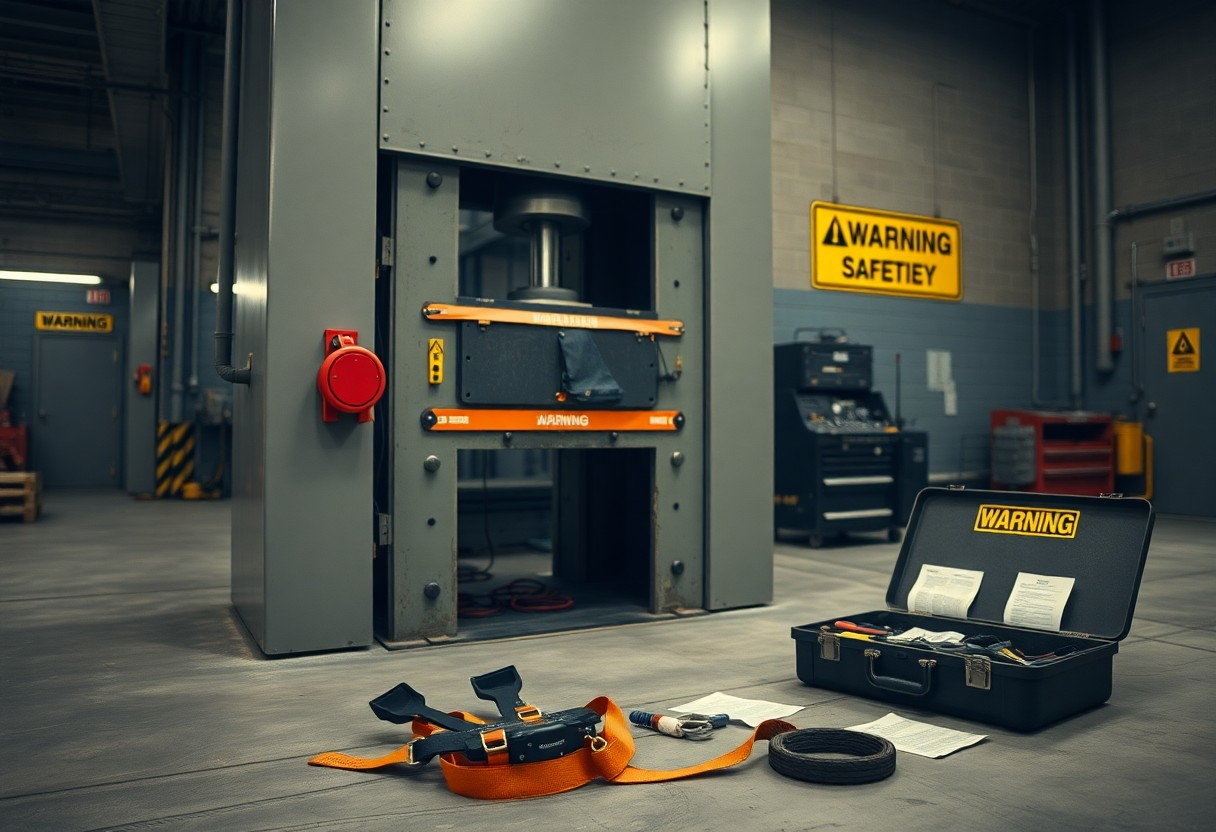
With every incident rooted in assumed understanding, you confront a hard truth: common sense is not a reliable safety control. What feels obvious to one person may be invisible to another, especially under pressure, fatigue, or unfamiliar conditions. Relying on it risks lives, not just outcomes.
Key Takeaways:
- Reliance on common sense in safety protocols creates dangerous gaps, as what seems obvious to one person may not be apparent to another, especially under stress or in unfamiliar conditions-such as a new technician failing to isolate energy sources during maintenance because the procedure wasn’t explicitly defined.
- Safety systems must be built on standardized, documented controls rather than assumed judgment, since human intuition varies widely across experience levels, cultural backgrounds, and training-illustrated by incidents in manufacturing plants where workers bypassed safeguards they deemed “unnecessary” based on personal habit.
- Organizations that treat common sense as a control often lack accountability in incident investigations, making it difficult to trace root causes when procedures were never formally established-this pattern emerged in a 2019 warehouse fire where no written protocol existed for storing flammable materials near electrical panels.
The Myth of Universal Logic
You assume others will act as you would in a hazardous situation, but that expectation is dangerously flawed. What feels obvious to you may be invisible to someone else, especially under stress or fatigue. A seasoned operator might bypass a guard because “it’s always been safe before,” while a new hire may not recognize the hazard at all. Common sense is shaped by experience, not universal reasoning, and relying on it ignores the variability of human perception. A chemical plant incident in Texas showed that even trained personnel ignored a leaking valve because it “didn’t seem urgent,” proving that intuition fails when standardized controls are absent.
The Failure of Vague Directives
When you rely on phrases like “use common sense” or “be careful,” you leave critical decisions to interpretation, and that ambiguity creates risk. A warehouse worker told to “handle with care” might not recognize the specific force threshold that damages a sensitive component. Instructions must define actions, not attitudes. Without clear parameters, compliance becomes inconsistent and safety gaps widen, especially under time pressure or fatigue.
Engineering Over Instinct
Trusting your gut when designing safety systems introduces unpredictable risk, because human instinct adapts poorly to complex mechanical or chemical environments. A technician might assume a valve is closed based on past experience, yet without a physical lockout tag, the system remains energized. Engineering controls like interlocks, pressure relief valves, and automated shutoffs eliminate reliance on judgment calls. In one incident at a mid-sized SaaS firm’s data cooling plant, an operator bypassed a sensor alarm assuming it was a false trigger-resulting in a refrigerant leak. Systems must be built so that safety does not depend on correct human prediction, but on fail-safe design. Relying on awareness or caution as a primary barrier consistently underperforms when fatigue, urgency, or distraction enter the equation. Automated diagnostics now detect 90% of pre-failure states in modern facilities, far exceeding human observation rates. Your intuition may warn of danger in the moment, but only engineered solutions prevent it systematically.
The Cost of Assumptions
Assuming employees will act safely because it “makes sense” exposes your organization to preventable incidents. A manufacturing plant once skipped formal lockout/tagout training, trusting workers would “know better,” only to face a serious injury during routine maintenance. Common sense varies by experience, background, and context, making it an unreliable safeguard. You cannot standardize or audit what you assume, and that gap is where compliance fails and accidents thrive.
Summing up
You rely on procedures, not assumptions, because expecting everyone to act on common sense ignores how people actually respond under pressure. A technician at a chemical plant once bypassed a safety check they deemed unnecessary, leading to a preventable leak-proof that unspoken expectations fail when stakes rise. Systems built on consistent design, not intuition, prevent incidents others assume “would never happen here.”
FAQ
Q: Why isn’t relying on common sense sufficient for workplace safety?
A: Common sense varies widely between individuals and is shaped by personal experience, culture, and background, making it an inconsistent basis for safety decisions. In a manufacturing plant, one worker might instinctively step back from moving machinery, while another unfamiliar with the equipment may not recognize the hazard. Safety protocols must be standardized and explicitly taught, not assumed. A documented procedure for lockout-tagout, for example, removes ambiguity and ensures every employee follows the same steps regardless of their personal judgment.
Q: Can training replace the need for common sense in safety-critical environments?
A: Training provides specific knowledge and repeatable responses to hazards, which is far more reliable than expecting employees to infer correct actions. At a chemical processing facility, workers are trained to respond to gas leaks using predefined evacuation routes and communication codes. These responses are practiced in drills so they become automatic, reducing dependence on split-second decisions. Relying on training rather than intuition ensures consistency, especially under stress when cognitive function is impaired.
Q: What happens when organizations treat common sense as a formal control measure?
A: Treating common sense as a control often leads to blame being placed on workers after incidents, rather than examining systemic failures. After a forklift collision at a distribution center, management cited ‘lack of common sense’ instead of reviewing blind spots in the warehouse layout or inadequate signage. This deflects responsibility from design flaws and discourages reporting. Effective safety systems identify hazards through risk assessments and implement engineered or administrative controls, not assumptions about employee judgment.
Leave a Reply