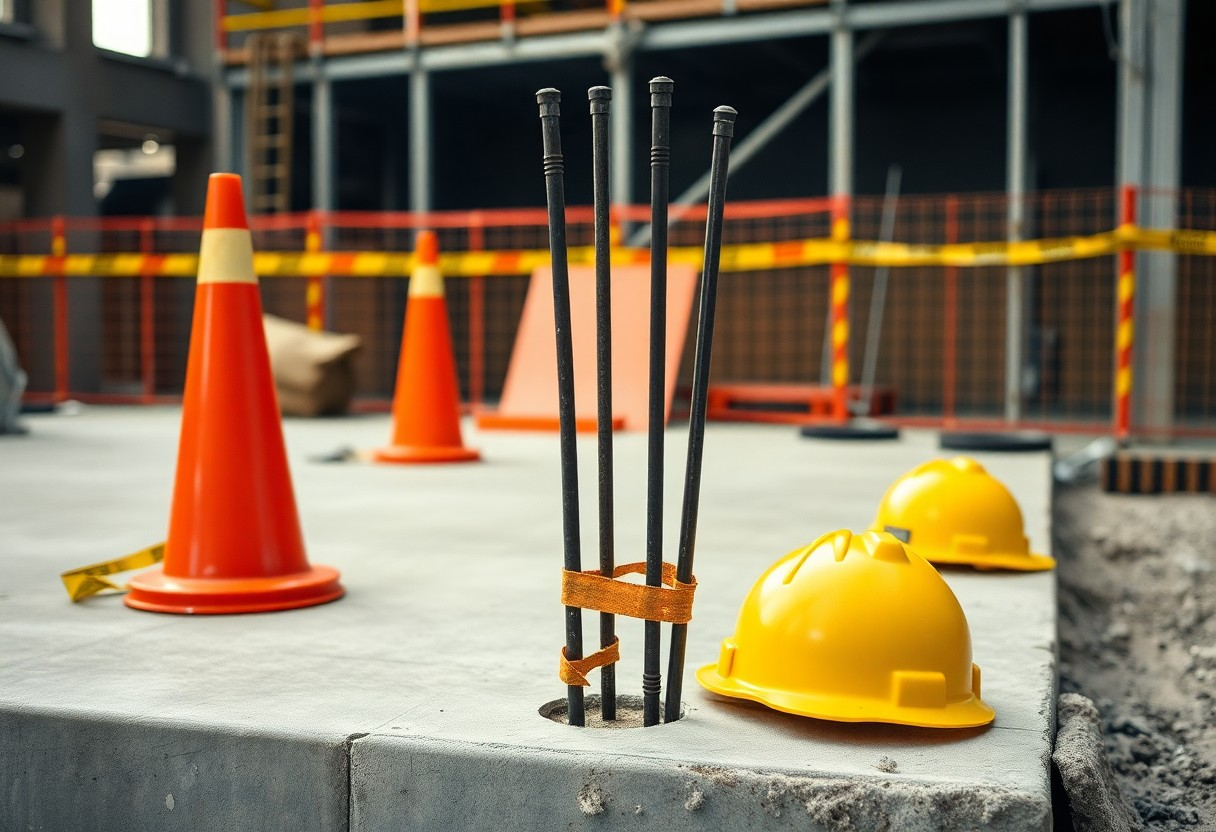
Over time, repeated exposure to danger without consequence dulls perception, making the most critical warnings fade into background noise. You’ve seen it happen: a frayed wire, a skipped safety check, a near-miss brushed off as luck. The risk was visible, even physically apparent, yet action came only after failure. This pattern is not rare-it’s predictable, and it reveals how human behavior overrides clear evidence.
Key Takeaways:
- A manufacturing plant in Ohio continued operating a press with a known guard malfunction for three weeks, citing production quotas, until an operator lost two fingers-highlighting how operational pressures can override clear safety signals.
- At a construction site in Seattle, six workers ignored a visibly cracked support beam because it had “held this long,” demonstrating how prolonged exposure to a hazard without incident reinforces false assumptions of safety.
- Internal emails from a 2019 chemical spill investigation revealed that junior engineers had flagged valve corrosion months prior, but their reports were never escalated, exposing structural communication gaps that silence early warnings.
The Mirage of Routine
Every day you follow the same steps, trusting that what has worked before will work again. This predictable rhythm creates a false sense of safety, where obvious hazards blend into the background like static noise. Familiarity doesn’t eliminate risk-it hides it in plain sight, making you less likely to question what feels normal.
The comfort of the status quo
Sticking with what you know feels easier than raising concerns, especially when no immediate harm occurs. The team continues the same process because it has always been done that way, and challenging it risks social friction or being labeled difficult. Comfort becomes a silent agreement to overlook what should be questioned.
Why repetition masks danger
Each time you complete a task without incident, your brain registers it as proof of safety, even if the underlying risk remains unchanged. A near-miss ignored once becomes an accepted norm by the tenth repetition, dulling your perception until warning signs are no longer seen as warnings at all.
Consider a mid-sized SaaS firm where engineers bypassed pre-launch checklists for minor updates, a practice that continued for months without failure. Over time, skipping steps felt justified, even logical. When a configuration error finally triggered a 14-hour outage, the root cause wasn’t negligence-it was the accumulated invisibility of risk through repetition, where each uneventful launch reinforced a dangerous illusion.
The Social Gravity of Silence
Someone sees the frayed wire snaking across the warehouse floor, the puddle near the refrigerated aisle, the missing handrail on the stairwell. Yet no one speaks. The hazard was obvious, but the cost of speaking often feels higher than the risk of staying quiet. In many workplaces, raising concerns can mark you as difficult, even when injury is imminent. Legal protections exist, such as Utah’s “Open and Obvious” Defense in Slip & Fall Cases, but they offer little comfort in the moment of decision. Utah “Open and Obvious” Defense in Slip & Fall Cases may shape liability after an accident, but it does nothing to break the silence before it.
The high cost of being a nuisance
Speaking up often means being labeled a troublemaker. A mid-sized SaaS firm once saw an engineer ignore a server configuration flaw because reporting it would mean interrupting a sprint deadline. The unspoken rule was clear: don’t slow things down. Even when risks are visible, the social penalty for raising them can outweigh perceived benefits, especially if leadership has signaled impatience with interruptions.
Groupthink as a survival tactic
Remaining silent isn’t always apathy-it can be rational self-preservation. In hierarchical environments, junior staff may see hazards but assume someone else will act. The belief that speaking up could damage standing or stall careers overrides safety instincts. This pattern repeats in hospitals, construction sites, and tech startups where cohesion is valued more than correction.
Consider a surgical team where a nurse notices incorrect dosage but hesitates to correct the lead physician. The procedure continues. Later, the error is caught, but no one acknowledges the near miss. The team’s culture rewards deference, not intervention. Over time, this behavior becomes automatic. People learn that silence preserves harmony, even at the expense of safety. The brain doesn’t calculate risk logically in these moments-it responds to social cues, not danger signs.
The Architecture of Denial
Organizations often build invisible structures that deflect accountability, not through malice but through design. You operate within systems where responsibility fragments across roles, making it easy to assume someone else has addressed the risk. When no single person owns the warning, the hazard becomes everyone’s and no one’s, dissolving into routine oversight.
How hierarchies dilute warnings
Information moves upward in filtered fragments, stripped of urgency by each layer. You may report a flaw, but in the process of escalation, its severity softens into ambiguity. By the time it reaches decision-makers, the alert has lost its teeth, absorbed into a spreadsheet or delayed for “further review” that never comes.
The myth of the perfect system
You trust processes to catch errors, but no checklist or protocol accounts for every edge case. Relying on systems as fail-safes creates a false sense of security, where compliance replaces critical thinking. When the protocol says “proceed,” deviation feels riskier than disaster.
Engineers at a mid-sized SaaS firm once flagged a memory leak in a core service, but the automated monitoring dashboard showed “within thresholds.” The system wasn’t broken-it was blind to slow degradation. Over months, performance eroded until an outage cascaded through client operations. No alarm ever triggered, because the design assumed normal conditions would persist.
The Narrative Fallacy of Risk
Humans construct stories to make sense of danger, often retrofitting logic after harm occurs. You see this in premises liability cases where the hazard seems glaring in hindsight, yet went unaddressed because it didn’t fit the expected script of risk. A spilled liquid in a grocery store aisle, dismissed as temporary, becomes evidence of negligence only after a fall-despite repeated warnings. The tendency to impose coherent narratives on chaotic events masks the reality that obvious risks are frequently invisible until tragedy reveals them. For deeper insight into how assumptions distort liability perception, review the analysis at West Virginia Premises Liability Risks…Not Open and ….
Rationalizing the red flags
When warnings appear, you often reinterpret them to maintain a sense of safety. A frayed handrail, a dimly lit stairwell, or a recurring slip hazard are recast as minor inconveniences rather than precursors to injury. This mental filtering allows you to preserve the belief that your environment is under control, even as multiple signals point to escalating danger. The cost of this reassessment becomes clear only when prevention is no longer an option.
The failure of imagination
You rarely act on risks you cannot visualize clearly. A wet floor sign may be present, but without picturing the fall, the cracked hip, the hospital stay, the threat remains abstract. This gap between awareness and emotional resonance lets hazards persist in plain sight. What feels improbable is treated as impossible, even when the conditions for harm are already in place.
Imagining disaster requires cognitive effort that routine environments discourage. In a warehouse where forklifts pass inches from pedestrian walkways every shift, the absence of past incidents reinforces a false sense of security. You assume that because an accident hasn’t happened yet, the system must be safe. Yet in high-liability settings like manufacturing plants or multi-tenant buildings, near-misses are not proof of safety but evidence of vulnerability. The mind’s reluctance to simulate catastrophe enables the normalization of risk, turning preventable dangers into accepted background noise.
Final Words
You overlook obvious hazards not because you’re careless, but because routine dulls perception, group dynamics suppress dissent, and the brain retrofits logic after failure. A factory worker ignores a leaking valve not from ignorance, but because production quotas reward silence and yesterday’s near-miss went unpunished. Normalization of deviance turns warnings into background noise, until an incident forces reckoning.
FAQ
Q: How can a hazard be obvious in hindsight but overlooked at the time?
A: Human perception is shaped by context and expectation, not just sensory input. A chemical plant operator might pass the same leaking valve daily without intervention because the drip is small, consistent, and has not yet caused failure. Over time, the brain categorizes the anomaly as part of normal operations, especially when production targets remain met. This normalization of deviance allows hazards to blend into the background, escaping attention until a failure occurs. The hazard was always visible, but its meaning changed only after an incident redefined its significance.
Q: Can group awareness of a risk still lead to inaction?
A: Yes, collective recognition does not guarantee action. In one hospital case, multiple nurses noticed a recurring error in medication labeling on a specific unit. No one reported it because each assumed someone else already had or that speaking up would disrupt team harmony. This shared silence created a false consensus that the issue was either unimportant or already addressed. Social dynamics often suppress individual initiative, particularly in hierarchical environments where junior staff hesitate to challenge established routines or superior judgment.
Q: What role does organizational structure play in ignoring known hazards?
A: Reporting pathways that require multiple approvals or lack clear accountability can stall responses to visible risks. A mid-sized manufacturing company once delayed fixing a frayed conveyor belt guard for six months because maintenance requests needed sign-off from both operations and safety leads, who assumed the other had taken responsibility. The structure created a gap where action fell through, not due to indifference but because responsibility was distributed without ownership. Simple fixes become stalled when no single person has the authority or duty to act immediately.
Leave a Reply