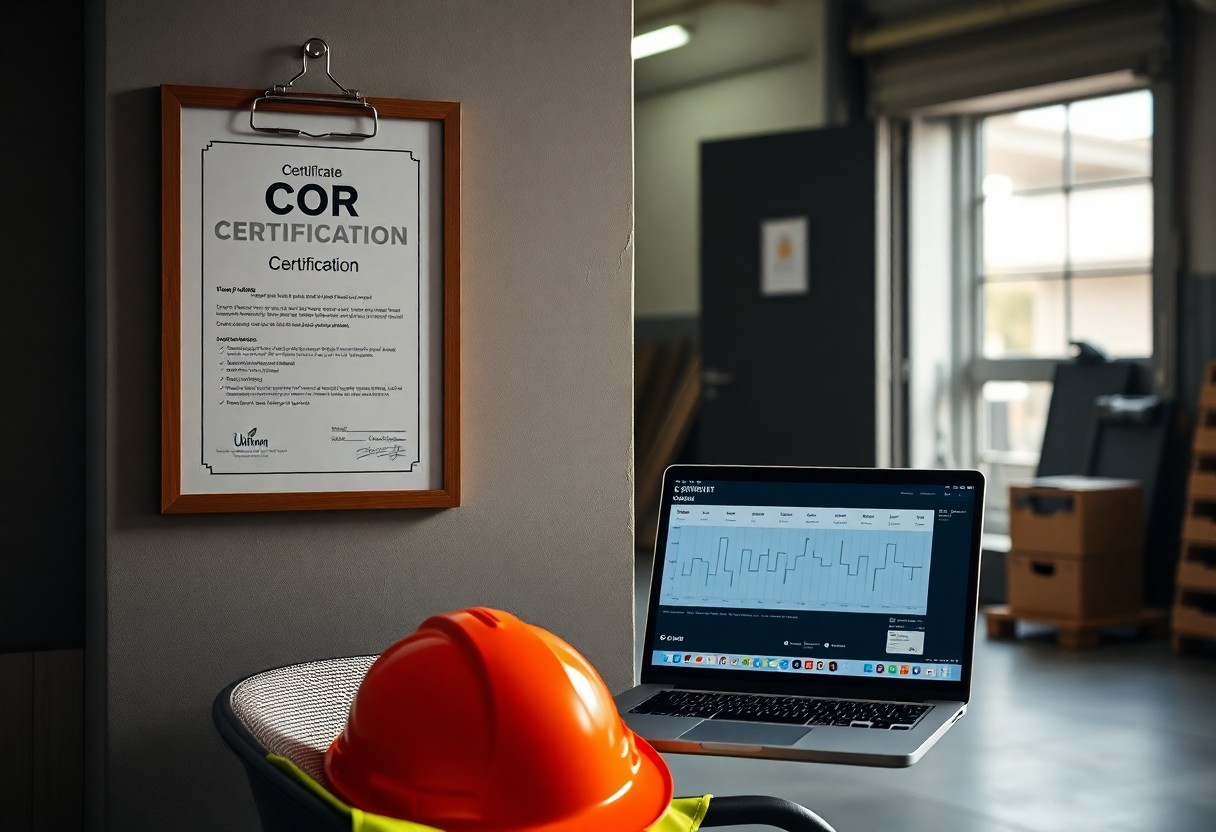
With certification in hand, you may feel a sense of accomplishment, but compliance does not equal safety. The real test begins the moment the auditor leaves, when daily decisions shape workplace culture. A mid-sized SaaS firm learned this after a post-certification incident revealed gaps between policy and practice. Certification is a milestone, not the destination, and treating it as such can mean the difference between sustained safety and preventable harm.
Key Takeaways:
- COR certification confirms a baseline level of compliance but does not guarantee day-to-day safety outcomes, as demonstrated by organizations that maintain certification while still experiencing preventable incidents due to inconsistent enforcement or cultural gaps.
- A certified safety management system requires ongoing adaptation, such as when a mid-sized SaaS firm revised its hazard assessment protocols quarterly in response to employee feedback and evolving project demands, far beyond the annual audit cycle.
- True safety performance is driven by leadership behavior, worker engagement, and continuous improvement practices, not just documented policies-evident in workplaces where safety meetings are led by frontline staff and near-miss reporting rates have steadily increased over time.
The Paper on the Wall
Certification hangs visibly in the office, a formal acknowledgment of compliance with provincial safety standards. That document represents months of audits, policy revisions, and employee training. While it signals progress, the framed certificate can quietly shift focus from continuous improvement to passive display. The real measure of safety isn’t in the laminate but in daily behavior.
The false peace of the frame
A framed COR certificate on the reception wall often brings a misplaced sense of accomplishment. You may notice reduced incident rates post-certification, but that dip can mask underlying risks. Complacency sets in when leadership interprets the document as proof of completion rather than evidence of baseline readiness. Safety culture weakens when visibility replaces vigilance.
The danger in the pause
After achieving certification, some organizations slow their safety momentum, assuming the hardest part is over. This pause creates openings for procedural drift and eroded accountability. A mid-sized SaaS firm, for example, delayed refresher training for six months post-COR, leading to a preventable equipment incident. Gains made during certification unravel quickly without sustained effort.
Stopping improvement efforts after certification ignores the dynamic nature of workplace hazards. New equipment, staffing changes, or expanded operations introduce fresh risks that the original COR audit didn’t address. Your safety program must evolve with these shifts, not stagnate behind a dated compliance milestone. Regular internal audits, employee feedback loops, and updated risk assessments keep the system responsive and effective.
The Real Work Begins
Compliance marks the threshold, not the destination. You’ve submitted the documents, passed the audit, and posted the certificate. Now comes the harder part: making safety visible in daily actions. Real progress shows not in binders but in behavior, when every worker feels responsible, not just accountable.
Living the rules in the dirt
Action defines safety where work happens. You follow procedures not because an inspector might come, but because a misstep on a ladder or a skipped lockout could end a career. Rules matter most when no one is watching, and consistency turns policy into habit on the shop floor or job site.
Looking past the inspector
Your focus shifts from passing audits to preventing incidents. You train crews to spot hazards before they escalate, knowing that compliance checks rarely catch near-misses. The real test isn’t the auditor’s checklist but the decisions made during a rushed shift or an equipment failure.
A mid-sized SaaS firm learned this when a server room fire exposed gaps between policy and practice. Their COR was current, yet emergency protocols hadn’t been rehearsed in over a year. Audits confirmed paperwork compliance, but the absence of muscle memory nearly doubled response time. This gap-between certified systems and real readiness-is where risk lives, and where your ongoing effort must be directed.
Constant Motion
Safety evolves daily, not just during audits. Relying on annual reviews creates dangerous gaps where risks go unaddressed. You maintain momentum by treating COR certification as a baseline, not an endpoint. Systems improve only when you act on near-misses, adapt to new equipment, and respond to crew feedback. Complacency after certification has led to preventable incidents on multiple worksites.
Fixing things before they break
Proactive maintenance prevents failures that endanger workers. You inspect tools weekly, not because the checklist demands it, but because a frayed cable on a lift can fail without warning. Catching wear early in a crane’s hydraulic system avoids catastrophic drops. Waiting for breakdowns contradicts the core intent of a safety management system.
The honest path to safety
Honest reporting builds trust and reveals real risks. You encourage workers to log near-misses without fear of reprimand, knowing that a reported slip on a wet floor prevents future falls. Concealing incidents to protect metrics erodes safety culture more than the incident itself. Transparency is not optional-it is foundational.
When a worker flags a faulty guard on a conveyor belt and supervisors act immediately, the entire team sees that speaking up leads to change. You reinforce this behavior by closing the loop-showing the fix was made and thanking the individual. Over time, this pattern increases reporting rates and reduces actual injuries, because problems surface before they escalate. A culture of silence, in contrast, hides hazards until an incident forces them into view.
The People on the Floor
Workers describe COR certification is the worst thing I’ve ever done in my … in online forums, citing excessive paperwork and disconnection from real hazards, a sentiment echoed across shifts and sites, revealing a growing gap between policy and practice (one Reddit thread captures this frustration in raw, unfiltered accounts).
Hearing the truth from the crew
Frontline workers often voice concerns only during informal chats, not audits, where fear of reprisal or futility silences honest feedback, making walkarounds with open ears more revealing than any compliance checklist.
Leading with quiet strength
Supervisors who listen more than they speak build trust that translates into faster hazard reporting and stronger team cohesion, often preventing incidents before they reach incident logs.
One superintendent at a mid-sized SaaS firm reduced near-misses by half over two years not through new protocols but by holding daily five-minute huddles at the tool crib, consistently showing up, listening, and acting-proving presence matters more than paperwork.
The Horizon of Safety
Compliance marks the baseline, not the peak, of effective safety management. Achieving COR Certification Nova Scotia: Guide validates your adherence to standards, but real protection emerges when you look beyond the checklist. Progress means anticipating risks before they materialize, not just documenting past performance.
Seeking better ways to work
Every task holds room for refinement, and workers closest to operations often see inefficiencies invisible to management. Encourage frontline feedback not as a formality but as a continuous source of innovation. Small adjustments, consistently applied, prevent incidents more effectively than top-down mandates.
The never ending journey
Safety excellence isn’t a destination achieved through certification alone. It evolves with each near-miss reported, every audit finding addressed, and all training updated to reflect real conditions. Complacency after certification has derailed more programs than lack of resources.
Organizations that sustain momentum treat safety as a living system, recalibrating processes as equipment, staffing, or workflows shift. A mid-sized SaaS firm adjusting protocols after a remote work expansion, or a fabrication shop revising lockout-tagout after introducing new machinery, demonstrates how ongoing adaptation defines true safety maturity. Certification validates a point in time; culture determines the trajectory beyond it.
Conclusion
You maintain COR certification not by treating it as an achievement but by recognizing it as evidence of a system that must keep evolving. Compliance today does not guarantee safety tomorrow. A construction firm in Alberta lost three workers after passing an audit, not because the standard failed, but because leadership stopped engaging. Your program lives in daily decisions, not documents. Renewal is not the goal. Sustained awareness is.
FAQ
Q: What does COR certification actually measure in a workplace safety program?
A: COR (Certificate of Recognition) certification verifies that a company has implemented a safety management system meeting provincial or territorial standards, typically aligned with the Canadian Standards Association’s Z1000 guidelines. It confirms the existence of documented policies, hazard assessments, training records, and incident reporting procedures. An external auditor reviews these elements to ensure structural compliance, not daily operational effectiveness. For example, a construction contractor may pass inspection because fall protection plans are filed and toolbox talk logs are complete, even if field supervision varies across job sites. The certification reflects a baseline framework, not the consistency of its application.
Q: If a company achieves COR certification, why would it still experience workplace incidents?
A: Certification confirms that safety systems are designed and documented according to standards, but it does not guarantee those systems are followed in practice. A manufacturing plant may have emergency shutdown protocols on file and still face injuries if machine operators bypass guards during high-pressure production runs. Human behavior, supervision quality, and real-time decision-making often determine outcomes more than paperwork. One forestry company maintained COR status for years while near-misses climbed, only identifying a culture of unreported risks during an internal behavioral audit two years after certification. Systems must be lived, not just filed.
Q: How often should a COR-certified company update its safety practices after certification?
A: Safety practices require continuous review, not periodic updates tied to recertification cycles. Most COR programs require annual internal audits and full external reassessment every three years, but leading organizations review key metrics monthly and adjust training or supervision in real time. A mid-sized SaaS firm with field technicians revised its vehicle safety checklist twice in one year after analyzing near-collision reports, even though its next audit was 14 months away. Waiting for the next audit creates gaps where risks can grow unchecked. The most effective safety cultures treat the COR standard as a starting benchmark, then build beyond it through ongoing observation, feedback, and adaptation.
Leave a Reply