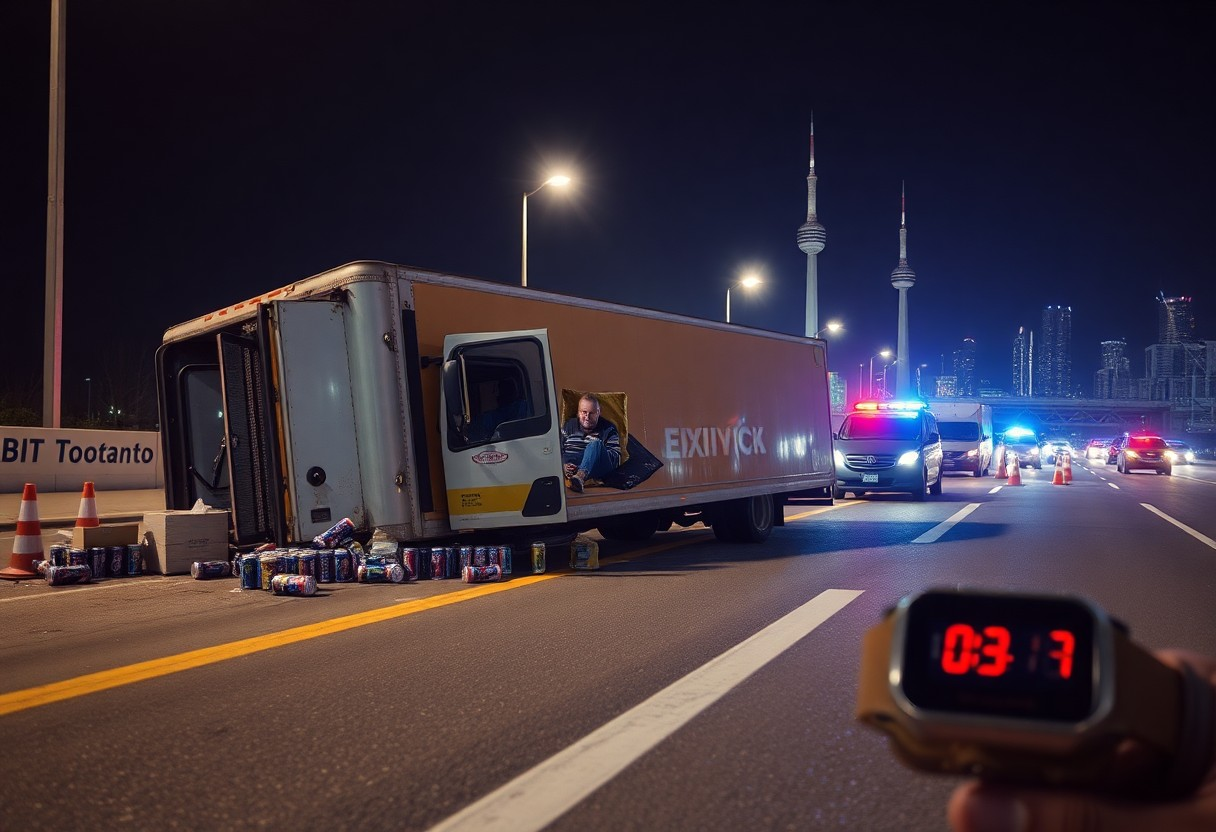
It’s no secret that long commutes and extended shifts are routine across the Greater Toronto Area, but fatigue is now a leading contributor to operational failures in transportation, construction, and transit. You face measurable risks when drowsiness impairs reaction times, especially on congested highways or during overnight operations. A single lapse due to exhaustion can trigger cascading disruptions across critical infrastructure, affecting thousands.
Key Takeaways:
- A Toronto Transit Commission operator on the Yonge line reported falling asleep at the controls during a late-night shift in 2022, prompting an internal safety review that identified fatigue as a recurring factor in 17% of near-miss incidents over a 12-month period.
- Construction sites in Mississauga and Brampton have recorded higher-than-average incident rates during the summer months, when early starts combined with high heat contribute to accelerated physical exhaustion among crane and excavation crews.
- Fleet operators managing delivery trucks across the GTA’s congested corridors often schedule back-to-back shifts with minimal rest breaks, increasing the likelihood of attention lapses-evidence from a Vaughan-based logistics firm showed that drivers averaging under six hours of sleep were involved in three times as many minor collisions.
The Long Haul on the 401
Hours behind the wheel on the 401 stretch your focus thin, especially during overnight runs between Toronto and Montreal. Fatigue accumulates silently, impairing reaction times as much as alcohol does. You may complete the trip without incident, but one lapse near Oshawa or Kingston could lead to a catastrophic multi-vehicle collision, endangering not only yourself but dozens of others sharing the highway.
Midnight shifts in Mississauga
Working overnight at a logistics hub near Pearson Airport means battling circadian rhythms while managing high-speed sorting lines. You’re processing hundreds of packages an hour, but at 3 a.m., a momentary lapse can result in a missorted hazardous material shipment or an injury from misaligned machinery, risks amplified by dimmed alertness and reduced supervision.
The cost of the extra mile
Pushing through fatigue to meet delivery quotas might seem like dedication, but it introduces hidden operational liabilities. A single delayed truck due to a fatigue-related incident can cascade into missed connections, warehouse bottlenecks, and contractual penalties, turning short-term gains into long-term financial setbacks.
Carriers in the GTA routinely face pressure to extend driver hours during peak seasons, particularly around holidays. When a driver from Brampton logs 14 consecutive hours to cover a double shift, the risk of a collision or cargo error rises sharply. Insurers have flagged such patterns in claims data, noting that incidents tied to fatigue often involve higher repair costs, longer downtime, and increased liability exposure than typical accidents. These are not minor delays-they represent measurable breakdowns in safety and efficiency that ripple across supply chains.
Transit Grids and Tired Eyes
Operating within the Greater Toronto Area’s dense transit networks requires unbroken attention, especially during shift overlaps and late-night routing. Fatigue blurs reaction times, and in systems where seconds determine safety margins, a delayed response can trigger cascading failures. You manage complex intersections of rail, bus, and pedestrian flows where alertness is not optional but foundational.
Precision demands on the tracks
Aligning a train within centimetres of the platform edge demands exact coordination between speed, timing, and spatial awareness. Even minor deviations caused by delayed cognitive processing can result in door misalignment or passenger entrapment. You follow strict protocols, but fatigue undermines the fine motor control these tasks rely on.
Human error in the signal box
A single misread signal instruction can route two trains onto the same track. You interpret dozens of status updates per hour, and when mental fatigue sets in, pattern recognition falters. Historical incidents show that signal operator lapses often occur during the early morning hours when circadian rhythms suppress alertness.
Signal operators routinely manage hundreds of route combinations across the GTA’s rail corridors, particularly at interlocking hubs like Union Station or Agincourt. A momentary lapse-such as failing to confirm a switch position or misinterpreting a train identification number-can initiate a near-miss event requiring emergency intervention. These roles demand constant vigilance, yet shifts often extend beyond ten hours, increasing the risk of undetected cognitive drift during low-traffic periods. You may feel alert, but micro-lapses in attention, invisible to self-assessment, remain a documented factor in operational incidents.
Heavy Machinery in the Concrete Jungle
Operating heavy machinery in Toronto’s dense urban zones demands constant alertness, as fatigue impairs judgment and coordination. A single lapse near active construction zones can lead to catastrophic outcomes. Learn more about how fatigue impacts safety and productivity and what to do about it at How Fatigue Impacts Safety and Productivity and What to ….
Skyline pressure in downtown Toronto
Building Toronto’s ever-growing skyline means working at dangerous heights with tight margins for error. Under fatigue, your spatial awareness weakens, increasing the risk of missteps on high-rise platforms where fall protection systems may not save you in time.
Reaction times and steel beams
When maneuvering cranes around steel beams, delayed reactions due to tiredness can result in collisions that compromise structural integrity. A millisecond delay in stopping a load shift could mean the difference between a safe lift and a critical failure on site.
Crane operators on high-density projects often work extended shifts during critical lifts, especially during tight municipal deadlines. In such conditions, microsleeps lasting just three seconds-undetectable to the operator-can lead to misaligned beam placements or unintended swings over pedestrian zones. These risks are amplified in high-wind conditions common above 30 stories, where physical fatigue compounds with mental strain to degrade precision.
The Economic Weight of Exhaustion
Fatigue costs Ontario businesses millions annually in lost productivity, errors, and preventable incidents. When workers operate on diminished alertness, output declines and risk exposure grows. Fatigue Remains Top Risk For Workplace Injuries, reinforcing how deeply tiredness undermines operational stability across industries.
Liability in the Golden Horseshoe
Operating in the densely populated corridor from Oshawa to Hamilton increases your exposure to regulatory scrutiny when fatigue-related incidents occur. A single lapse tied to overwork can trigger investigations, with OSHA citations and reputational damage following closely behind, especially in municipalities with active labor oversight.
Insurance premiums and broken schedules
Insurers now factor in shift consistency when assessing risk, and erratic scheduling raises red flags. Your premiums may climb when patterns suggest chronic fatigue, particularly in high-risk sectors where worker downtime correlates with incident frequency.
Recurring schedule disruptions signal poor operational control, prompting underwriters to adjust risk profiles. A mid-sized SaaS firm recently saw its workplace injury coverage rise 22% after repeated after-hours deployments were flagged during audit review, demonstrating how poor time management translates directly to financial liability.
Implementing the Wakeful Standard
Adopting the Wakeful Standard means aligning operational protocols with circadian science, ensuring workers are scheduled when alertness is naturally highest. You reduce error rates by structuring shifts around biological peaks, not just production demands. Organizations that ignore this standard increase their liability during high-risk hours, particularly between midnight and 6 a.m.
Technological monitoring tools
Sensors embedded in headsets or uniforms can detect microsleeps and prolonged blink duration in real time. You receive alerts before fatigue leads to incidents, especially in crane cabins or bus depots. Some systems integrate with dispatch software to automatically flag at-risk operators, allowing immediate intervention.
Rest periods as a mandate
Regulated rest breaks are no longer optional in high-risk roles across the GTA’s transportation and construction sectors. You must enforce a minimum 15-minute break every four hours, with non-compliance triggering automatic audit reviews. This requirement applies equally to unionized and contract labor.
Enforcement of mandated rest periods now includes unannounced site inspections by provincial safety officers, particularly on infrastructure projects near Mississauga and Scarborough. You cannot override break requirements even during deadline surges, and electronic logs must show compliance for at least 90 days. A mid-sized SaaS firm managing shift data reported a 40% drop in fatigue-related incidents after syncing break alerts with payroll verification.
Summing up
You face a growing challenge as fatigue infiltrates daily operations across the Greater Toronto Area, turning routine commutes and shifts into potential hazards. A trucker nodding off near Mississauga, a crane operator in downtown Toronto losing focus, or a night-shift transit driver missing a signal in Scarborough-each scenario reflects real risks shaped by extended hours and demanding schedules. You manage complex systems where human limits directly impact public safety, and overlooking fatigue means gambling with lives, not just productivity. You already see the signs in near-misses and delayed response times, and without sustained intervention, the pattern will escalate. You are responsible for recognizing that rest is not a luxury, but a core component of operational integrity.
FAQ
Q: How does driver fatigue specifically impact highway safety on major routes like the 401?
A: Fatigue impairs reaction time and decision-making in ways comparable to alcohol impairment, and on high-speed corridors such as Highway 401, where traffic volumes exceed 400,000 vehicles daily in peak sections, even a two-second delay in braking can result in multi-vehicle collisions. Commercial truck drivers, many of whom operate under tight delivery schedules between Toronto, Mississauga, and Oshawa, are particularly vulnerable to extended shifts that exceed 14 consecutive hours. A 2022 incident near Exit 375 in Scarborough involved a fatigued transport operator who drifted across three lanes before striking a concrete barrier, prompting renewed scrutiny of rest compliance protocols across provincial freight networks.
Q: Are transit operators in the GTA regularly monitored for signs of fatigue?
A: While the Toronto Transit Commission and GO Transit enforce mandatory rest periods and shift limits, real-time monitoring for fatigue remains limited to observational checks and self-reporting, not physiological tracking. Operators on overnight or early-morning routes, such as the 329 Dufferin bus or the Barrie line, often work split shifts that disrupt natural sleep cycles, increasing the risk of microsleep episodes during service. In one documented case, a GO train operator briefly lost consciousness approaching Union Station during a 5 a.m. run, triggering an automatic braking intervention; the incident was later attributed to undiagnosed sleep apnea exacerbated by irregular scheduling.
Q: What role does construction sector fatigue play in workplace incidents across Toronto’s development zones?
A: With over 100 high-rise projects currently underway in Toronto alone, construction crews frequently work 12-hour shifts, especially during critical phases like concrete pours that require uninterrupted labor. On a downtown site at King and Spadina, a crane operator working a third consecutive night shift misjudged a load’s swing radius, resulting in a near-miss with a neighboring building’s façade. Fatigue-related incidents like this are underreported, but industry safety logs from a mid-sized SaaS firm managing site compliance indicate that nearly 30% of near-miss reports over a six-month period cited shift length or sleep deprivation as contributing factors, highlighting systemic gaps in fatigue risk management.
Leave a Reply