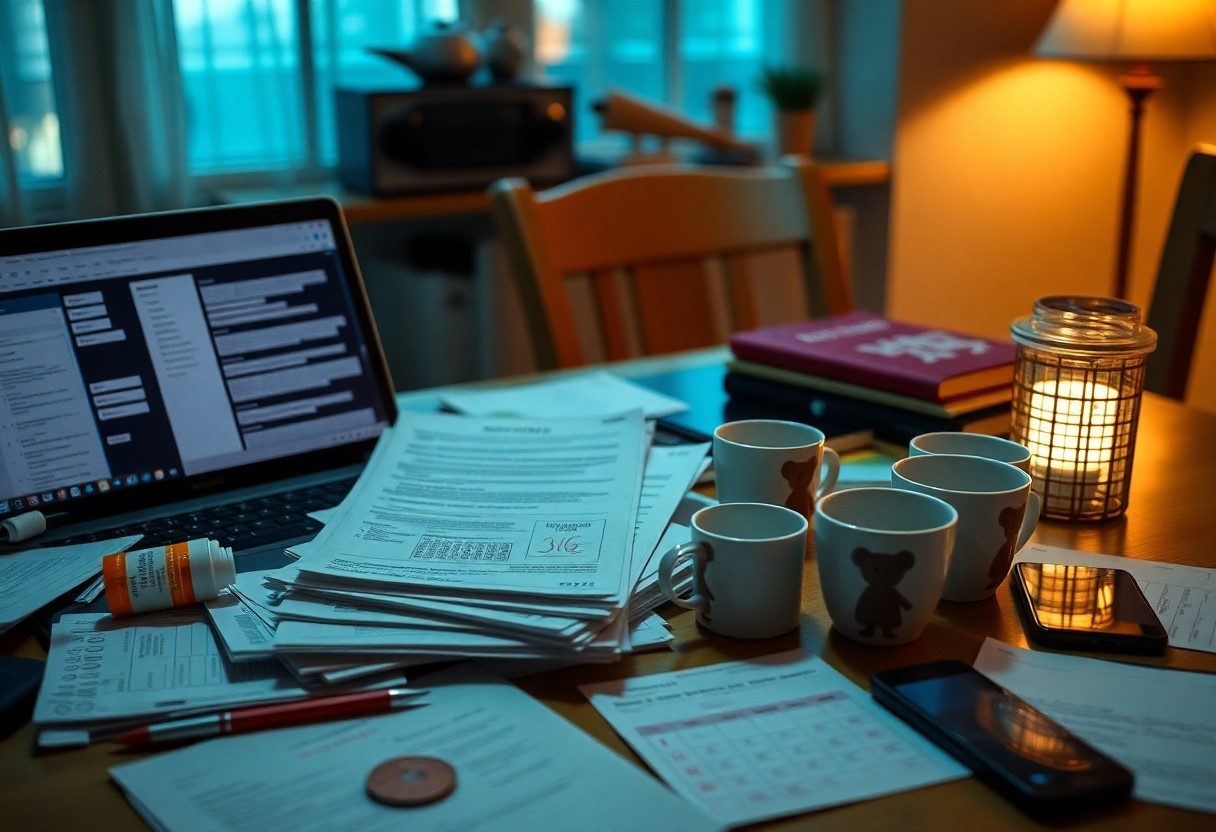
Many people assume fatigue is a personal failing, a sign of poor discipline or weak willpower, but this belief masks a deeper, systemic issue. You are not simply tired because you slept poorly or drank too much coffee. Fatigue is often a predictable outcome of overwork, economic pressure, and social inequality. When you internalize exhaustion as a private flaw, you overlook the structural forces shaping your energy levels. This misdiagnosis carries real costs-to your health, your relationships, and your ability to think clearly. A mid-sized SaaS firm might celebrate “hustle culture,” but its employees pay in chronic burnout, missed medical appointments, and reliance on stimulants. The burden isn’t yours alone to carry.
Key Takeaways:
- A mid-sized SaaS firm implemented a four-day workweek trial and saw a 30% reduction in employee sick days over six months, illustrating that systemic changes outperform individual fixes for fatigue.
- When exhaustion is framed as a personal failing, companies avoid restructuring unsustainable workloads, as seen in a 2022 tech industry survey where 68% of employees blamed themselves for burnout despite reporting unrealistic deadlines.
- Nations with strong labor protections, such as the Netherlands and Denmark, consistently report lower rates of work-related fatigue, suggesting that policy, not willpower, shapes rest at scale.
The Myth of the Lazy Individual
Society often labels persistent fatigue as a sign of personal failure, framing exhaustion as evidence of poor discipline. When you struggle to keep up, the assumption is that you are not trying hard enough, despite working longer hours than ever. This narrative erases systemic causes and turns a biological signal into a moral indictment.
Shifting the burden to the worker
Employers increasingly expect you to manage fatigue through self-improvement routines, wellness apps, or better sleep hygiene. The real issue-excessive workloads and inflexible schedules-is reframed as your responsibility to fix, allowing organizations to avoid structural changes that would reduce burnout at its source.
The biological limit as a moral flaw
Your body’s need for rest is recast as weakness when fatigue is treated as a character defect. The inability to work indefinitely becomes a personal shortcoming, not a natural boundary. This mindset pathologizes normal human limits and pressures you to override crucial signals.
When sleep deprivation is met with suggestions to “just meditate” or “drink less caffeine,” the deeper reality is ignored: no amount of personal optimization can sustain performance beyond biological thresholds. A mid-sized SaaS firm may praise employees who answer emails at midnight, but those same workers later face declines in cognitive function comparable to alcohol impairment, undermining both health and productivity.
The Total Extension of the Workday
Your workday doesn’t end when you leave the office, because fatigue from prolonged mental and physical strain accumulates long after clocking out. The hidden cost of chronic fatigue to patients and their families extends far beyond health outcomes, eroding personal time, family cohesion, and long-term well-being through unrelenting exhaustion.
The death of the private hour
Evenings once reserved for rest or connection now dissolve into catch-up tasks, as the expectation to remain productive invades what little remains of personal time. Your ability to disconnect is no longer a given, but a privilege eroded by normalized overwork and the quiet assumption that availability equals commitment.
Digital tethers and permanent labor
Email alerts, messaging apps, and after-hours calls transform your phone into a 24/7 extension of the workplace. The boundary between on and off duty has collapsed, turning meals, weekends, and vacations into opportunities for unpaid labor disguised as responsiveness.
Constant connectivity doesn’t just blur lines-it eliminates them. A mid-sized SaaS firm may not mandate overtime, yet employees routinely answer client messages at midnight, driven by unspoken pressure and performance tracking tools that reward constant presence. This always-on culture treats recovery as negotiable, embedding exhaustion into the rhythm of daily life while calling it flexibility.

The National Cost of a Tired People
A population running on depleted reserves undermines national productivity, public safety, and long-term economic resilience. Chronic fatigue contributes to medical expenses, workplace errors, and diminished civic engagement. When exhaustion becomes widespread, it is no longer a personal failing but a systemic liability affecting every institution. The true cost appears in eroded trust, slower innovation, and preventable failures across critical sectors.
The decay of public health
Fatigue weakens immune function and increases susceptibility to chronic illness, placing sustained pressure on healthcare systems. A tired body struggles to regulate metabolism, repair tissue, or manage stress hormones. Over time, sleep-deprived communities see higher rates of cardiovascular strain and mental health crises. This pattern burdens emergency services and reduces life expectancy, turning individual tiredness into a collective health emergency.
The loss of creative labor
Creative work demands cognitive flexibility, emotional availability, and the mental space to imagine alternatives-resources fatigue systematically depletes. Artists, writers, designers, and researchers cannot produce original work under constant exhaustion. When burnout becomes normalized, entire industries lose their capacity for innovation. The real cost lies not in missed deadlines but in the ideas that never form.
Creative labor often operates on irregular schedules, making it especially vulnerable to the erosion of rest. A software developer debugging an algorithm at 2 a.m. may solve a technical problem but lose the insight needed for a breakthrough architecture. A teacher revising lesson plans after midnight might deliver content but miss the spark that turns instruction into inspiration. These are not isolated lapses but symptoms of a broader collapse in generative thinking, where the mind, starved of recovery, defaults to repetition over invention. The absence of rest doesn’t just reduce output-it hollows out the quality of what remains.
The Profit in Artificial Energy
Energy drinks, prescription stimulants, and caffeine-laden products thrive because fatigue is no longer seen as a signal to rest but as a deficit to correct, The Costs of Clinician Fatigue and Its Prevention highlights how medical professionals are pushed to rely on artificial means to endure extended shifts, turning exhaustion into a profitable market.
Selling the cure for a manufactured ill
You’re sold alertness in a can while working conditions remain unchanged, the same employers who demand constant output fund the very industries that profit from your depletion, creating a cycle where fatigue is both caused and commodified.
The industry of the temporary patch
Stimulants, bright light therapy devices, and micro-napping apps promise quick fixes, yet none address the root causes of exhaustion, instead reinforcing the idea that adaptation, not reform, is the solution.
Pharmaceutical companies, wellness startups, and beverage giants benefit from a culture that equates endurance with productivity, marketing solutions that wear off by design so you’ll need to repurchase them daily, ensuring sustained revenue from recurring fatigue.
The Political Value of Fatigue
Fatigue shapes political behavior more than most admit. When exhaustion becomes widespread, it dampens public dissent and reduces civic participation. A tired population is less likely to organize, protest, or vote, creating a stable environment for those in power. This quiet suppression of engagement is not a side effect-it is a structural advantage. Governments and institutions benefit when citizens lack the energy to challenge authority or demand change.
Lethargy as a tool of compliance
Lethargy discourages resistance by draining the physical and mental resources needed to act. When you are too tired to attend meetings or read policy updates, compliance becomes automatic. Chronic fatigue functions as a nonviolent mechanism of control, ensuring that even in free societies, many citizens withdraw from meaningful participation without force or coercion.
The silencing of the active citizen
Active citizenship requires time, focus, and stamina-resources fatigue systematically erodes. You may intend to speak at a council meeting or join a campaign, but exhaustion delays and eventually derails those plans. The result is a gradual disappearance of grassroots voices from public discourse, leaving decisions to those with the energy reserves or privilege to sustain involvement.
Consider a community fighting a landfill proposal: the most affected residents often work multiple jobs, care for families, and lack the surplus energy to sustain nightly meetings or legal challenges. Meanwhile, developers arrive rested, funded, and organized. Your fatigue does not just delay action-it tilts the playing field. Over time, persistent tiredness ensures that only the well-rested and well-resourced shape policy, turning civic imbalance into a self-reinforcing cycle.
The Need for a Right to Rest
Fatigue is not a personal failing but a structural condition shaped by economic demands, and treating it as an individual burden ignores the systemic forces at play. A formal right to rest would acknowledge that recovery is not a luxury earned through productivity but a necessary condition for human dignity. Without such a right, workers remain exposed to endless encroachments on their time and health.
Moving beyond the personal fix
Sleep trackers and caffeine supplements offer temporary relief but do nothing to address the root causes of exhaustion. Relying on individual solutions shifts responsibility away from employers and policymakers, allowing exploitative schedules to persist. Real change requires collective action, not another app or wellness trend.
State protection for the weary
Some countries legally limit work hours and mandate rest periods, recognizing that fatigue undermines safety and well-being. A legal right to disconnection in France, for example, restricts after-hours work emails for certain employees. These measures treat rest as a public good, not a privilege granted at the employer’s discretion.
Legislation can redefine what is considered acceptable in the workplace, especially in high-risk industries where fatigue leads to accidents. In transportation, mandatory rest breaks are already enforced due to the danger of impaired alertness. Expanding similar protections across sectors would affirm that no job should demand irreversible harm to health, and that the state has a role in preventing it.
To wrap up
You treat fatigue as a personal failing, yet it shapes your productivity, health, and political engagement in ways no self-help regimen can fix. A mid-sized SaaS firm expecting constant availability doesn’t just burn out employees-it normalizes exhaustion as a condition of belonging. When rest becomes a luxury only the privileged can afford, you reinforce a system where fatigue serves powerful interests far beyond the individual.
FAQ
Q: How does treating fatigue as a personal failure affect workplace policies?
A: When organizations frame fatigue as an individual shortcoming, they often implement wellness programs that place the burden of recovery on employees rather than addressing structural causes. A mid-sized SaaS firm might offer meditation apps or subsidized gym memberships while maintaining a culture of late-night Slack messages and back-to-back virtual meetings. These initiatives rarely reduce burnout because they ignore the root issue: unsustainable workloads and inflexible schedules. Instead of reevaluating meeting frequency or setting boundaries around after-hours communication, companies signal that employees must simply manage their energy better. This approach allows employers to appear supportive while avoiding meaningful changes to workflow or expectations.
Q: Can public health data show the impact of widespread fatigue on national productivity?
A: National health surveys consistently link chronic fatigue to increased absenteeism, higher error rates, and reduced output across sectors like healthcare, transportation, and manufacturing. Nurses working 12-hour shifts report making more medication errors in their final hours, while truck drivers on extended schedules are disproportionately involved in fatigue-related accidents. One study tracking emergency room staff found that those working more than three consecutive night shifts were twice as likely to misdiagnose common conditions. These patterns suggest that fatigue is not just a personal inconvenience but a systemic risk with measurable consequences for safety and efficiency.
Q: Why do some industries benefit from a fatigued workforce?
A: Certain business models rely on diminished worker capacity to maintain control and maximize output. Gig economy platforms, for example, design algorithms that encourage workers to accept back-to-back tasks by offering time-limited bonuses, knowing that fatigue reduces the likelihood of organized pushback. Fast food chains schedule employees with unpredictable rotating shifts, which disrupt sleep patterns and make it harder to seek alternative employment or unionize. Energy drink companies spend millions annually marketing to young hourly workers, framing exhaustion as a temporary chemical imbalance rather than a symptom of exploitative labor practices. These interconnected incentives create a cycle where fatigue is not an accident but a predictable and profitable outcome.
Leave a Reply