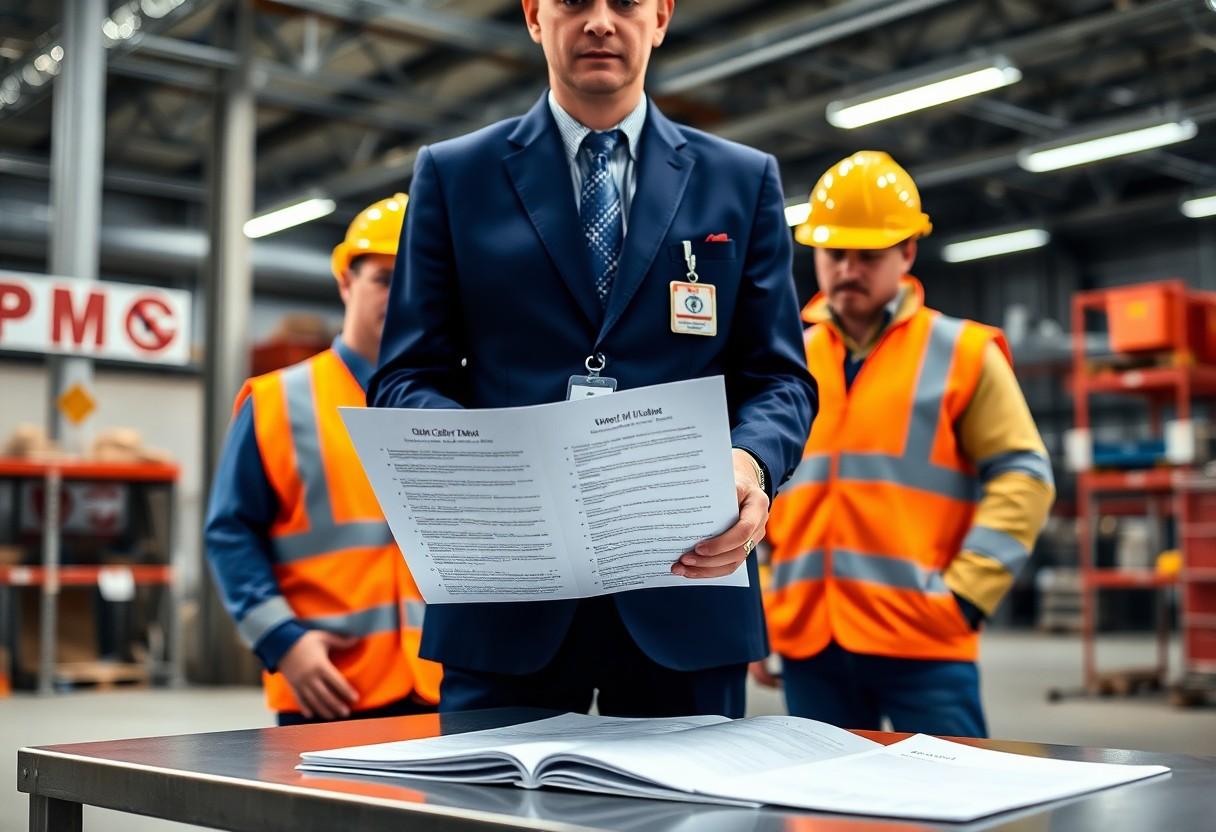
Compliance begins the moment an inspector steps onto your worksite, and what your supervisors say and do in those first minutes can determine the outcome of the entire visit. In Ontario, workplace inspections are unannounced, and the responses from your front-line leaders are legally binding. A single misstatement or missing document can trigger penalties, work stoppages, or even criminal charges under the Occupational Health and Safety Act.
Key Takeaways:
- Supervisors must be able to immediately produce documentation showing that all workers have received mandatory safety training, such as WHMIS and fall protection, with records updated within the past 12 months.
- During an inspection, a supervisor’s verbal account of daily hazard assessments must align precisely with written logs and actual site conditions, as inconsistencies can trigger escalated penalties.
- A mid-sized SaaS firm managing industrial clients was fined $48,000 after an inspector found that supervisors could not demonstrate how machine guarding checks were conducted, despite having forms on file.
The Knock at the Gate
Imagine the sudden sound of boots on concrete, a government-issued badge held up at your site entrance-an Ontario Ministry of Labour inspector has arrived unannounced. Your security team calls your supervisor, who must decide in seconds whether to grant access. Refusing entry without legal justification can result in immediate orders and penalties, while unprepared access could expose gaps in compliance. How your team responds in those first minutes sets the tone for everything that follows.
The Supervisor’s Burden
Every directive you issue carries legal weight the moment an inspector appears. Your team looks to you not just for guidance but as proof of compliance, and one misstated rule can invalidate an entire safety program. Training records may show attendance, but inspectors listen closely to how you explain procedures in the moment. A mid-sized SaaS firm learned this when an offhand comment about bypassing lockout protocols triggered a full worksite shutdown. Your words don’t just instruct, they testify.
The Paper Trail
Every inspection begins with a request for records, and your supervisors must know exactly where to find them. Training logs, incident reports, and maintenance schedules must be current, complete, and consistent-gaps or missing signatures raise red flags. If records are disorganized or stored offsite without immediate access, the inspector may issue orders on the spot. You can learn from others’ experiences, such as in this discussion on how to get a response from Ontario ministry inspectors on documentation timelines, where a contractor detailed how a delayed reply nearly triggered a stop-work order. Digital logs with timestamped entries reduced follow-up actions during their next visit. Supervisors who can produce accurate records within minutes demonstrate compliance is a daily priority, not a reaction. A single missing WHMIS training sheet can escalate into a broader investigation.
The Right Words
How your supervisors respond in the first 30 seconds can determine the inspection’s trajectory. They must avoid speculative answers, admitting uncertainty when needed, and never downplay hazards. A simple, “I’ll get the person responsible” is often safer than an improvised explanation. Phrases like “We’re looking into that” or “That’s not current practice” can become evidence of negligence if contradicted by documentation or observed conditions.
The Equipment Test
During an inspection, you may be asked to demonstrate how machinery is operated and maintained under real conditions. Your supervisors must know not only the safety procedures but also be able to correctly activate emergency stops, lockout protocols, and daily inspection routines. A single misstep, like bypassing a guard or skipping a checklist item, can trigger immediate compliance action. For example, if a forklift’s backup alarm fails during testing, the unit must be taken out of service on the spot.
The Final Reckoning
When the inspector asks your supervisor to describe the last safety meeting, their exact words matter. A vague answer like “we talked about being safe” raises red flags, while a clear summary of hazards reviewed, controls confirmed, and workers involved shows a functioning system. One manufacturing site faced escalated scrutiny after a supervisor could not recall the topic of the monthly meeting, despite signed attendance sheets. Inspectors assess understanding, not just compliance paperwork. Your team’s ability to articulate safety practices in plain language can determine whether the visit ends with a handshake or a ticket. A supervisor’s spoken account is often the final and most persuasive evidence of your workplace culture.
To wrap up
If an Ontario inspector arrived today, your supervisors would need to speak with clarity and confidence about safety protocols, training records, and equipment checks. Their responses would reflect not just policy knowledge but daily enforcement-whether lockout procedures are consistently followed, incident reports filed within 24 hours, or PPE inspected weekly. A moment of hesitation could signal systemic gaps a mid-sized SaaS firm eliminated through monthly internal audits and role-playing inspection scenarios.
FAQ
Q: What would an Ontario Ministry of Labour inspector expect to see during a surprise visit to our worksite?
A: Inspectors typically begin by requesting to speak with a supervisor and reviewing documentation such as workplace safety policies, training records, and the most recent Joint Health and Safety Committee (JHSC) minutes. They will observe active work processes, check for proper machine guarding, and verify that personal protective equipment is being used correctly. A mid-sized SaaS firm with on-site server maintenance, for example, would need to show proof of lockout-tagout training and hazard assessments for electrical work. The inspector may also ask to walk through high-risk areas, ensuring that fall protection systems are in place where required and that emergency procedures are clearly posted.
Q: How should supervisors respond if they are asked about an employee’s safety training during an inspection?
A: Supervisors must be able to produce documented evidence of training, not just confirm it verbally. This includes signed attendance sheets, certificates for certified courses like Working at Heights or WHMIS, and internal records showing task-specific orientation. If a worker is operating a forklift, the supervisor should be able to immediately provide the operator’s training file, including the date of the last evaluation. In one documented case, a manufacturing site avoided penalties because supervisors had digital tablets on hand with up-to-date training logs, allowing real-time verification. Relying on memory or vague assurances is not sufficient under the Occupational Health and Safety Act.
Q: What happens if a supervisor gives an incorrect statement during an inspection?
A: Misstatements can lead to compliance orders, fines, or even prosecution if they involve deliberate misinformation. For example, claiming that all confined space entries are monitored when no attendant is assigned could trigger immediate work stoppage. Inspectors may cross-reference supervisor statements with employee interviews and written procedures. If a discrepancy arises, the Ministry may expand the scope of the inspection. Supervisors should be trained to respond with factual, limited answers and to defer complex legal or procedural questions to designated health and safety officers or legal counsel when appropriate.
Leave a Reply