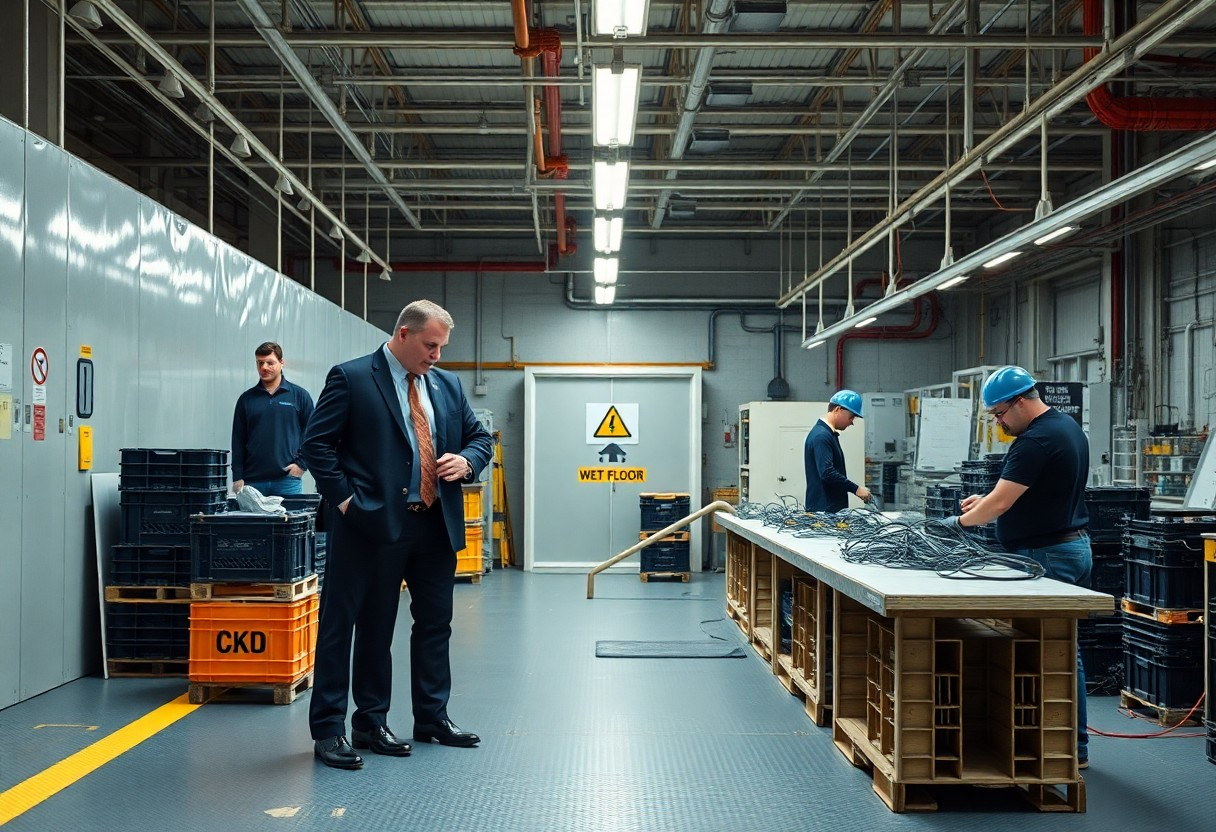
Safety hazards vanish the moment managers arrive on the floor, a pattern seen in factories, warehouses, and construction sites worldwide. You’ve likely witnessed it: loose cables suddenly taped down, missing guardrails reinstalled overnight, workers donning full PPE just before the tour. This temporary compliance creates a false sense of security, masking deep-rooted systemic risks that only surface when leadership is absent. What you see during inspections is often not what happens day to day.
Key Takeaways:
- A mid-sized SaaS firm conducting quarterly safety audits found that incident reporting dropped by 70% during the week of executive visits, only to rebound immediately afterward, suggesting suppression rather than improvement.
- Workers on an offshore oil rig were observed temporarily halting non-imperative tasks and removing personal protective equipment modifications when supervisors arrived, restoring them once the visit concluded, revealing a ritual of performative compliance.
- In a manufacturing plant in Ohio, a near-miss involving a misaligned conveyor guard was reported the day after a management walkthrough, indicating hazards were being concealed rather than resolved during oversight periods.
The Optical Illusion of Compliance
What you see during a management walkthrough often reflects a carefully staged performance, not daily reality. Workers adjust their behavior the moment leadership appears, cleaning workspaces, wearing unused PPE, and halting risky shortcuts-not because hazards are gone, but because scrutiny is present. A forklift operator at a distribution center may suddenly fasten a seatbelt after months of skipping it, or a technician might power down a machine mid-task to follow lockout procedures only when supervisors approach. These momentary corrections create a false sense of security, masking systemic gaps in safety culture with temporary obedience. The real danger lies in mistaking this performance for genuine compliance.
The Management Parade
When executives schedule site visits, a predictable sequence unfolds behind the scenes. Supervisors issue quiet alerts, prompting teams to temporarily reposition tools, clear walkways, and halt high-risk tasks. These adjustments are not improvements-they are stage directions. The most dangerous behaviors vanish only for the duration of the tour, returning immediately afterward. You’re witnessing a performance, not progress.
The Psychology of the Performance
When you walk the floor, employees shift into a well-rehearsed routine, masking real risks behind instantaneous compliance. This behavior isn’t deception for its own sake; it’s a survival response shaped by past consequences. Workers have learned that pointing out hazards during routine operations invites scrutiny, but performing safety perfectly when leadership arrives earns approval. The momentary transformation in conduct reveals not a failure of individual discipline, but a deeply conditioned reaction to observation. Safety becomes a show, timed to your presence.
The Disappearing Hazard
When managers arrive on site, hazards often vanish-not because they’re fixed, but because workers temporarily hide them. You’ve likely seen it: loose cables suddenly taped down, missing machine guards reappearing, safety glasses materializing on every face. This reactive cleanup creates a false sense of security, masking systemic risks. What’s reported during audits rarely reflects daily reality. A mid-sized SaaS firm tracking field operations found discrepancies in 70% of safety checklists when comparing routine logs to unannounced review data. When too many incident reports become a safety risk, the focus shifts from fixing problems to managing appearances.
Corporate Blindness
You overlook hazards not because they’re invisible, but because your presence reshapes behavior. When leadership walks the floor, employees instinctively correct posture, fasten harnesses, and clear aisles-mimicking safety rather than living it. The real danger lies in mistaking this performance for compliance. A forklift operator at a distribution center once restarted a stalled conveyor without lockout, only to freeze mid-motion when he spotted a manager approaching. That near-miss never made a report. The hazard vanished before it could be recorded, reinforcing a false sense of security. You’re not seeing the workplace as it is, but as it performs under observation. This illusion, repeated across shifts and sites, creates a parallel reality where risks are hidden, not mitigated. A mid-sized SaaS firm discovered similar gaps in server room protocols during unannounced audits-procedures skipped for months, then perfectly executed the moment leadership announced a visit. The gap between observed and actual behavior is where accidents incubate.
The Cost of the Charade
Every time you schedule a walkthrough, workers adjust their behavior, masking real risks behind a performance that looks safe but isn’t. This temporary compliance creates a false record of safety, leading to delayed equipment repairs, ignored near-misses, and unaddressed training gaps. A mid-sized SaaS firm learned this after a post-incident audit revealed three unreported electrical hazards had persisted for months, each visible daily to staff but hidden during leadership visits. The longer the act continues, the more expensive the eventual failure becomes-both in liability and culture. Real safety isn’t performative; it’s consistent, even when no one is watching. A single incident following a clean audit can unravel years of reported progress, exposing not just physical danger but systemic deception embedded in routine inspections.
Final Words
When management visits, hazards often vanish not because they’re resolved but because workers temporarily adjust behavior to meet perceived expectations. You’ve likely seen it: tools properly stored, safety gear suddenly worn, near-misses unreported-all part of a short-lived performance. This pattern doesn’t reflect safety success, but a culture where employees prioritize approval over authenticity. A warehouse team in Ohio, for example, consistently cleaned spill zones only during executive walkthroughs, leaving daily risks unaddressed. Your presence changes behavior, but real progress requires systems that sustain safety long after the tour ends.
FAQ
Q: Why do safety issues seem to vanish when managers arrive on-site?
A: Workers often shift into a performance mode when management is present, temporarily adhering strictly to safety protocols they may routinely bypass. A technician at a mid-sized manufacturing plant, for example, might suddenly wear full protective gear and follow lockout-tagout procedures to the letter during a walkthrough, even if those practices are loosely applied during regular shifts. This behavior stems from an unspoken understanding that management visits are evaluation moments, not routine operations, triggering a short-term compliance reflex rather than reflecting day-to-day conditions.
Q: Can regular audits or inspections prevent this kind of safety theater?
A: Standard audits often reinforce the problem because they follow predictable schedules and formal procedures. Employees anticipate them and prepare accordingly, cleaning workspaces, correcting违规 practices temporarily, and staging areas to appear compliant. One logistics company discovered that forklift operators consistently wore seatbelts during scheduled safety reviews but rarely did so during normal operations, as confirmed by unannounced camera footage. The ritual of the audit becomes part of the performance, not a reliable diagnostic tool.
Q: What methods actually reveal the real safety conditions in a workplace?
A: Unannounced, informal observations by trusted personnel-such as safety ambassadors from different departments or third-party observers unfamiliar to the team-tend to capture more accurate behaviors. A chemical processing facility reduced incident rates by 40% over two years after introducing random walk-throughs conducted by cross-site safety liaisons who reported directly to an independent review board. These visits focused on routine interactions, avoided formal checklists, and prioritized open conversations, allowing latent risks like improper valve handling or bypassed ventilation systems to surface without triggering defensive compliance.
Leave a Reply