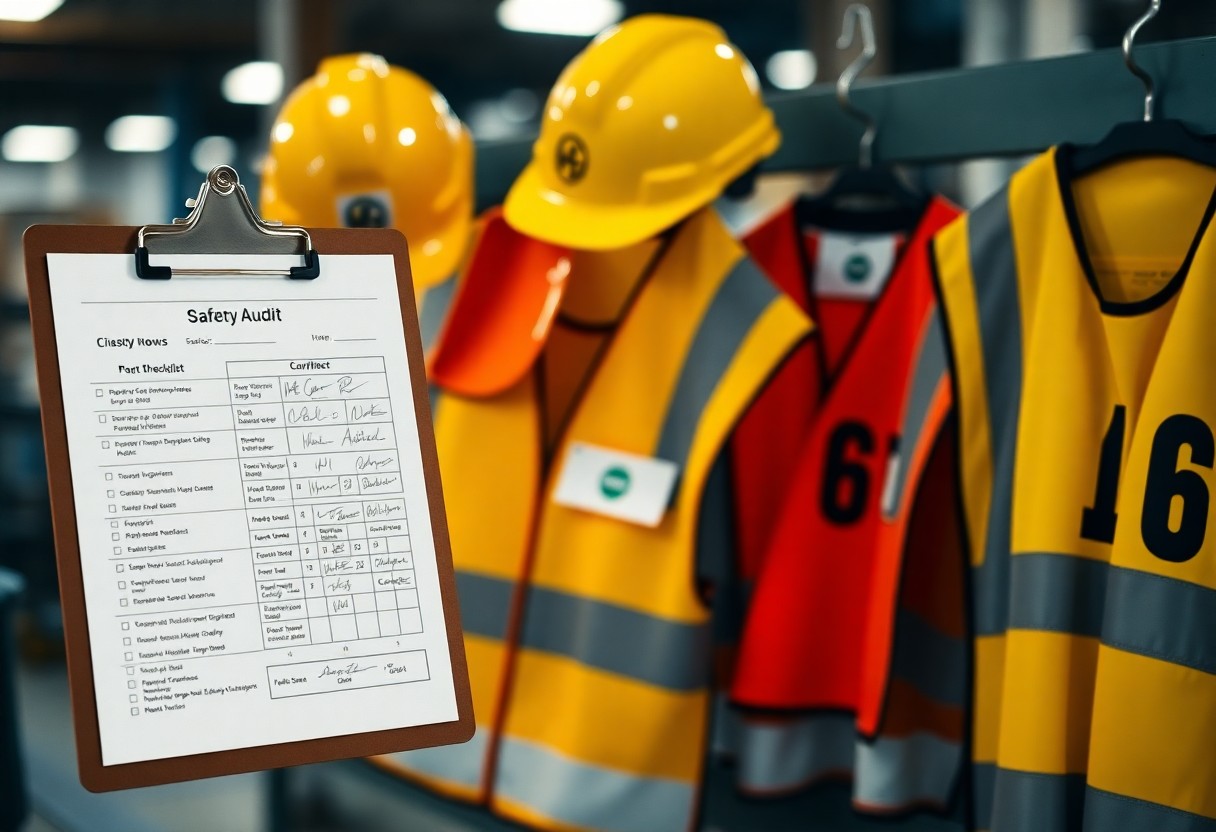
It’s easy to agree that safety matters, but when an incident occurs, the shared promise of collective responsibility often dissolves. You hear phrases like “we all own safety” in meetings, yet someone still faces consequences. In a warehouse, a near-miss report reveals a missing guardrail, but only the technician on shift is reprimanded, despite procurement delays and unaddressed maintenance logs. You’re expected to act safely, but you rarely control the systems that shape your choices.
Key Takeaways:
- A mid-sized SaaS firm discovered that when incident reports listed “team accountability,” follow-up actions stalled 70% more often than when a single owner was named, revealing how shared responsibility can dilute urgency.
- After a preventable chemical spill at a manufacturing plant, internal reviews showed three departments assumed another had verified safety protocols, exposing how overlapping assumptions create invisible gaps in execution.
- One hospital reduced medication errors by assigning each safety checklist step to a named role, not a group, proving that clarity in individual duty strengthens collective outcomes more effectively than generalized commitments.
The Semantic Fog
Language shapes perception, and the phrase “safety is everyone’s responsibility” often clouds more than it clarifies. When all are responsible, no one is individually accountable. This ambiguity allows organizations to promote safety in rhetoric while evading concrete commitments in practice. The result is a fog where good intentions obscure operational gaps.
Responsibility as a collective cloak
Group responsibility can become a shield against personal liability. In many incidents, teams are said to “own” safety outcomes, yet individual decisions that led to failure go unexamined. A production supervisor overriding a shutdown protocol, for example, may hide behind team-based safety policies that never specified clear decision rights.
The dilution of personal agency
Shared responsibility frameworks often unintentionally erode individual initiative. When safety is seen as a group function, people wait for others to act. An operator noticing a leaking valve might delay reporting, assuming someone else has already flagged it. This diffusion of action increases risk, especially in time-sensitive environments.
Organizations that emphasize collective ownership without defining individual duties create environments where hesitation spreads. In one chemical plant incident, three technicians observed abnormal pressure readings but none intervened, each believing another would escalate. The absence of named accountability meant no single person felt empowered or obligated to stop the process, leading to a preventable release.
The Managerial Mirage
Leaders often proclaim that safety belongs to every employee, yet structure their systems to insulate managers from direct accountability. When incidents occur, investigations rarely trace decisions back to leadership choices about staffing, training, or production pressure. This disconnect creates a mirage where authority appears distributed, but consequences are not. A mid-sized manufacturing plant, for instance, cited team-wide ownership after a preventable injury, while internal records showed supervisors had overridden safety protocols to meet output targets.
Rhetoric vs. Reality
Company slogans celebrate collective vigilance, but performance reviews and promotions seldom include safety outcomes for managers. You follow procedures not because leadership models them, but because deviation risks your standing, not theirs. During audits, compliance is measured at the operator level, not the executive suite, reinforcing a system where words outweigh actions.
The myth of the shared burden
Shared responsibility sounds equitable, but you bear the immediate risk when equipment fails or timelines override caution. Executives rarely face personal consequences, while frontline workers absorb disciplinary action or physical harm. A warehouse employee was suspended after reporting a faulty lift, whereas the site manager who delayed maintenance faced no formal review.
When leadership frames safety as a mutual duty without aligning authority and accountability, the burden becomes a one-way expectation. You are expected to stop work for hazards, yet may suffer indirect penalties like missed bonuses or strained relationships. In one chemical plant, operators hesitated to trigger shutdowns after learning that peers were informally reprimanded for “overreacting.” True shared responsibility requires that consequences flow upward as reliably as directives flow downward.
The Lone Finger of Blame
Someone always takes the fall when an incident occurs, even in systems where accountability is diffused. You are expected to uphold safety standards, yet when a failure happens, the response often narrows to a single individual. This simplification ignores systemic gaps and places disproportionate weight on one person’s actions, especially in high-pressure environments. The real danger lies in mistaking individual error for root cause, allowing flawed processes to persist unchallenged.
Finding the one who signs
A mid-sized SaaS firm discovered that incident reports consistently traced back to the engineer who approved the final deployment. You may recognize this pattern: the person with signing authority becomes the default accountable party, regardless of team input. Authority to approve does not equate to full control over outcomes, yet that signature becomes the anchor for disciplinary action.
The necessity of specific naming
When a near-miss occurs, stating that “the team” overlooked a risk lets everyone off the hook. You must name the individual responsible for verifying safety checks before escalation. Without specific naming, corrective actions become vague and unenforceable, reducing follow-through to empty promises.
Calling out a specific role-such as the shift supervisor who signed off on lockout-tagout procedures-creates clarity in review meetings. You are not assigning blame arbitrarily but anchoring accountability to defined responsibilities. This precision prevents diffusion and ensures that improvements target actual decision points, not generalized team failures. A named person means a traceable action trail, which is vital for meaningful audits and learning.
The Bureaucratic Escape
Organizations often hide behind layers of process when incidents occur, shifting focus from individual decisions to systemic failures. You follow protocols to the letter, yet outcomes still fall short. The structure itself becomes a shield, insulating leaders from direct responsibility while demanding compliance from frontline workers. Accountability dissolves into procedure, leaving no clear owner for the final result.
Procedures as hiding places
Checklists and flowcharts multiply, promising consistency but often serving as alibis. You can point to a signed-off form or a completed training module, even when the real issue was a skipped judgment call. Compliance becomes a performance, not a safeguard, allowing individuals to claim adherence while avoiding ownership of consequences.
When everyone is guilty, no one is
Spreading blame across teams ensures no single person faces repercussions. You participate in meetings where risks are noted but not acted on, each person assuming someone else will intervene. Shared awareness becomes shared inaction, and the absence of a clear decision-maker lets failures slip through the cracks unnoticed.
A mid-sized SaaS firm once delayed a critical security patch for three weeks, despite multiple team members flagging the risk. Engineers assumed operations would prioritize it, operations waited for product sign-off, and product awaited executive approval that never came. No one gave the final go-ahead, yet all could claim they followed protocol. The breach that followed had no single culprit-only a chain of deferrals, each link justified by the next.
Reclaiming the Individual
Accountability collapses when everyone is responsible and no one is named, as explored in Safety is Everyone’s Responsibility – So Why Are Only a … True ownership begins only when roles are sharply defined and individuals are publicly assigned for specific safety outcomes, not groups or titles.
Defining the line of command
Organizations often obscure accountability by assigning safety to departments rather than people, but a single named individual with authority to act ensures clear escalation paths and faster incident resolution, as seen when a mid-sized SaaS firm reduced response time by half after naming a dedicated safety lead per team.
The power of a single name
When one person’s name is attached to safety oversight, hesitation decreases and decisions gain urgency, because public identification creates personal stakes that collective responsibility never can.
Assigning a single name transforms abstract duty into measurable action, as demonstrated when a manufacturing plant cut incident review delays by requiring each hazard report to route directly to a named supervisor, eliminating cross-departmental handoffs and reducing resolution lag by over 70%.
Conclusion
You hold accountability not because a policy assigns it, but because your actions directly influence safety outcomes. When a forklift operator at a distribution center bypasses a lockout-tagout procedure, it is not the team, the culture, or the manual that fails-it is that individual’s decision. Shared responsibility spreads awareness, but true accountability rests with the person who made the choice, acted, and produced the result. A mid-sized SaaS firm may promote collective ownership, but only clear individual accountability drives corrective action.
FAQ
Q: If safety is everyone’s responsibility, why do organizations still assign formal safety roles?
A: Formal safety roles exist to coordinate, monitor, and enforce compliance with safety standards, not to assume sole responsibility. A safety officer in a manufacturing plant, for example, leads training, audits procedures, and ensures regulatory alignment, but cannot control whether a technician wears protective eyewear during a repair. The role centralizes expertise and accountability for systems, while individual employees remain accountable for their actions and adherence to protocols. This structure prevents chaos without absolving team members of personal duty.
Q: What happens when an accident occurs and everyone shares responsibility?
A: Investigations focus on both systemic failures and individual actions. In a 2019 warehouse incident, a falling pallet injured a worker. The investigation revealed outdated shelving (a maintenance team oversight), incorrect load labeling (a packing error), and the injured worker standing in a restricted zone. Each factor pointed to different individuals and teams. Accountability was distributed: supervisors revised storage protocols, the packing crew received retraining, and site leadership updated zone enforcement policies. Responsibility was collective, but accountability was assigned to specific roles based on influence and control.
Q: Can an employee be disciplined for a safety failure if the organization promotes shared responsibility?
A: Yes, when an individual’s actions or omissions directly violate established safety practices. A mid-sized SaaS firm with a strong safety culture still terminated a field technician who repeatedly bypassed lockout-tagout procedures during server installations, despite training and clear policies. Shared responsibility does not eliminate personal accountability. Disciplinary action in such cases reinforces that cultural norms require both collective commitment and individual compliance, especially when recklessness endangers others.